Why Venetian Blind Service Life Matters for Household Budgets
When upgrading home window treatments, most homeowners prioritize style, light control, and affordability, while easily overlooking one critical metric: long-term service life. Venetian blinds are one of the most popular horizontal blind options for residential and commercial spaces, thanks to their flexible light adjustment, sleek minimalist design, and wide compatibility with different window sizes. However, material differences create a massive gap in durability, maintenance costs, and replacement frequency, directly impacting your long-term household expenses.
Many users opt for low-cost PVC Venetian blinds or budget faux wood styles initially, only to face fading, warping, cracking, and discoloration within 2 to 3 years. Frequent replacements, part repairs, and deep cleaning costs eventually make cheap blinds far more expensive than premium durable alternatives. In contrast, Aluminum Venetian Blinds stand out in the market for their exceptional longevity and low maintenance attributes, becoming the top choice for long-term home and office decoration. Understanding the durability differences between common blind materials can help you avoid unnecessary waste and make a cost-effective window treatment decision.
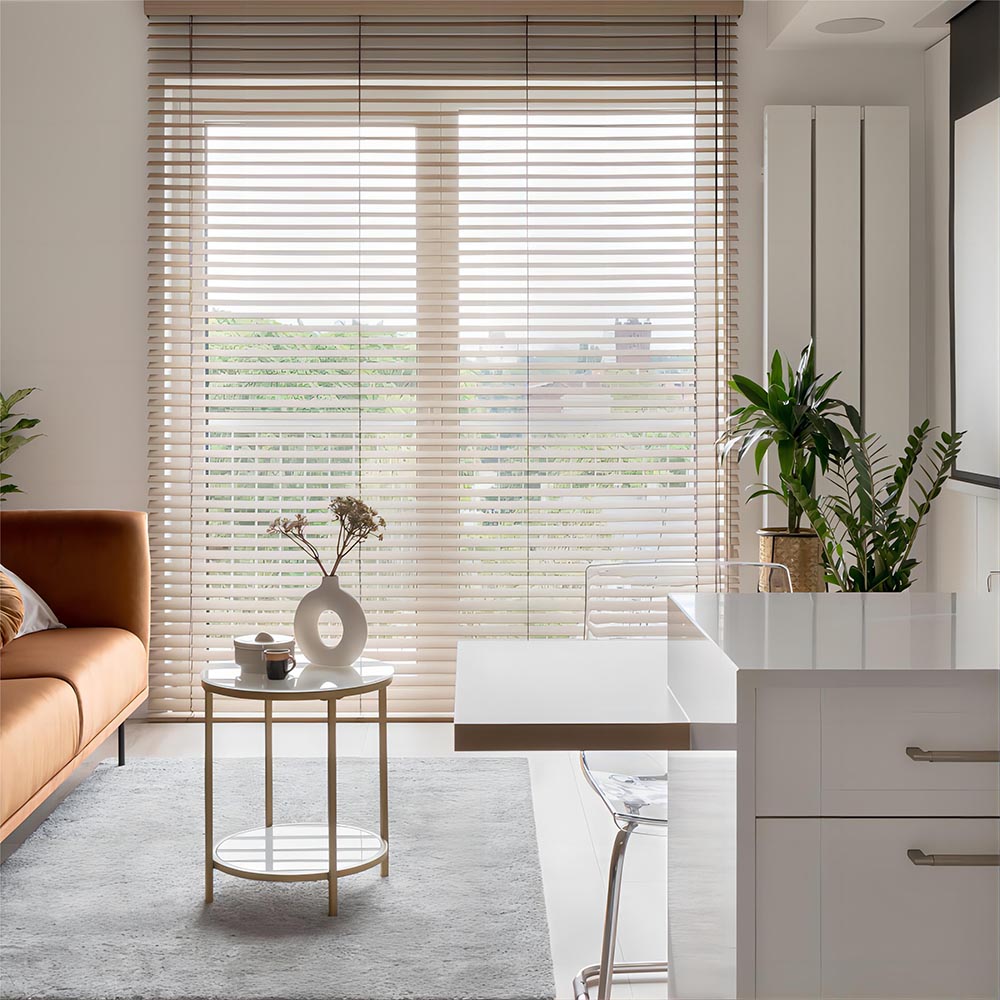
Service Life Comparison: Aluminum vs. PVC vs. Faux Wood Venetian Blinds
To help users clearly distinguish the practical performance of mainstream window treatments, we compare the actual service life, applicable scenarios, failure problems, and comprehensive cost of three common Venetian blind materials under standard household environments, including regular sunlight exposure, indoor humidity changes, and daily manual operation.
|
Blind Material Type |
Average Service Life |
Common Wear and Failure Issues |
Best Application Scenarios |
|
Aluminum Venetian Blinds |
8–12 years |
Minimal wear; occasional cord loosening; no warping, fading, or cracking |
Bedrooms, kitchens, bathrooms, home offices, commercial spaces |
|
PVC Venetian Blinds |
2–4 years |
UV fading, high-temperature warping, brittleness, and cracking in dry weather |
Low-budget temporary decoration, low-light indoor rooms |
|
Faux Wood Venetian Blinds |
4–6 years |
Humidity-induced swelling, surface peeling, and mold growth in damp areas |
Dry living rooms, study rooms with soft light |
The data show that aluminum Venetian blinds have a far longer service life than the other two mainstream materials. Unlike PVC and faux wood products that degrade rapidly under environmental changes, aluminum alloy materials maintain stable physical and chemical properties throughout long-term use. Although the upfront purchase cost of aluminum blinds is slightly higher, their ultra-low replacement frequency and maintenance cost make them the most cost-effective custom horizontal blinds for long-term home decoration.
Core Factors That Determine Venetian Blind Durability
The huge service life gap between different blinds stems from three core environmental resistance capabilities, which are also the key reasons why aluminum blinds outperform PVC and faux wood alternatives.
• UV Resistance and Anti-Fading Performance
Long-term sunlight exposure is the biggest killer of window blinds. PVC Venetian blinds are made of plastic polymer materials that are prone to molecular aging under continuous UV radiation, leading to yellowing, fading, and surface brittleness. Faux wood blinds, composed of wood-plastic composites, also suffer from color fading and surface layer peeling after long-term sun exposure. In comparison, high-quality aluminum Venetian blinds adopt electrostatic powder coating technology, which forms a dense protective layer on the surface. This coating effectively resists UV erosion, preventing color fading and surface aging even after years of direct sunlight exposure.
• Humidity and Temperature Adaptability
Indoor humidity and temperature changes greatly affect the structural stability of blinds. Bathrooms and kitchens with high humidity are completely unsuitable for faux wood blinds, as composite materials easily absorb moisture, causing board swelling, deformation, and mold growth. PVC blinds will soften and warp in high-temperature environments such as sun-exposed balconies, and become brittle and easy to break in low-temperature dry seasons. Aluminum Venetian blinds have excellent temperature and humidity resistance, with no deformation in high temperatures, no rust in humid environments, and no brittleness in dry weather, adapting to all indoor household scenarios.
• Structural Wear Resistance of Daily Operation
Venetian blinds need frequent lifting, lowering, and angle adjustment in daily use, which brings continuous mechanical wear. PVC and faux wood slats are relatively fragile; frequent friction and collision will cause edge chipping and slat deformation, affecting normal use. Aluminum slats are lightweight, tough, and impact-resistant, with strong structural stability. The internal ladder ropes and track accessories of qualified aluminum blinds are matched with high-quality wear-resistant materials that can withstand tens of thousands of manual operations without failure.
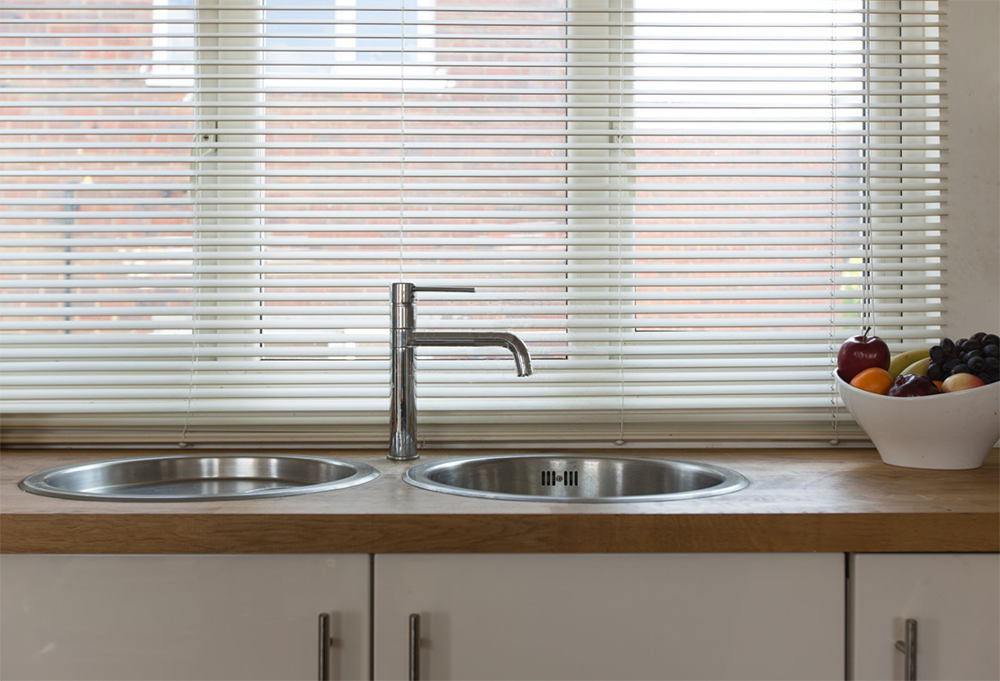
Practical Tips to Extend the Lifespan of Horizontal Blinds
No matter what kind of Venetian blinds you use, standardized daily maintenance can effectively delay aging and extend service life. Here are practical and easy-to-operate tips for all homeowners:
First, adopt gentle daily cleaning methods. Avoid using corrosive detergents, alcohol, or strong alkaline cleaning agents to wipe blind slats, which will damage the surface protective layer. For daily dust removal, use a dry microfiber cloth or a soft brush to wipe gently; for stubborn stains, wipe with a damp cloth and dry immediately.
Second, avoid violent operation. Do not pull the lifting cord hard or twist the slats forcibly when adjusting the blinds, which will cause cord breakage and slat deformation. For aluminum blinds, slight slat deviation can be adjusted gently, while forced pulling will damage the internal transmission structure.
Third, do targeted protection according to the environment. For windows with long-term direct sunlight, you can properly adjust the slat angle to avoid full-time direct UV irradiation; for humid spaces such as bathrooms, keep regular ventilation to reduce moisture accumulation. Even moisture-resistant aluminum blinds need ventilation maintenance to avoid long-term damp retention on the surface.
Finally, conduct regular accessory inspection. Check the lifting cords, ladder tapes, and rotating shafts every six months. Replace worn cords in time to avoid sudden breakage and extend the overall service life of the blinds.
FAQs About Venetian Blind Durability and Replacement
Q1: Are Aluminum Venetian blinds worth the extra cost compared to PVC blinds?
A1: Absolutely worth it. Although PVC Venetian blinds have a lower upfront price, they need replacement every 2 to 3 years, with cumulative replacement and maintenance costs far exceeding aluminum blinds. Aluminum Venetian blinds can be used for nearly a decade stably, with almost no maintenance cost in daily use, bringing higher long-term cost performance.
Q2: Can faux wood blinds be used in humid areas like bathrooms?
A2: Not recommended. Faux wood Venetian blinds have limited moisture resistance. Long-term high humidity will cause material swelling, surface peeling, and mold growth, which will greatly shorten their service life. Aluminum blinds are the ideal choice for humid indoor scenarios.
Q3: How to know when it’s time to replace old Venetian blinds?
A3: Replace PVC and faux wood blinds once they have irreversible warping, cracking, large-area fading, or mold. For aluminum blinds, if only individual cords or accessories are worn, you can replace the parts instead of the whole set; overall replacement is only needed when the slats are severely deformed or oxidized.
Q4: Do aluminum blinds require complicated professional maintenance?
A4: No. Aluminum Venetian Blinds are one of the lowest-maintenance window treatments. Their smooth anti-stain surface is not easy to accumulate dust, and daily dry wiping is enough for cleaning. No regular professional maintenance is required, which saves a lot of time and energy for household users.
Post time: Jun-22-2026