Choosing window treatments is far more than a decorative decision. The right blinds balance natural light, privacy, room aesthetics, and long-term practicality, while a mismatched style can make a space feel cramped, dim, or outdated. For most homeowners renovating or refreshing their interiors, the biggest dilemma boils down to two timeless options: Horizontal Blinds and Vertical Blinds.
Both styles are durable, versatile, and widely used in residential and commercial spaces, but their functional strengths and visual impacts differ drastically. One thrives in standard small-to-medium windows and cozy indoor spaces, while the other dominates large glass openings and modern open-concept layouts.
What Makes Them Different?
Before diving into comparisons, it’s essential to understand the fundamental structural difference between Horizontal Blinds and Vertical Blinds. This simple structural variance is the root of all their functional and aesthetic gaps.
Horizontal Blinds feature narrow, horizontal slats stacked vertically, operating by tilting up and down or lifting entirely to expose the window. They are the classic, most common window covering, available in aluminum, faux wood, real wood, and PVC materials. Designed for precision adjustment, they fit nearly all standard window sizes and seamlessly blend with traditional and casual modern decor styles.
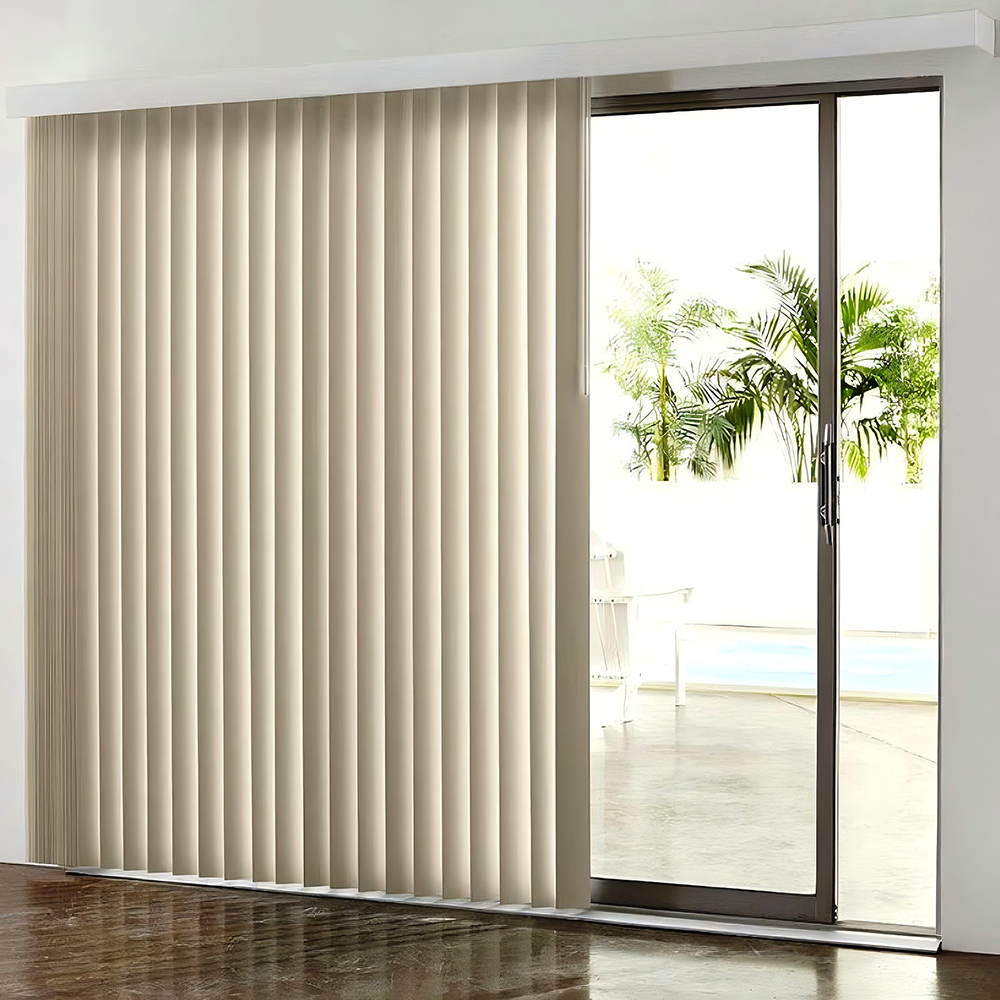
Vertical blinds consist of long, vertical slats hanging from a top track, sliding side to side and rotating to control light. Traditionally linked to office spaces, modern vertical blinds have evolved with sleek, minimalist designs, making them a popular choice for residential large windows, floor-to-ceiling glass walls, and sliding patio doors. Their vertical structure creates a distinct visual rhythm unmatched by horizontal styles.
Key Functional Comparison: Light Control & Privacy
Light regulation and privacy are the two most critical factors for window blinds, and the two styles deliver entirely different user experiences in these aspects.
• Horizontal Blinds: Precise, Customizable Light Management
When it comes to fine-tuned light control, Horizontal Blinds stand unrivaled. Their horizontal slats let users adjust angles incrementally, directing natural light upward toward ceilings for soft diffused illumination or tilting downward to block harsh direct sunlight. This precision is ideal for rooms requiring consistent, adjustable brightness, such as living rooms, studies, and bedrooms.
For west-facing windows that endure intense afternoon glare, horizontal blinds effectively filter harsh sunlight without darkening the entire room. In terms of privacy, their layered slat structure blocks street-level outdoor views perfectly while retaining soft ambient light. When fully closed, they achieve nearly complete room darkening, making them suitable for light-sensitive sleep environments.
• Vertical Blinds: Wide-Range Light Adjustment for Large Openings
Vertical blinds excel at covering expansive glass areas but offer less precise light control than horizontal alternatives. Their vertical slats rotate as a whole, providing broad light adjustment rather than subtle incremental tweaks. They excel at eliminating overall glare on floor-to-ceiling windows and sliding doors, maintaining uniform brightness across wide spaces.
For privacy, vertical blinds perform excellently in open layouts. Users can adjust slat angles to block sideways views from neighbors or passers-by while preserving panoramic outdoor scenery. The only downside is minor light gaps between individual slats, which prevent full blackout even when fully closed, making them less ideal for strict dark bedrooms.

Aesthetic & Spatial Visual Effects
Window treatments shape the visual perception of a room, and these two blind styles create opposite spatial illusions, which is a core factor in the final selection.
Horizontal Blinds deliver a grounded, classic, and tidy visual effect. Their horizontal lines visually widen narrow windows, balancing the proportion of tall, narrow window openings. They fit perfectly with traditional home decor, minimalist casual styles, and Nordic interiors, adding a warm, cozy touch to small and medium-sized rooms. Their compact structure avoids overwhelming indoor spaces, keeping window areas neat and streamlined.
Vertical Blinds feature extending vertical lines that visually stretch wall height, making ceilings look taller and spaces more open and airy. This makes them the top choice for modern luxury, minimalist, and industrial-style homes with high ceilings and large glass facades. Unlike horizontal blinds that divide window space horizontally, vertical blinds maintain the vertical integrity of floor-to-ceiling windows, preserving the sense of spaciousness in open-concept living rooms and balconies.
Practicality: Cleaning, Durability & Maintenance
Daily usability and long-term maintenance determine whether blinds are a practical long-term investment. Here, each style has its unique pros and cons.
Horizontal blinds have a major maintenance drawback: their flat horizontal slats easily accumulate dust, pet hair, and fine debris. Regular wiping is required to keep them clean, and gaps between stacked slats can hide grime that is hard to remove. In high-humidity areas like kitchens and bathrooms, wooden horizontal blinds may warp or deform over time, while low-quality aluminum styles are prone to bending and creasing after accidental collisions.
Vertical blinds are far more low-maintenance. Their upright slats barely collect dust, and air circulation between slats reduces dust accumulation significantly. A quick weekly wipe is enough to keep them spotless. Additionally, their hanging structure avoids friction with window sills, reducing wear and tear. The only minor flaw is that loose slats may sway and make slight rustling sounds in strong crosswinds, which rarely affect daily life but is worth noting for ultra-quiet bedroom environments.
Best Room-by-Room Applications
To simplify the selection process, the most suitable scenarios for Horizontal Blinds and Vertical Blinds are sorted out below based on practical residential usage needs:
• Choose Horizontal Blinds For These Spaces
Bedrooms: Precise light blocking and adjustable brightness create ideal sleeping environments, with full blackout options for shift workers and light sleepers. Studies & Home Offices: Accurate glare control prevents screen reflection, protecting eyesight during long working and studying hours. Kitchens & Bathrooms: Waterproof PVC and aluminum horizontal blinds resist moisture and oil stains, fitting small and standard-sized windows perfectly.
• Choose Vertical Blinds For These Spaces
Living Rooms with Large Windows: Vertical lines enhance spatial hierarchy, retaining panoramic views while softening harsh sunlight. Sliding Patio & Balcony Doors: Fully sliding vertical slats create completely unobstructed openings, convenient for daily access and ventilation. High-Ceiling Rooms: Elongated vertical lines optimize spatial proportion, avoiding the cramped feeling brought by traditional curtain designs.
Final Verdict: How to Choose Ultimately?
There is no absolute “better” option between Horizontal Blinds and Vertical Blinds—only more suitable choices for your space and habits.
Pick Horizontal Blinds if you have standard small-to-medium windows, prioritize precise light control and full privacy, prefer classic cozy decor, or need durable moisture-proof treatments for kitchens and bathrooms. It is the most cost-effective, versatile option for most ordinary residential windows.
Pick Vertical Blinds if you have floor-to-ceiling windows, sliding doors, or high-ceiling open spaces, pursue a modern minimalist aesthetic, or want low-maintenance window treatments with less dust accumulation. It transforms large glass areas into stylish, functional focal points of the room.
Window coverings serve as the subtle finishing touch that shapes a home’s temperament. Matching blind styles to window size, room function, and decoration style allows homeowners to easily balance beauty and practicality, creating a comfortable and tailored living space.
Post time: May-19-2026