Office spaces rely on more than just furniture and decor to create a functional, comfortable environment—window treatments play a critical role too. Venetian Blinds, with their sleek design, light control, and versatility, are a top choice for offices across industries, from open-concept workspaces to private meeting rooms. Rushed, uninformed, or incorrect installation, however, can turn this practical upgrade into a daily headache for facilities teams and employees alike.
Industry data and consultations with over 200 office window treatment projects—supporting businesses in urban CBDs and suburban tech parks with selection, installation, and maintenance—have identified five most common installation problems that plague office Venetian Blinds. Each issue is backed by real client cases, paired with actionable fixes to help avoid the same mistakes.
Incorrect Sizing: The Most Common Culprit (Case Study: A 50-Desk Open Office)
• The Problem
Sizing errors are the root cause of 60% of office Venetian Blinds installation issues. The mistake usually boils down to two extremes: oversizing (blinds are too wide/long for the window) or undersizing (blinds leave gaps that compromise privacy and light control).
A real case involved a 50-desk open-plan office in a major urban district. The client, a marketing agency, ordered custom Venetian Blinds without taking precise measurements, relying instead on the manufacturer’s “standard size” recommendation. When the blinds arrived, the 24-inch wide slat sets were 2 inches too narrow for each window. The gaps along the sides let in harsh sunlight and unfiltered views into the office, disrupting focus for remote workers and making it impossible to maintain privacy during client calls. Worse, the blinds’ mounting brackets couldn’t be adjusted to fit the window frame, forcing the team to drill new holes—damaging the window trim and delaying the office move-in by two weeks.
• Why It Happens
- Relying on manufacturer “standard sizes” instead of measuring actual window dimensions (not rough opening sizes).
- Failing to account for window trim, moldings, or wall protrusions (common in older office buildings).
- Ordering blinds before finalizing the window treatment hardware (e.g., valances, brackets) that affect fit.
• Practical Fixes
- Measure twice, order once: Use a tape measure to record width (left to right) and height (top to bottom) of the window opening, not the wall. For a precise fit, subtract 1/4 inch from the width to avoid rubbing, and add 1 inch to the height if mounting inside the frame.
- Account for trim/moldings: If office windows have decorative trim, measure the space between the trim edges instead of the window itself.
- Work with local installers: For custom-sized Venetian Blinds, partner with a supplier that offers on-site measurement services—this eliminates guesswork and reduces shipping/return delays.

Poor Mounting: Damaged Walls & Malfunctioning Blinds (Case Study: A Law Firm’s Private Meeting Rooms)
• The Problem
Mounting Venetian Blinds incorrectly might seem like a small oversight, but it can lead to structural damage, broken mechanisms, and safety hazards—especially in high-traffic office spaces.
A mid-sized law firm in a central business district installed faux wood Venetian Blinds in their 12 private meeting rooms. The in-house team chose to mount the blinds directly to drywall (instead of using wall anchors or wooden studs) to save time. Within three months, several blinds had fallen off the wall—one hitting a paralegal’s desk and cracking a laptop screen. Upon inspection, it was found that the drywall had compressed under the weight of the blinds, causing the screws to loosen and pull free. Additionally, the mounting brackets were installed at an angle, leading to crooked blinds that wouldn’t tilt or lift smoothly—a major issue for meeting rooms where light control is critical for presentations.
• Why It Happens
- Skipping stud detection: Office drywall is often thin and can’t support the weight of Venetian Blinds (especially wood or faux wood variants) without reinforcement.
- Using low-quality screws or hardware: Cheap, flimsy brackets and screws can’t withstand daily use (e.g., adjusting blinds multiple times a day).
- Mounting blinds too close to window sills or radiators: This restricts movement and puts extra stress on the lift cords and tilt wands.
• Practical Fixes
- Find the studs: Use a stud finder to locate wooden support beams behind the office wall. Mount brackets directly to studs for maximum stability—this is non-negotiable for heavy wood or faux wood Venetian Blinds.
- Use wall anchors if studs aren’t accessible: For drywall-only areas, use plastic or metal wall anchors rated for 10+ pounds (the weight of most office Venetian Blinds).
- Maintain clearances: Leave at least 2 inches of space between the blinds and window sills, radiators, or other obstructions to ensure smooth tilting and lifting.
- Invest in quality hardware: Opt for stainless steel or heavy-duty plastic brackets designed for commercial use—they cost 20-30% more than basic hardware but prevent costly replacements and damage.
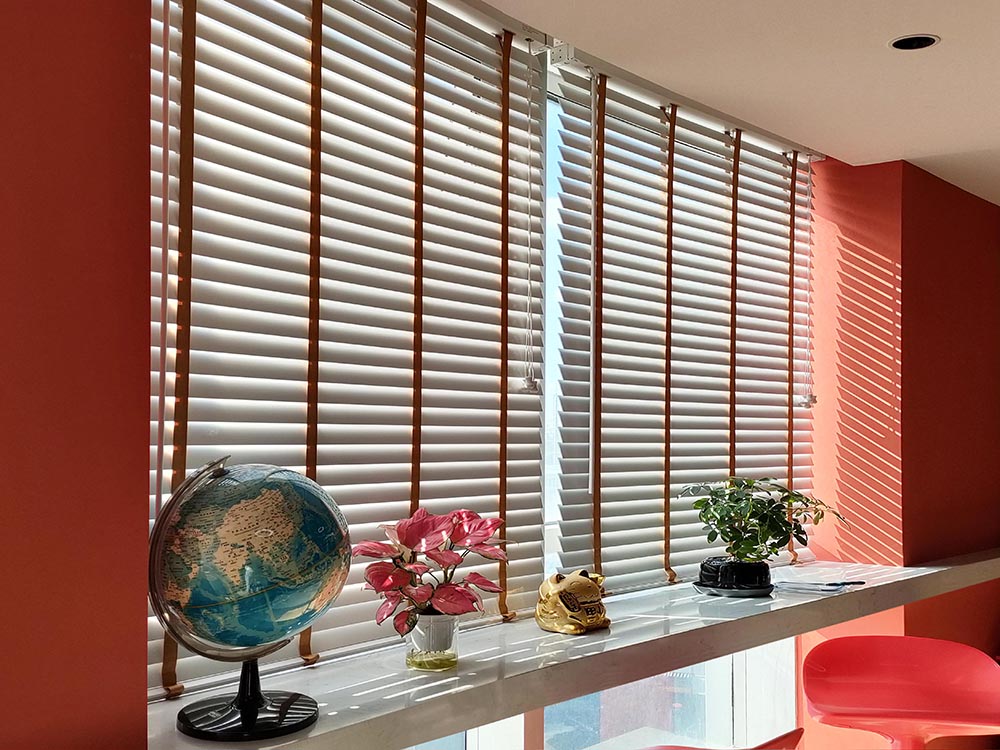
Wrong Material Selection for Office Environments (Case Study: A Tech Startup’s Server Room)
• The Problem
Not all Venetian Blinds materials are created equal—and choosing the wrong one for a specific office space can lead to rapid deterioration, safety risks, and wasted money.
A tech startup in a tech park faced issues after their server room Venetian Blinds failed within six months. The team had selected aluminum Venetian Blinds (a popular choice for offices) for their server room, which houses sensitive IT equipment that generates constant heat. However, they didn’t account for the room’s high temperatures (averaging 82–88°F year-round) and dust buildup. The aluminum slats, which are lightweight and thin, began to warp under the heat, causing the blinds to jam. Worse, the dust accumulated in the slat crevices shorted out a nearby server fan—posing a fire hazard. The startup had to replace all 18 blinds at a cost of over $1,200, plus downtime for the IT team to remove the faulty blinds.
• Why It Happens
- Choosing materials based on aesthetics alone, not the office environment’s conditions (e.g., humidity, temperature, dust).
- Ignoring the unique needs of specialized spaces (server rooms, break rooms, patient areas in medical offices).
- Failing to research material durability: For example, real wood Venetian Blinds are beautiful but prone to warping in humid offices, while PVC slats can yellow in direct sunlight.
• Practical Fixes
Match materials to space conditions:
- High-traffic, sunny offices: Choose aluminum or high-quality faux wood Venetian Blinds. Aluminum is scratch-resistant and easy to clean, while faux wood resists warping and UV damage.
- Server rooms/IT spaces: Opt for PVC-free aluminum Venetian Blinds with a dust-repellent coating. Avoid wood/faux wood, as they trap dust and warp in high heat.
- Hospitable/break rooms: Select waterproof faux wood blinds to resist spills and humidity from coffee machines or microwaves.
Avoid real wood in commercial offices: Unless it’s a low-traffic, climate-controlled private office, real wood Venetian Blinds will warp and crack from frequent use and temperature fluctuations.
Ignoring Safety Regulations (Case Study: A School’s Administrative Offices)
• The Problem
Office safety isn’t just about fire exits and first aid kits—it also includes window treatment safety, especially in spaces with children, employees with mobility issues, or high-traffic areas.
A K-12 school’s administrative offices required Venetian Blinds updates after the previous installation violated national safety standards for window coverings. The blinds used looped lift cords that hung freely from the slats—a major hazard for young students who might climb on desks or get tangled in the cords. Additionally, the tilt wands were made of thin plastic that snapped easily, creating sharp edges that could cause cuts. The school’s safety inspector flagged the blinds as a violation, forcing the district to halt all non-essential office upgrades until the issue was fixed.
• Why It Happens
- Overlooking local safety regulations: Many regions have strict rules for window coverings in public or educational spaces, mandating cordless designs or cord cleats to secure cords.
- Choosing corded blinds for high-traffic areas: Looped cords are a choking hazard for children and a tangling risk for employees with mobility aids.
- Using low-quality, uncertified hardware: Cheap tilt wands and cords can break easily, creating safety risks.
• Practical Fixes
- Opt for cordless designs: Cordless Venetian Blinds use a spring-loaded lift system or pull rods instead of cords, eliminating entanglement hazards. They’re ideal for offices with children, pets, or high foot traffic.
- Install cord cleats for corded blinds: If corded blinds are necessary, mount cord cleats 5 feet above the floor to secure the cords and keep them out of reach.
- Choose certified hardware: Look for blinds that meet national safety standards (e.g., ASTM F2822) and use durable, shatterproof materials for tilt wands.
- Consult safety inspectors: For public or commercial offices, reach out to local safety officials before installation to ensure compliance.
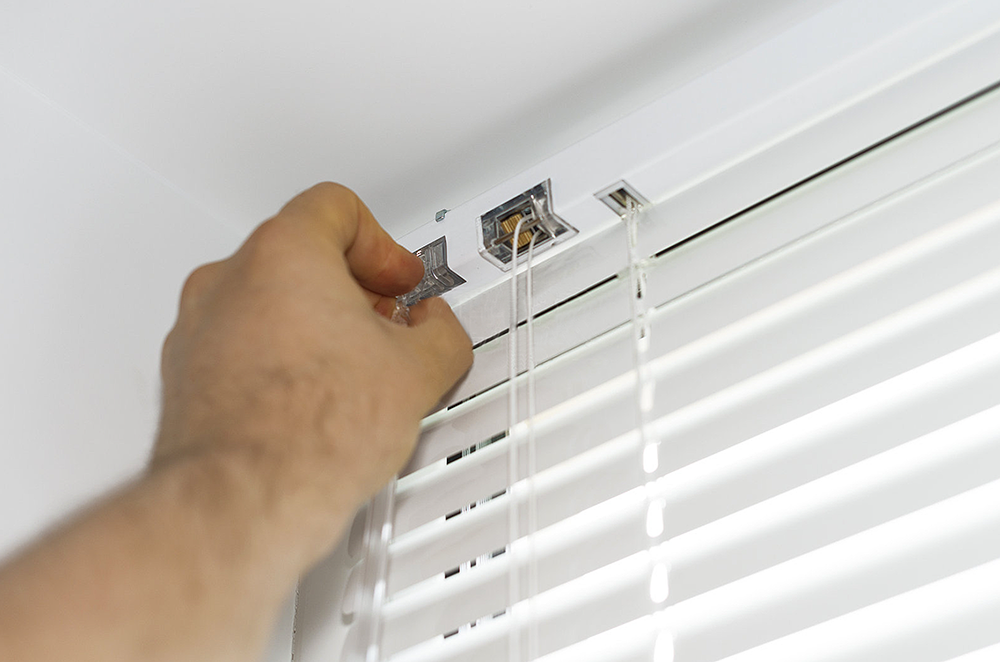
Neglecting Maintenance Post-Installation (Case Study: A Bank’s Customer Service Halls)
• The Problem
Installation doesn’t end once the blinds are hung—poor ongoing maintenance accelerates wear and tear, making even the highest-quality Venetian Blinds look shabby and dysfunctional.
A regional bank in a suburban business district had Venetian Blinds installed in their customer service halls two years prior. Despite being a low-traffic area (only customers entering the lobby), the blinds were covered in dust, sticky with coffee spills, and several slats were stuck in a tilted position. The bank’s facilities team admitted they’d never cleaned the blinds beyond a quick wipe-down once a month. The result? Blinds that looked unkempt, made it hard for customers to adjust light levels, and were on the verge of breaking—costing the bank a reputational hit and potential repair costs.
• Why It Happens
- Assuming office blinds are “maintenance-free”: Venetian Blinds, especially in public spaces, accumulate dust, dirt, and spills over time.
- Using incorrect cleaning methods: Harsh chemicals or excessive water can damage slats, warp wood, or strip aluminum finishes.
- Lack of a scheduled maintenance plan: Many offices don’t have a routine for cleaning or inspecting blinds, leading to neglected damage.
• Practical Fixes
Create a maintenance schedule: For office Venetian Blinds, follow this routine:
- Weekly: Dust slats with a microfiber cloth or vacuum (use a soft brush attachment) to prevent dust buildup.
- Monthly: Wipe slats with a damp cloth (mild soap and water for aluminum/faux wood; dry cloth only for wood).
- Quarterly: Inspect mounting brackets, cords, and tilt mechanisms for looseness or damage. Tighten screws or replace worn parts as needed.
Clean spills immediately: For coffee, soda, or food spills, blot the area with a damp cloth (avoid rubbing) and dry thoroughly to prevent stains and warping.
Avoid harsh chemicals: Skip bleach, ammonia, or abrasive cleaners—they can damage slat finishes and weaken materials. Use a mild, pH-neutral cleaner for tough stains.
Address small issues quickly: A loose screw or stuck slat might seem minor, but ignoring it will lead to more severe damage (e.g., a broken tilt mechanism) that’s costlier to fix.
Installing office Venetian Blinds isn’t just about picking a stylish design—it’s about choosing the right materials, measuring accurately, mounting safely, and maintaining the blinds for long-term use. The five problems outlined here are common, but they’re all avoidable with a little planning and attention to detail.
From the open office that suffered from sizing errors to the server room that dealt with wrong material choices, each case teaches a valuable lesson: office blinds installation is a project that requires care, not haste. By taking the time to measure correctly, use quality hardware, match materials to the space, comply with safety rules, and maintain the blinds regularly, businesses can ensure their Venetian Blinds enhance the office’s functionality and aesthetics—without the headaches of faulty installation.
Whether refreshing a single office or an entire workspace, investing in professional consultation (even for small projects) can save time, money, and frustration down the line. At the end of the day, office Venetian Blinds should work for the space—not against it.
Post time: Apr-16-2026