Kitchen window coverings face far harsher conditions than any other room in the home. Constant cooking grease fumes, lingering steam humidity, fluctuating high temperatures, and frequent food splatters make ordinary fabric curtains and wooden blinds impractical and short-lived. Most homeowners struggle with a common dilemma when renovating kitchen windows: choosing between PVC Venetian blinds and aluminum blinds, the two most mainstream hard window covering options for kitchen use. Both are marketed as waterproof, oil-resistant, and easy to clean, but their actual performance, durability, and daily maintenance differ greatly in real kitchen environments. In this practical guide, we conduct a detailed head-to-head comparison of the two popular horizontal venetian blinds, focusing on oil resistance, waterproof capability, heat tolerance, and long-term service life, to help you pick the most durable and cost-effective solution for your kitchen. We will also cover key selection and maintenance tips tailored for kitchen window blinds to avoid premature damage and frequent replacements.
Unique Environmental Challenges for Kitchen Window Blinds
Before comparing specific blind materials, it is essential to understand why kitchens eliminate most traditional window treatments. Unlike bedrooms or living rooms with stable temperature and clean air, kitchens have three core harsh conditions that test blind performance. First, persistent oil pollution from stir-frying and baking forms a thin, sticky grease film on window surfaces, which easily adheres to blind slats and gaps. Second, long-term steam from boiling and cooking creates high humidity, leading to damp accumulation and potential mold or corrosion issues. Third, continuous heat from stoves and ovens raises ambient temperatures, requiring window coverings to resist thermal deformation and aging. Only blinds with excellent waterproof, oil-proof, and high-temperature resistance can maintain a clean, intact look for years in this environment.
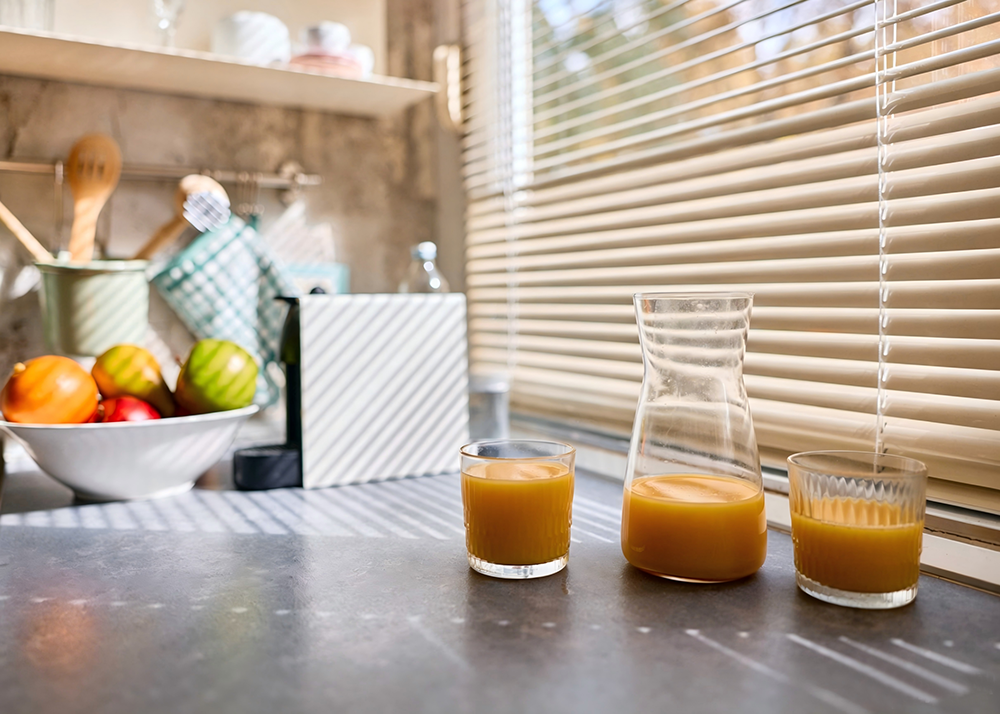
Head to Head Comparison PVC Venetian Blinds vs Aluminum Blinds
To help you make a targeted choice, we compare PVC Venetian Blinds and aluminum blinds from six core dimensions that matter most for kitchen use, combining real household usage feedback and material properties.
1. Oil Proof and Easy Cleaning Performance
Oil resistance is the top priority for kitchen blinds. PVC material features a dense, non-porous surface with no tiny gaps for grease to penetrate. Grease, oil splatters, and kitchen dust only stay on the surface of PVC Venetian Blinds, which can be completely wiped clean with a damp microfiber cloth and a small amount of neutral detergent. No stubborn oil stains will remain after regular cleaning. In contrast, aluminum blinds have a smooth metal surface but carry subtle electrostatic adsorption properties. They easily absorb fine oil fume particles in the air, and long-term accumulation forms a dull, sticky oil layer that is hard to wipe off thoroughly. Over time, aluminum slats will turn yellow and dim, affecting the overall kitchen aesthetics. For families who cook frequently with heavy oil, PVC venetian blinds show obvious advantages in anti-fouling and easy-clean performance.
2. Waterproof and Humidity Resistant Ability
Both materials are fully waterproof and will not rot or mold like wooden or fabric blinds. PVC is an inert polymer material with zero water absorption, capable of resisting long-term kitchen steam and humidity without deformation, swelling, or mildew growth. It maintains stable performance even in small, closed kitchens with poor ventilation. Aluminum blinds also have good waterproof properties, but metal materials are prone to oxidation in long-term humid environments. After one to two years of use, edge oxidation and tiny rust spots may appear on aluminum slats, especially near window sills prone to water accumulation. These subtle corrosion marks are difficult to repair and gradually reduce the service life of the blinds.
3. High Temperature Resistance and Anti Aging
This is the biggest difference between the two materials in kitchen scenarios. Pure aluminum metal has excellent high-temperature resistance, with no deformation, discoloration, or aging under normal kitchen cooking temperatures. It can withstand long-term heat radiation from stoves without performance changes, making it extremely heat-stable. Standard PVC Venetian Blinds are not suitable for high-temperature areas close to stoves. When exposed to sustained heat above 40 degrees Celsius, ordinary PVC slats are prone to slight warping, softening, and accelerated aging. Low-quality PVC blinds may even turn yellow and brittle after long-term heat exposure. However, upgraded heat-resistant PVC venetian blinds with high-temperature stabilizers can effectively avoid these problems and adapt to most conventional kitchen window layouts.
4. Texture Appearance and Light Control
In terms of decorative effect, PVC Venetian Blinds have a matte, soft texture with diverse color options, including white, beige, gray, and customized neutral tones. They can perfectly match modern, minimalist, and Nordic kitchen styles, creating a warm and clean indoor atmosphere. Aluminum blinds mostly present a cold metal luster, with single color options and a strong industrial feeling, which may appear abrupt in warm-style kitchen decorations. In terms of light control, both horizontal venetian blinds support precise slat angle adjustment to control light intake and protect privacy, with no obvious functional gap between the two.
5. Safety and Environmental Performance
Food safety and indoor environmental health are critical for kitchen spaces. High-quality PVC venetian blinds adopt food-grade environmentally friendly formulas, free of formaldehyde, peculiar smell, and harmful volatile substances. They will not release toxic gases even in high-temperature kitchen environments. Regular aluminum blinds are safe and non-toxic, but some low-cost products use recycled aluminum with unqualified surface coatings, which may peel off after long-term heat and humidity erosion, bringing hidden health risks. Both materials are flame-retardant and meet household fire safety standards, fully adapting to kitchen usage needs.
6. Cost and Long Term Durability
PVC venetian blinds have a more affordable price, with low daily maintenance costs and no risk of rust or oxidation. With correct maintenance, heat-resistant PVC blinds can stably serve kitchens for 5 to 8 years. Aluminum blinds have a slightly higher unit price and stable physical properties, but oxidation and oil adsorption will gradually reduce their service experience. Their actual replacement cycle is basically the same as qualified PVC blinds. For ordinary household kitchens, PVC venetian blinds have higher cost performance and lower long-term use costs.
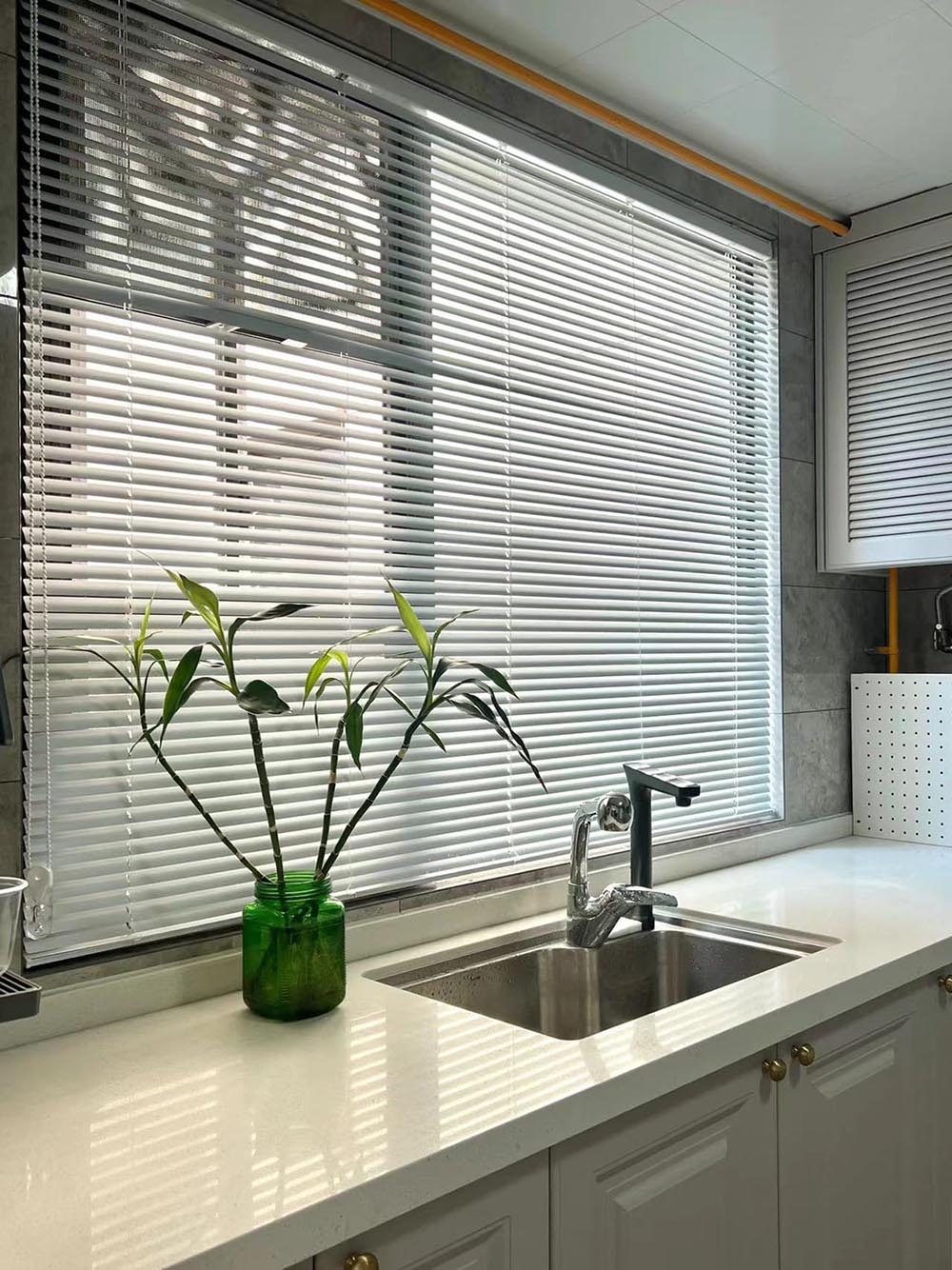
Verdict: Which Blind Is Best for Your Kitchen
After comprehensive performance comparison, we summarize targeted selection suggestions for different kitchen usage scenarios to help you make the most suitable choice. For most family kitchens with conventional cooking habits, especially Chinese-style kitchens with frequent stir-frying and heavy oil fume, PVC Venetian Blinds are the optimal choice. Their superior oil resistance, easy-clean features, diverse appearance, and cost advantages solve the core pain points of kitchen window maintenance, bringing a clean and low-maintenance experience. They are also the most suitable kitchen window blinds for small and medium-sized kitchens with ordinary temperature environments.
If your kitchen is an open layout with integrated dining and living spaces, or the window is extremely close to the stove and bears long-term direct high-temperature radiation, aluminum blinds are more suitable. Their outstanding high-temperature resistance can completely avoid thermal deformation and aging risks, ensuring long-term stable use in extreme heat environments. For families who rarely cook fried food and pursue simple industrial-style decoration, aluminum blinds are also a good alternative.
Practical Maintenance Tips to Extend Kitchen Blind Service Life
No matter which material you choose, scientific daily maintenance can effectively avoid premature damage and keep your blinds brand-new for years. For PVC Venetian Blinds, avoid placing them too close to high-temperature stove sources to prevent local thermal deformation. Clean the slat surface with a damp cloth every one to two weeks to remove floating oil fumes and avoid long-term grease accumulation. Never use strong alkaline or corrosive cleaners, which will damage the PVC surface protective layer.
For aluminum blinds, focus on anti-oxidation maintenance. Wipe off water stains and residual steam in time after cooking to avoid long-term damp retention on the slat edges. Regularly clean the adsorbed fine oil dust to prevent stubborn oil layers from forming and affecting the appearance. For both types of horizontal venetian blinds, keep windows ventilated after cooking to reduce indoor humidity and oil fume concentration, which is the simplest and most effective way to reduce aging and pollution.
Post time: Jun-04-2026