Venetian blinds are one of the most popular window treatments for modern homes, offices, and rental properties, thanks to their sleek look, adjustable light control, and budget-friendly pricing. Whether you have PVC Venetian blinds, aluminum Venetian blinds, or faux wood Venetian blinds, these versatile window coverings collect dust, kitchen grease, pet hair, and everyday grime faster than most homeowners realize. The biggest cleaning struggle most people face is simple: wanting spotless slats without accidental fading, peeling, bending, or surface scratches.
Many standard cleaning habits ruin Venetian blinds over time. Scrubbing with rough sponges, using harsh chemical cleaners, oversoaking slats, or rushing the drying process all lead to irreversible damage. Each blind material has unique tolerance levels for water, soap, and friction, meaning a one-size-fits-all cleaning method never works. In this guide, we break down safe, step-by-step cleaning routines for PVC, aluminum, and faux wood Venetian blinds, covering regular dusting, deep decontamination, and critical mistakes to avoid for long-lasting durability.
Understand Your Venetian Blind Material First
Before starting any cleaning task, identifying your blind material is non-negotiable. Using the wrong technique is the top cause of damaged residential blinds. Each material has distinct strengths and vulnerabilities that dictate safe cleaning practices.
• PVC Venetian blinds are lightweight, waterproof, and resistant to mold and mildew, making them ideal for bathrooms and kitchens. They handle mild water exposure well but are prone to micro-scratches and fading from abrasive cleaners or harsh bleach solutions.
• Aluminum Venetian blinds are ultra-durable, rust-resistant with proper care, and perfect for high-traffic spaces. Their thin metal slats bend easily under pressure, and harsh chemicals can strip their protective coating, leading to dull, patchy discoloration over time.
• Faux wood Venetian blinds mimic real wood aesthetics but are made from composite PVC materials. They are more water-resistant than natural wood blinds, yet vulnerable to excessive moisture. Oversoaking causes layered peeling, warped slats, and trapped mold between blind gaps, ruining their polished wooden finish.
Daily and Weekly Routine Cleaning
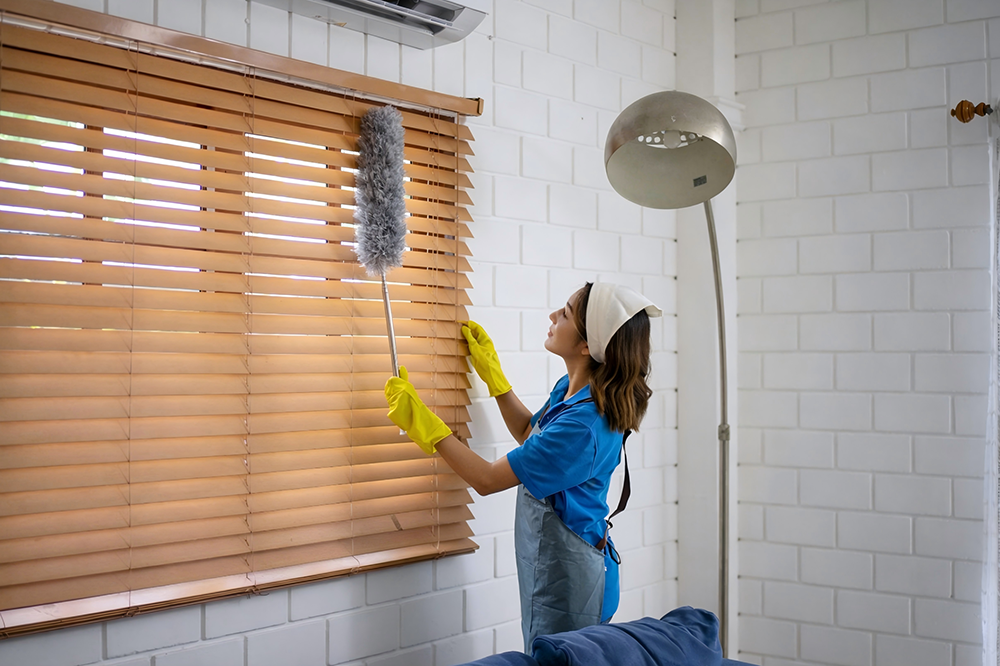
Consistent light cleaning eliminates the need for aggressive deep cleans and preserves the condition of your horizontal window blinds long-term. This quick routine works safely for all three materials and takes less than ten minutes per window.
Start by fully closing the Venetian blinds so all slats lie flat and exposed. Use a clean, dry microfiber cloth or a soft feather duster to wipe each slat from top to bottom in one steady direction. Avoid scrubbing back and forth, as this drags trapped dust across the surface and creates fine scratches.
For stubborn pet hair or fine dust stuck in gaps, use a vacuum cleaner with a soft brush attachment on low suction. Never use high suction settings, as they can bend thin aluminum slats or pull loose the coating on faux wood blinds. Once one side is complete, flip the slats to the opposite angle and repeat the dusting process to cover every surface.
We recommend this light cleaning routine once a week for homes with pets, open windows, or nearby road dust, and every two weeks for low-traffic rooms. This simple habit prevents dust buildup that hardens into tough grime over time.
Safe Deep Cleaning Methods for Each Blind Type
Routine dusting handles surface dirt, but deep cleaning is needed every three to six months to remove grease, sticky residue, and dulling film. Below are material-specific methods that deliver fresh, streak-free results without damage.
1. How to Clean PVC Venetian Blinds
PVC blinds are the most forgiving of the three materials, tolerating mild wet cleaning without warping or fading. For a quick deep clean without removal, mix one quart of lukewarm water with two drops of gentle dish soap—avoid concentrated formulas, bleach, or ammonia. Dip a microfiber cloth in the solution, wring it out completely until damp (not dripping), and wipe each slat individually.
For heavy kitchen grease buildup, add a small amount of white vinegar to the soapy solution to cut through sticky residue naturally. After wiping all slats, use a clean dry cloth to buff the surface and prevent water spots. For extremely dirty blinds, you can safely remove them and soak them in a bathtub filled with cool soapy water for 10 minutes. Gently scrub with a soft sponge, rinse thoroughly, and lay flat to air dry completely before rehanging.
2. How to Clean Aluminum Venetian Blinds
Aluminum blinds require gentle handling to avoid bent slats and stripped coatings. Never soak aluminum blinds or use abrasive scrubbers like steel wool or rough scouring pads. For deep cleaning, use the same mild soapy water solution as PVC blinds, paired with an ultra-soft microfiber cloth.
Wipe each slat slowly with light pressure, supporting the bottom of thin slats with your free hand to prevent bending. Avoid all harsh chemical cleaners, as they break down the factory-applied protective finish, leaving aluminum vulnerable to oxidation and dull discoloration. After cleaning, dry every slat immediately with a lint-free cloth to eliminate water marks. Aluminum blinds dry quickly, so there is no need for extended air drying.
3. How to Clean Faux Wood Venetian Blinds
Faux wood blinds demand the most caution during deep cleaning. While water-resistant compared to real wood, their composite layered structure traps moisture easily, leading to peeling, warping, and mold growth if over-saturated. Never soak faux wood blinds or allow standing water on slat surfaces.
Stick to a barely damp microfiber cloth with diluted mild soap solution. Wipe each slat gently, one at a time, and dry instantly with a clean towel. For tough stains, spot clean only instead of cleaning the entire blind surface. Avoid vinegar in high concentrations, as it can dull the faux wood finish over repeated use. Always work top to bottom to prevent dirty water from dripping onto already cleaned slats.
Most common blind cleaning mistakes to avoid
Most Venetian blind damage stems from avoidable cleaning errors, not normal wear and tear. These key mistakes shorten your blinds’ lifespan significantly:
• Using abrasive tools: Scrub brushes, rough sponges, and steel wool scratch PVC coatings, strip aluminum finishes, and scuff faux wood surfaces permanently.
• Oversoaking slats: Excess water causes faux wood peeling, aluminum spotting, and mold growth in blind hardware gaps. Even water-resistant PVC blinds develop water stains if left wet.
• Using harsh chemicals: Bleach, ammonia, and industrial cleaners fade colored blinds, break down composite materials, and corrode aluminum hardware over time.
• Rehanging damp blinds: Hanging blinds before full drying traps moisture, leading to mold, mildew, slat warping, and stuck adjustment mechanisms.
Frequently Asked Questions
Q1: Can I clean all Venetian blinds with the same water and soap mixture?
A: You can use a mild diluted dish soap solution for all three materials, but the application method differs drastically. PVC blinds tolerate light soaking, aluminum blinds need dry-wipe techniques with minimal moisture, and faux wood blinds require only barely damp cloth cleaning with immediate drying. A universal solution works, but a universal technique does not.
Q2: How often should I deep clean my Venetian blinds?
A: For standard residential homes, deep clean every 3 to 6 months. Kitchen blinds need monthly deep spot cleans due to grease buildup, while bathroom blinds benefit from quarterly deep cleans to prevent mildew. Routine dusting every 1–2 weeks keeps blinds fresh between deep cleans.
Q3: Why do my faux wood blinds peel after cleaning?
A: Peeling almost always comes from oversoaking, harsh chemicals, or delayed drying. Faux wood’s layered composite coating separates when exposed to excess moisture or corrosive cleaners. Always use minimal water and dry instantly to preserve the finish.
Q4: Is vacuuming safe for aluminum Venetian blinds?
A: Yes, when using a soft brush attachment on low suction. High suction bends thin aluminum slats, so avoid powerful vacuum settings. Vacuuming is one of the safest ways to remove loose dust without surface contact damage.
Cleaning Venetian blinds correctly does not require expensive tools or harsh chemicals—it only requires material-specific care and gentle consistency. By matching your cleaning method to your blinds’ material (PVC, aluminum, or faux wood), you can eliminate dust, grease, and stains completely while preserving the slats’ shape, color, and finish for years. Small daily and weekly maintenance prevents heavy buildup and avoids the need for risky aggressive cleaning. Follow these structured steps, avoid common mistakes, and your horizontal window blinds will maintain a crisp, brand-new look with zero damage.
Post time: Jun-05-2026