Kitchen blinds endure some of the toughest household wear and tear day in and day out. Unlike living room or bedroom window coverings, aluminum and vinyl kitchen blinds constantly accumulate cooking grease, food residue, dust, and sticky oil buildup from daily meal prep. Over time, this layered grime dulls the original surface finish, attracts more dust, and even creates unsightly discoloration that regular light wiping cannot fix.
Many homeowners and casual cleaners struggle with one common frustrating issue: attempting deep cleaning only to ruin their blinds permanently. Using harsh off the shelf cleaners or incorrect DIY solutions often leads to vinyl blind whitening, cloudy surface coating, scratched aluminum slats, and peeling paint on finished aluminum surfaces. The core problem is that most generic cleaning guides treat vinyl and aluminum blinds the same, despite their vastly different material tolerance and protective coating properties.
Why Kitchen Blinds Get Damaged During Improper Grease Cleaning
To clean safely and effectively, it is essential to understand why common cleaning mistakes cause irreversible damage. Aluminum and vinyl blinds both work well in high heat kitchen environments, but their protective outer layers react drastically differently to chemical cleaners and abrasive scrubbing.
Vinyl or PVC blinds feature a smooth, thin protective coating designed to resist daily dust and light stains. However, this coating is extremely vulnerable to oxidation and chemical corrosion. Strong alkaline, chlorine based, or abrasive cleaners eat away at the transparent top layer, resulting in permanent whitening, foggy discoloration, and brittle material degradation. Once the vinyl coating fades or turns white, no cleaning method can restore the original clear finish.
Aluminum blinds are more heat resistant and structurally durable, but they rely on a factory applied painted finish for corrosion protection and color consistency. Aggressive scrubbing with rough tools or harsh acidic cleaners scratches the paint layer, strips off surface coating, and leaves aluminum slats prone to oxidation, dark spots, and patchy peeling. Most damaged aluminum blinds end up ruined not from heavy grease, but from over cleaning with improper products.
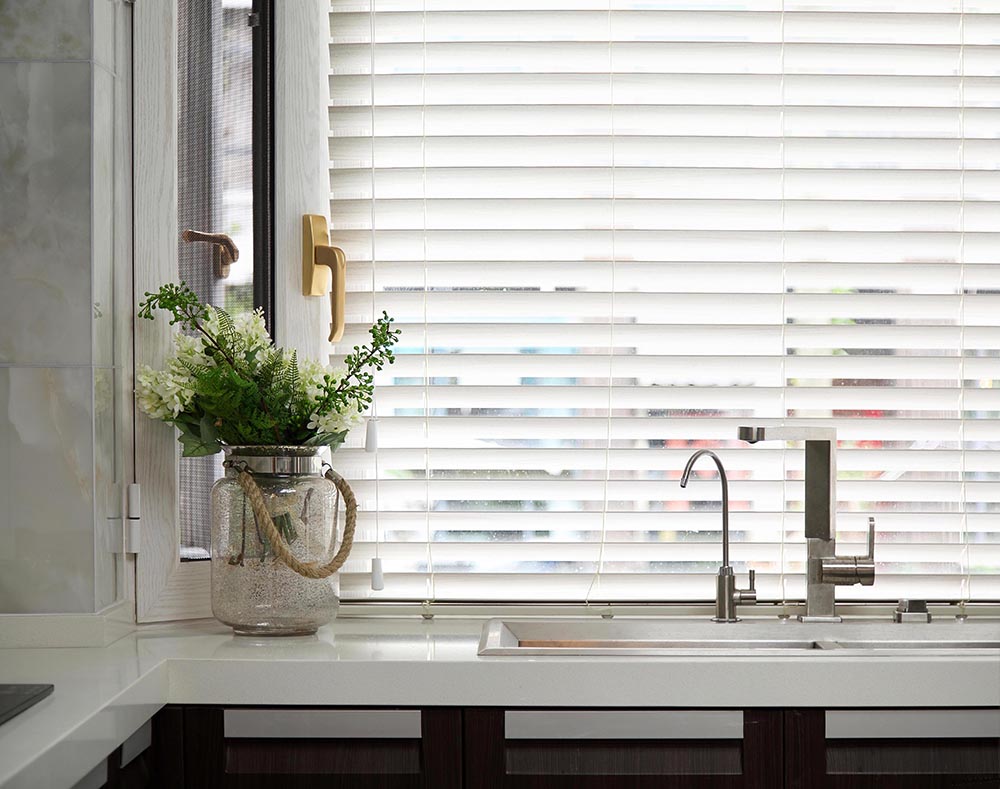
Safe Homemade Cleaning Solutions for Greasy Vinyl and Aluminum Blinds
The best kitchen blind cleaning solutions are affordable, non corrosive, and easy to mix with common household items. These DIY formulas effectively cut through light and heavy kitchen grease without compromising the original surface finish, perfectly suited for regular deep cleaning and seasonal maintenance.
• Gentle Solutions for Vinyl PVC Blinds
For light greasy film and daily dust buildup on vinyl blinds, a mild neutral solution works best. Mix one gallon of lukewarm clean water with one teaspoon of fragrance free mild dish soap. Avoid concentrated dish soap, as leftover residue will attract more dust and create stickiness. Dip a soft microfiber cloth into the solution, wring it out completely to avoid dripping water, and wipe each slat gently from top to bottom. This method removes surface grease without touching the vinyl protective coating.
For heavy, caked on kitchen grease that has built up over months, a diluted white vinegar solution delivers powerful degreasing results safely. Mix equal parts lukewarm water and white vinegar, and apply the solution to greasy areas with a soft sponge. Let it sit for three to five minutes to soften hardened oil residue, then wipe clean with a dry microfiber cloth. Vinegar’s mild acidic property breaks down grease molecules without corroding vinyl, preventing the whitening and clouding caused by chemical degreasers.
• Effective Deep Cleaning Recipes for Aluminum Blinds
Aluminum slats can tolerate slightly stronger degreasing treatments but still require gentle handling to protect painted finishes. For moderate grease buildup, the same mild dish soap water solution used for vinyl blinds works perfectly. For thick, layered cooking grease common above stoves and ranges, create a baking soda paste by mixing baking soda and a small amount of water into a thick spreadable consistency.
Apply the paste only to heavily stained areas, leave it for five minutes to dissolve tough grease, and wipe away gently with a soft bristled cleaning brush or microfiber cloth. Never scrub back and forth vigorously. After cleaning, wipe each slat with a clean damp cloth to remove baking soda residue and dry immediately. This method removes stubborn aluminum blind grease without scratching or peeling the factory paint finish.
Strictly Forbidden Cleaners That Ruin Blind Surfaces
Knowing what not to use is just as important as knowing how to clean correctly. Many popular household cleaners permanently damage aluminum and vinyl kitchen blinds and should be avoided entirely for blind maintenance.
Bleach and all chlorine based cleaners are the top cause of ruined vinyl blinds. Their strong oxidative properties chemically burn the vinyl protective layer, leaving irreversible white faded patches and making the material brittle over repeated use. Ammonia and heavy duty alkaline degreasers gradually strip painted aluminum coatings, causing uneven fading and peeling slats.
Abrasive scouring powders, steel wool, and stiff plastic brushes create microscopic scratches on both materials. These tiny marks trap more grease and dust over time, making future cleaning harder and permanently dulling the original smooth finish. Highly concentrated acidic cleaners also cause patchy corrosion and discoloration on both vinyl coatings and painted aluminum surfaces.
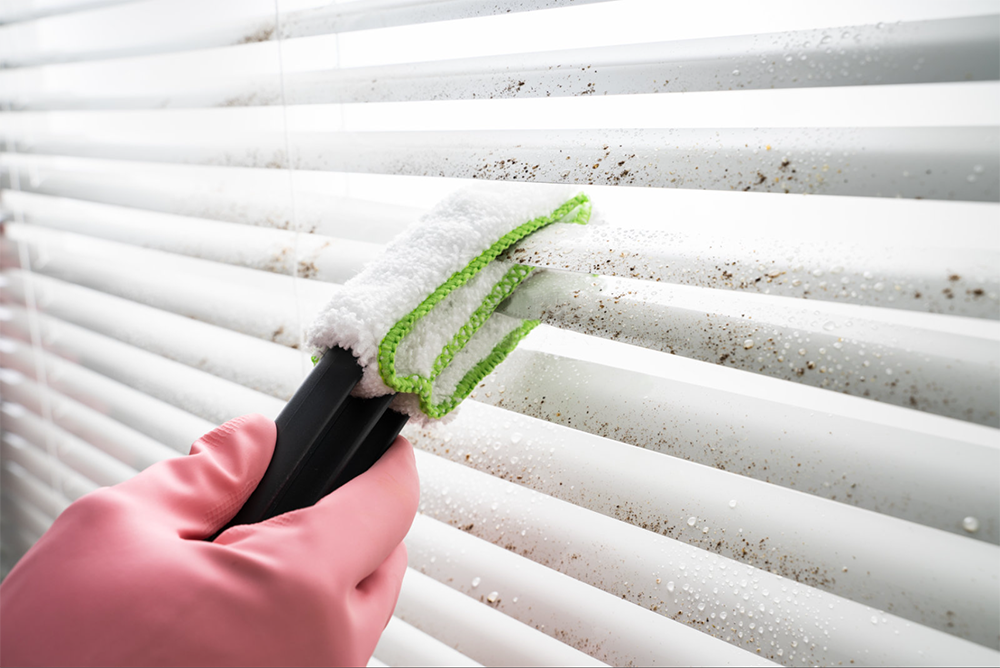
Pro Step by Step Deep Cleaning Process for Kitchen Blinds
Following a structured cleaning routine ensures thorough grease removal while protecting your blinds’ original condition. Start by fully extending the blinds and closing each slat flat to expose the entire surface. Use a dry microfiber duster to remove loose dust and dry debris first, which prevents muddy streaks when applying liquid cleaners.
Mix your chosen homemade cleaning solution according to your blind material and grease severity. Work section by section instead of soaking the entire blind at once. Wipe each slat gently, clean off all residue, and dry immediately with a fresh dry cloth. Avoid leaving damp slats to air dry naturally in direct sunlight, as rapid sun exposure can cause uneven fading and water spots on both aluminum and vinyl surfaces.
For extremely heavy grease buildup that does not lift after the first application, repeat the gentle cleaning process instead of using harsher products. Two rounds of mild cleaning are far safer than one aggressive chemical treatment for long term blind durability.
Frequently Asked Questions
Q1: What cleaners damage vinyl blind surface coating?
The most damaging cleaners for vinyl blinds include bleach, chlorine based solutions, pure ammonia, strong alkaline industrial degreasers, and abrasive scouring powders. These products erode the protective top coating of vinyl slats, leading to permanent whitening, foggy surface discoloration, material brittleness, and faded patches. Only mild neutral soap and diluted vinegar solutions are safe for regular vinyl blind cleaning.
Q2: How to remove heavy kitchen grease from aluminum slats?
To remove heavy caked on grease from aluminum slats, start with full dry dust removal. Apply a homemade baking soda paste or mild soapy water solution to stained areas and let it sit for several minutes to soften hardened grease. Wipe gently with a soft microfiber cloth or soft bristle brush, avoid aggressive scrubbing and harsh chemical cleaners, then wipe clean and dry immediately to protect the aluminum painted finish from peeling and scratching.
Q3: Can bleach be used to clean PVC vinyl blinds?
Bleach should never be used to clean PVC vinyl blinds. Its powerful oxidative formula destroys the vinyl protective coating on a molecular level, causing irreversible whitening and surface fogging. Consistent bleach use accelerates material aging, making vinyl slats brittle, prone to cracking, and permanently discolored with no repair solution available.
Simple weekly maintenance can drastically reduce heavy grease buildup and extend the lifespan of your kitchen blinds. A quick dry dusting or light wipe with a damp microfiber cloth removes fresh grease residue before it hardens into stubborn stains. Avoid waiting months for deep cleaning sessions, as layered aged grease requires harsher cleaning efforts and increases the risk of surface damage. With consistent gentle care and safe homemade cleaning solutions, aluminum and vinyl kitchen blinds can retain their original smooth finish and clean appearance for years.
Post time: Aug-03-2026