Choosing the right window blinds for residential or commercial spaces is far trickier than most people assume. Many homeowners and project buyers prioritize only appearance and upfront pricing, overlooking critical factors like humidity adaptability, long-term durability, and routine maintenance costs. This common mistake often leads to premature slat warping, surface discoloration, mold buildup, and frequent replacements, especially in high-moisture spaces such as kitchens, bathrooms, and coastal homes with humid year-round weather.
Faux wood blinds and solid wood blinds have long been two top-selling window treatment options for global residential and commercial projects. Both deliver authentic natural wood textures, sophisticated visual appeal, and versatile compatibility with modern, minimalist, and traditional interior designs. That said, their inherent material differences create significant gaps in moisture resistance, warp stability, service lifespan, and long-term cost efficiency. As a professional window blind manufacturer specializing in custom faux wood and solid wood blinds, we break down practical, real-world differences between the two popular window solutions, delivering actionable, scenario-based selection tips for all types of window decoration needs.
Understanding the Core Material Differences
The performance gap between these two popular blind styles stems entirely from their raw materials and manufacturing processes. Solid wood blinds are crafted from 100% natural wood materials, including premium basswood, oak, and maple. They retain the original porous fiber structure of natural timber, offering unrivaled organic texture and eco-friendly properties. However, this natural structure also creates inherent vulnerabilities, making solid wood blinds sensitive to humid conditions and frequent temperature fluctuations.
Faux wood blinds, also referred to as composite wood blinds, are engineered from high-grade PVC and natural wood powder composite materials. Using precision compression and premium surface coating technologies, these durable window blinds accurately replicate the grain, color, and tactile texture of genuine solid wood. Unlike porous natural wood, faux wood features a dense, seamless internal structure with no fiber gaps, delivering built-in moisture-proof and warp-resistant performance that natural wood cannot match.
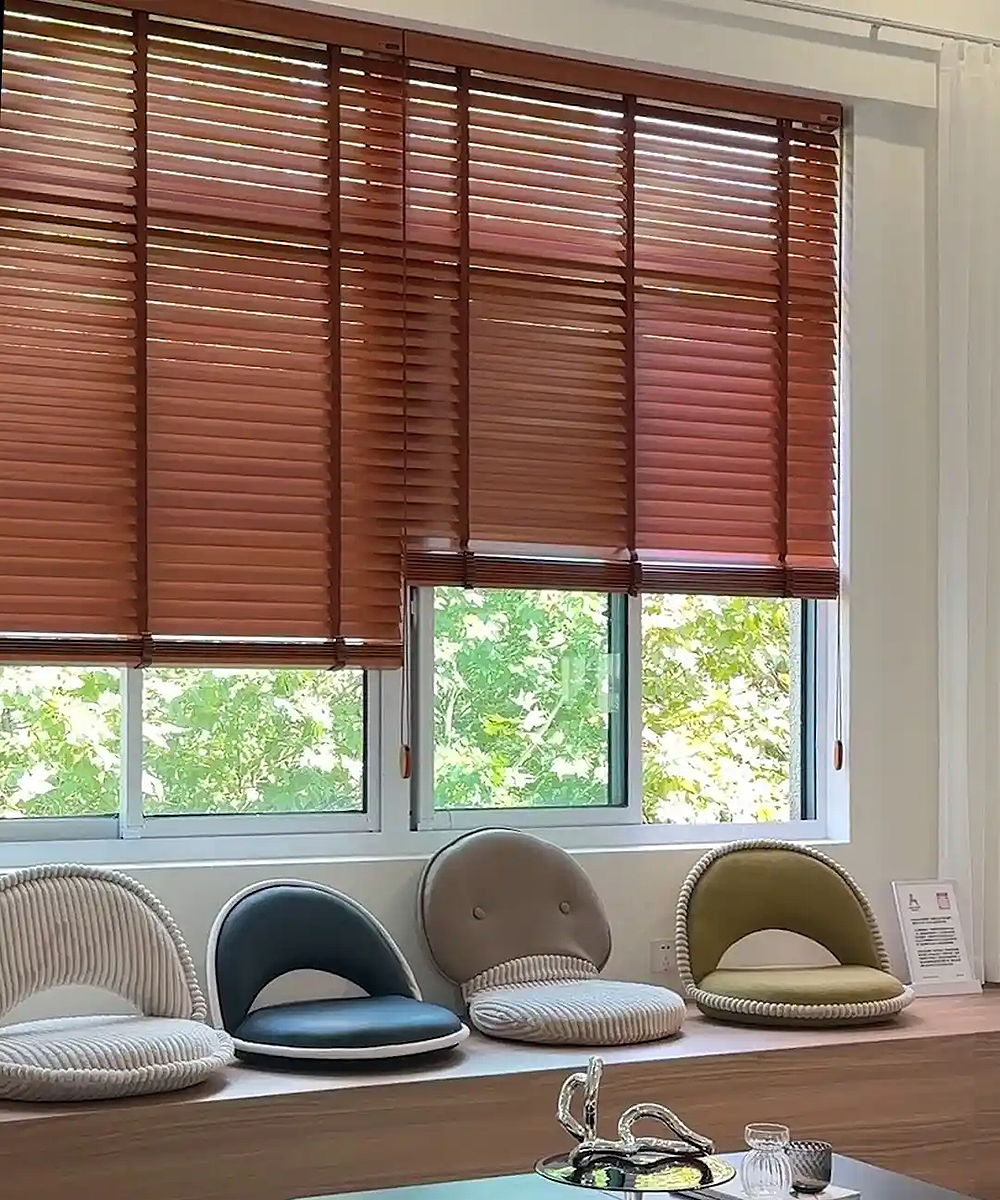
Moisture Resistance Performance in Daily Environments
Moisture damage is the leading cause of premature failure for household and commercial window blinds. Natural solid wood is highly hygroscopic, meaning it actively absorbs water vapor from the air in humid environments. Long-term moisture exposure causes wood fibers to expand unevenly, resulting in surface bulging, internal structural loosening, and irreversible material damage. In enclosed, moisture-prone spaces like bathrooms and kitchens, solid wood blinds are particularly susceptible to dark mold spots and mildew growth, which ruin aesthetic appeal and compromise indoor air quality over time.
Engineered faux wood composite materials eliminate the hygroscopic flaws of natural wood entirely. Its solid, compact structure effectively blocks water vapor penetration, allowing the blinds to maintain stable, intact performance in consistently humid environments. Whether during rainy seasons, in steamy indoor spaces, or coastal regions with persistent high humidity, faux wood slats will not absorb moisture, deform, or develop mold. This superior moisture resistance makes faux wood blinds the most reliable, low-fuss waterproof blinds for wet areas where solid wood blinds struggle to maintain durability and appearance.
Warping Risk and Long Term Stability
Sudden temperature shifts and ongoing humidity fluctuations are the primary culprits behind blind slat warping. Solid wood blinds are extremely responsive to environmental changes. Seasonal temperature swings, direct sunlight exposure, and fluctuating indoor ventilation trigger uneven shrinkage and expansion of wood fibers. For most unprotected solid wood blinds, visible bending, twisting, and warping occurs within six months to two years of use. This damage leads to operational issues, including uneven lifting, poor closure tightness, and reduced shading and privacy performance.
Faux wood blinds are industrially engineered with a balanced thermal expansion coefficient, making them immune to regular indoor temperature and humidity changes. Their sturdy, fixed composite structure maintains perfect flatness and flexible operation for years under standard household and commercial usage conditions. For windows exposed to direct sunlight, frequent heating and air conditioning cycles, or poor ventilation, warp-resistant faux wood blinds deliver far more consistent long-term stability compared to traditional solid wood blinds.
Upfront and Long Term Cost Comparison
Most buyers only evaluate upfront purchase costs while overlooking hidden long-term expenses, leading to inaccurate cost-effectiveness assessments. In terms of initial investment, solid wood blinds command higher prices due to premium raw material costs and intensive handcraft processing. High-end solid wood blinds crafted from imported timber with hand-polished finishes carry an even steeper upfront price tag compared to standard-spec faux wood blinds with identical color and styling.
The cost gap widens significantly over time when accounting for maintenance and replacement fees. Solid wood blinds require routine professional upkeep, including surface waxing, waterproof coating reapplication, and mold cleaning, to slow aging and prevent warping. Neglected solid wood blinds degrade rapidly, requiring frequent replacements that add substantial long-term costs. In stark contrast, faux wood blinds feature a smooth, stain-resistant surface that only requires simple damp-cloth cleaning, with zero need for professional maintenance. Their long service life and maintenance-free design make them the most cost-effective window blinds for long-term residential and commercial use.
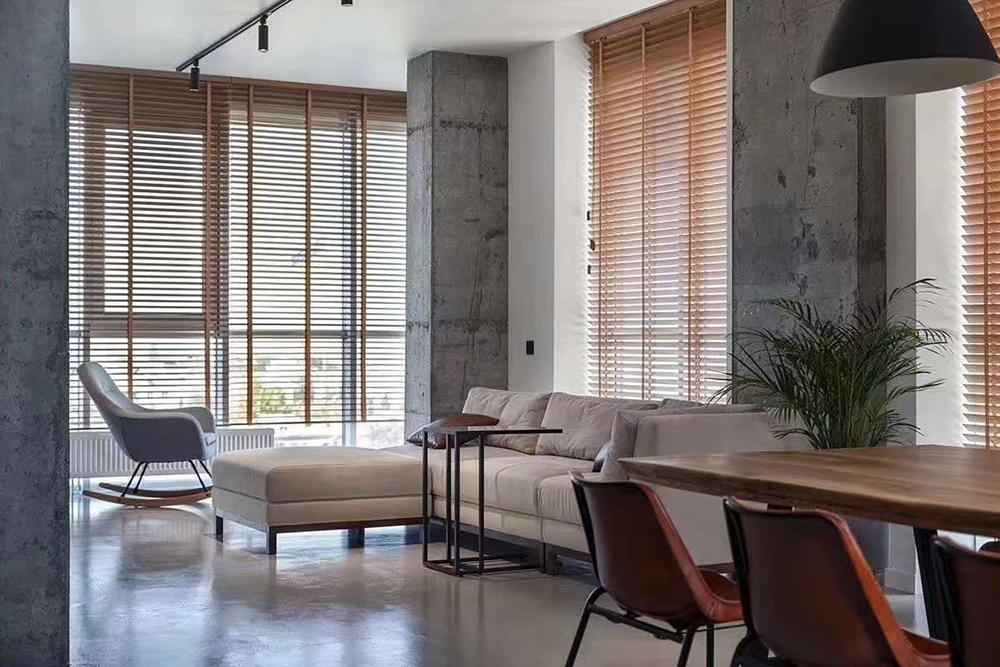
Suitable Application Scenarios for Two Blind Types
No single blind type suits every space—optimal selection depends entirely on usage environment and functional needs. Solid wood blinds stand out for their authentic organic texture, eco-friendly composition, and high-end decorative value. They are ideal for dry, temperature-stable indoor spaces such as bedrooms, living rooms, studies, and upscale office interiors. The warm, natural wood grain elevates overall interior aesthetics, making solid wood blinds a top choice for luxury residential renovations and high-end custom interior projects.
Faux wood blinds prioritize practicality, durability, and cost efficiency for high-demand environments. They are the perfect waterproof, warp-proof window solution for high-humidity and high-wear spaces, including residential bathrooms, kitchens, outdoor balconies, coastal property windows, hotel public areas, and commercial office buildings. For bulk project procurement and commercial clients, faux wood blinds offer a balanced combination of reliable quality, low long-term maintenance, and reasonable pricing, effectively reducing after-sales issues and operational complaints for large-scale decoration projects.
Frequently Asked Questions
Q1: Which blinds last longer in humid bathrooms, faux wood or solid wood?
Faux wood blinds have a far longer service life in humid bathroom environments. Solid wood absorbs moisture easily and tends to mold and warp in wet conditions, requiring frequent maintenance or replacement. Premium composite faux wood blinds are fully waterproof and moisture-proof, maintaining stable performance for years without deformation, making them the most durable bathroom window blind option on the market.
Q2: Does solid wood blind cost more on long term maintenance?
Yes, solid wood blinds generate obvious long term maintenance costs. They need regular waxing, coating protection, and mold cleaning to prevent aging and warping. Faux wood blinds require almost no professional maintenance, only daily simple cleaning. Over five to ten years of use, the comprehensive cost of solid wood blinds is much higher than faux wood blinds despite similar initial visual effects.
Q3: Why do solid wood slats warp easier than PVC faux wood?
Solid wood has natural porous fiber structures that absorb and release air moisture with environmental changes, causing uneven expansion and contraction. Long-term sunlight exposure and temperature differences further aggravate structural deformation. PVC-based faux wood blinds feature a dense and integrated synthetic structure with a fixed expansion coefficient, which will not produce physical deformation under conventional indoor environmental changes, effectively avoiding common slat warping issues.
Q4: Are faux wood blinds visually similar to real wood blinds?
Modern high-quality faux wood blinds can perfectly simulate natural wood grain, color, and tactile texture. From daily viewing distance, it is nearly impossible to distinguish them from real solid wood blinds. With advanced surface printing and embossing manufacturing technology, our custom faux wood products can meet most residential and commercial decoration aesthetic needs without sacrificing visual appeal.
Post time: Jul-28-2026