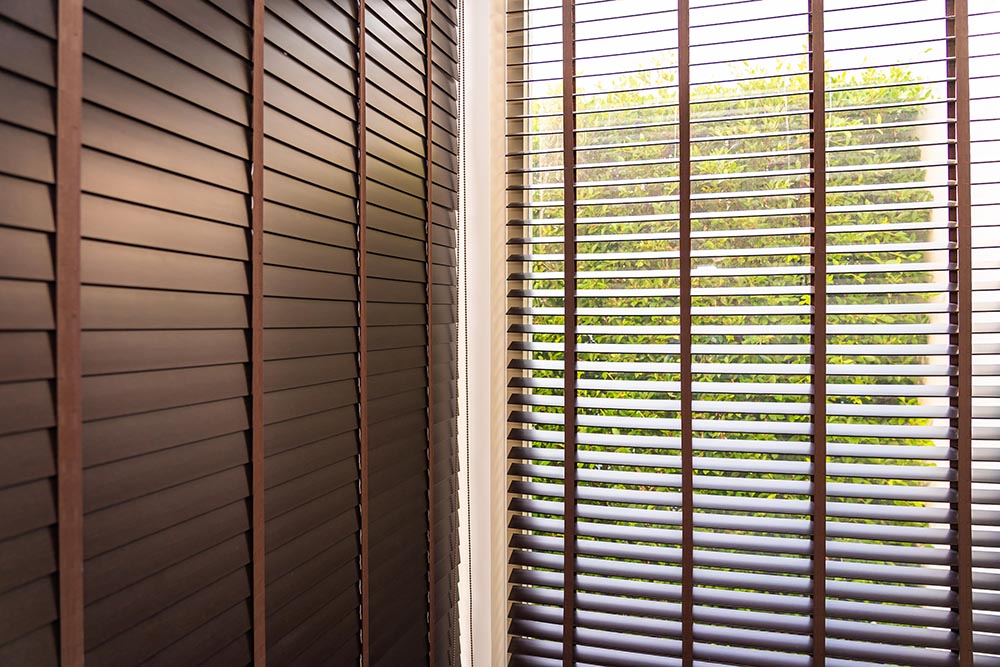
Faux wood Venetian blinds are one of the most popular window covering choices for modern households and commercial spaces. Combining the natural aesthetic of real wood with the waterproof, budget-friendly advantages of synthetic materials, these faux wood Venetian blinds perfectly balance beauty and practicality. Compared with solid wood Venetian blinds, they resist moisture, fading, and insect damage, making them ideal for kitchens, bathrooms, and coastal residences with high humidity.
However, many homeowners encounter two annoying common issues after one to three years of use: slat warping and surface peeling. Deformed slats fail to close or align evenly, ruining the neat look of windows, while peeling coatings create messy flaky residues that accumulate dust and affect indoor cleanliness. Most people blame poor product quality blindly, but in fact, these problems mostly stem from improper use, harsh environmental conditions, or incorrect daily maintenance. This article will break down the core causes of warping and peeling of faux wood Venetian blinds and share actionable, beginner-friendly maintenance and repair solutions to help you extend the service life of your horizontal window blinds and restore their original appearance.
Core Causes of Warping and Peeling on Faux Wood Venetian Blinds
Faux wood Venetian blinds are mainly made of PVC or wood-plastic composite materials with a surface protective coating. Their structural characteristics determine that they are durable in conventional environments but vulnerable to damage under extreme temperature, humidity, and external force conditions. The root causes of the two major faults are classified and analyzed below.
1. Primary Causes of Slat Warping
Slat warping refers to bending, twisting, or uneven tilting of the horizontal blind slats, which is the most common damage for faux wood window blinds. The biggest culprit is extreme and fluctuating temperatures. In summer, long-term direct sunlight through glass produces greenhouse heat, raising the local temperature of window surfaces far above room temperature. Faux wood materials soften when overheated, and the slats gradually bend under their own weight or uneven thermal stress. Dark-colored faux wood Venetian blinds absorb more heat, making them more prone to warping than light-colored ones.
Heat sources near windows also cause irreversible deformation. Many families install heating radiators, floor heating vents, or kitchen stoves close to windows. Continuous hot air blowing on the slats for a long time disrupts the internal molecular structure of the synthetic material, leading to permanent bending. In addition, unreasonable installation and storage are easily overlooked causes. Tight installation that squeezes slats, long-term stacking pressure during decoration, or frequent collisions and extrusion will leave subtle deformations, which become more obvious over time.
2. Key Reasons for Surface Peeling
The smooth and wear-resistant coating is the core protective layer of faux wood Venetian blinds, and peeling means the complete failure of surface protection. The primary cause is long-term high humidity and moisture erosion. Although faux wood materials are waterproof, excessive humid steam in bathrooms and kitchens will penetrate the tiny gaps at slat edges and coating joints. Over time, the bonding force between the coating and the base material weakens, causing bulging, cracking, and finally peeling.
Improper cleaning habits are another major trigger. Many users mistakenly use boiling water, strong alkaline detergent, or high-pressure steam cleaning to remove oil stains and dust. These harsh cleaning methods corrode the surface coating, destroy its anti-ultraviolet and wear-resistant properties, and lead to flaking. Moreover, long-term ultraviolet radiation accelerates coating aging. UV rays break down the surface protective layer, making it brittle, faded, and easy to peel off when rubbed. Low-quality blinds with thin and uneven coatings will show peeling problems in a shorter time.
Practical Maintenance Solutions to Fix and Prevent Damage
Most warping and peeling problems of faux wood Venetian blinds can be improved or completely avoided through scientific maintenance. The following targeted solutions are suitable for daily household operations, no professional tools are required, and they are highly efficient and zero-cost waste.
1. Improvement and Prevention Methods for Warped Slats
For slightly warped slats, timely adjustment can restore their flatness. First, open the blinds completely to let all slats fully receive natural air circulation, avoid closed and heated environments. Place the warped slats in a cool and ventilated place, use slight natural gravity to reshape them, and never forcibly bend or press them, which will cause secondary creases and permanent distortion.
Daily prevention is the key to avoiding re-warping. In hot summer, do not let the blinds fit tightly against the glass for a long time. Appropriately tilt the slats to reserve a gap for air circulation, which can dissipate accumulated heat effectively. Keep heating vents, radiators, and other heat sources at least 30 centimeters away from the blinds to avoid long-term hot air baking. For windows with strong sunlight all year round, installing low-transmittance window film can reduce heat and UV radiation, fundamentally slowing down thermal deformation of slats.
2. Repair and Maintenance Skills for Peeling Coatings
For local slight peeling, you can trim the flaky loose parts with small scissors first, then wipe the slat surface with a dry soft cloth to remove dust and residual debris, and apply a small amount of furniture surface repair glue for minor bonding and smoothing. It is worth noting that if the peeling area exceeds one-third of a single slat, it is recommended to replace the individual slat instead of continuing repair, to avoid affecting the overall aesthetics and service life.
Scientific daily cleaning is the best way to prevent peeling. Develop a regular dust removal habit: use a feather duster or a microfiber cloth to wipe the slats weekly to prevent dust accumulation and abrasive wear on the coating. For kitchen oil stains and bathroom water stains, use a soft cloth wrung dry with diluted mild neutral detergent, wipe gently along the slat texture, and dry immediately after cleaning. Never use corrosive cleaners, steam cleaners, or soak the blinds in water, which are the main killers of faux wood coatings.
3. Long-term Daily Maintenance Rules for Faux Wood Venetian Blinds
First, maintain a stable indoor environment. Keep indoor humidity between 40% and 60% for a long time, use a dehumidifier in humid seasons, and avoid long-term damp steam wrapping the blinds. Second, avoid external force damage. Do not pull the lifting rope violently or twist the slats randomly when adjusting the blinds, to prevent loose structure and deformed slats. Third, conduct regular inspection and maintenance. Check slat flatness, coating integrity, and rope flexibility every quarter, and deal with minor problems in time to avoid small defects expanding into large-scale damage.
Frequently Asked Questions (Q&A)
Q1: Can severely warped faux wood Venetian blinds be fully repaired?
A: Severely deformed slats with obvious bending and twisting cannot be fully restored to their original flatness. The internal material structure has been permanently damaged, and forced correction will cause cracking or breakage. It is more cost-effective to replace individual damaged slats directly than to repair them.
Q2: How often should faux wood horizontal window blinds be cleaned?
A: For ordinary living rooms and bedrooms, weekly dry dust removal and deep wet cleaning every 2–3 months are sufficient. For high-pollution areas such as kitchens and bathrooms, deep cleaning is recommended once a month to avoid long-term accumulation of oil stains and water stains corroding the coating.
Q3: Are faux wood Venetian blinds suitable for all window environments?
A: They are suitable for most indoor scenarios, especially humid spaces where solid wood blinds cannot be used. But they are not recommended for windows with long-term high-temperature baking (such as south-facing windows with continuous intense sunlight or windows close to high-power heat sources). You can install sunshade accessories to reduce heat stimulation if installation is necessary.
Q4: What is the main difference between faux wood and solid wood Venetian blinds in maintenance?
A: Solid wood blinds are afraid of water and humidity, requiring regular wax maintenance, while faux wood types are moisture-resistant and wax-free. The core maintenance focus of faux wood Venetian blinds is heat insulation and anti-corrosion cleaning, while solid wood ones focus on moisture-proof and anti-drying cracking.
The warping and peeling of faux wood Venetian blinds are not irreparable quality defects, but are mostly caused by extreme temperature and humidity environments and incorrect daily maintenance. As a durable and cost-effective horizontal window blind product, its service life can reach 8–15 years with standardized maintenance. By avoiding high-temperature baking and excessive humidity, mastering correct cleaning methods, and doing daily inspections and protection, you can completely solve common damage problems, keep the blinds flat, smooth, and beautiful for a long time, and maximize their use value.
Post time: Jun-16-2026