Kitchen window coverings take more abuse than any other window treatment in a residential home. Day after day, cooking releases fine grease particles, warm steam, and fluctuating high heat that slowly degrade inferior blinds. Unlike bedroom and living room windows that only collect minor dust, kitchen windows endure constant exposure to moisture and oily residue all year long. Many homeowners prioritize cohesive interior design and opt for elegant solid wood or standard faux wood blinds to elevate their kitchen aesthetics. While these wood-style blinds look stunning right after installation, they quickly develop a host of annoying issues. Sticky caked-on grease, irreversible yellowing and discoloration, bent and warped slats, hidden mold growth, and frequent expensive replacements become recurring headaches that waste both time and household money.
When shopping for kitchen blinds, functionality should always come before pure aesthetics. Solid wood and basic faux wood blinds offer a warm, inviting tone perfect for dry, low-traffic rooms, but they are simply not built to handle the harsh, messy conditions of active cooking spaces. Countless homeowners fall into the trap of choosing stylish yet impractical blinds, only to face excessive upkeep and premature replacement within a couple of years. On the flip side, aluminum and vinyl blinds are engineered specifically for kitchen environments. They deliver dependable grease resistance, steady heat endurance, and fuss-free cleaning, resolving the most common pain points kitchen owners face with window treatments.
Why Solid Wood and Ordinary Faux Wood Blinds Fail in Kitchens
The fundamental reason solid wood and ordinary faux wood blinds fail in kitchens is their inherently porous structure. Natural wood features countless microscopic open pores that actively trap airborne grease, water vapor, and kitchen humidity every time you cook. Even mainstream faux wood alternatives, despite being man-made, retain this porous build with no fully sealed protective barrier. This critical design flaw leaves the material completely susceptible to oil stains, moisture damage, and heat-related wear that plagues everyday kitchen use.
With consistent daily cooking, tiny floating grease particles settle evenly across blind slats and sink deep into porous gaps. Standard surface wiping with cloths or household wipes only removes superficial residue, leaving thin layers of grease trapped inside the material. Over months and years, this embedded grease oxidizes, leaving dull, yellowed or brown permanent stains that cannot be cleaned away. To make matters worse, trapped grease paired with kitchen moisture creates a damp, dark environment ideal for mold and mildew growth. This leads to persistent musty odors and can even compromise indoor air quality in your home.
High kitchen temperatures amplify all these grease-related problems. Stove-side windows are constantly exposed to steady heat during daily meal prep, from quick breakfasts to elaborate dinners. Continuous thermal exposure causes porous wood and faux wood slats to absorb heat unevenly, triggering gradual internal expansion. Over time, this subtle expansion results in obvious physical damage, including slat warping, edge curling, and surface cracking. Deformed slats disrupt the internal tilting mechanism, leading to uneven light gaps and incomplete closure. Unlike fixable surface dirt, heat-induced structural damage is permanent, leaving full blind replacement as the only viable solution.
Beyond poor durability, wood and faux wood blinds require rigorous, ongoing maintenance to stay functional. Homeowners need frequent deep cleaning, regular surface polishing, and strict humidity control to slow grease buildup and thermal deformation. For busy modern families and frequent home cooks, this repetitive upkeep adds unnecessary chores to already packed schedules. When accounting for cleaning time, minor repair fees, and routine full replacements, seemingly affordable wood-style blinds turn into a costly, impractical choice for any window near stoves or active cooking zones.
Vinyl Blinds: Low Maintenance Grease Proof Solution for Kitchens
Vinyl blinds have emerged as a top-tier residential kitchen option, all thanks to their fully sealed, non-porous construction. Unlike wood and faux wood with open pores, solid vinyl slats feature a tight, uniform structure with zero penetration gaps. Cooking grease, water droplets, and floating food fumes never sink into the slat interior. Every kitchen mess stays strictly on the surface, completely eliminating permanent staining, internal mold growth, and stale grease odors that ruin traditional kitchen blinds.
The ultra-simple cleaning routine is what makes vinyl blinds perfect for busy households. No specialized cleaners, professional tools, or strenuous deep scrubbing is required for upkeep. Daily maintenance takes mere seconds: a soft damp microfiber cloth easily wipes away surface grease, dust, and light food residue. For heavier oil buildup from frequent stir-frying and high-heat cooking, a small amount of mild household detergent works flawlessly without scratching, fading, or damaging the vinyl material.
Vinyl also offers stable, reliable heat resistance tailored for standard household kitchen conditions. The material does not absorb ambient cooking heat, so slats never swell, warp, or crack under regular temperature fluctuations. Its flexible yet sturdy build retains its shape and smooth tilting function for years with minimal intervention. Blending budget-friendly pricing, zero complex maintenance, and consistent everyday grease resistance, vinyl blinds stand out as the most practical, cost-effective solution for standard home kitchens.
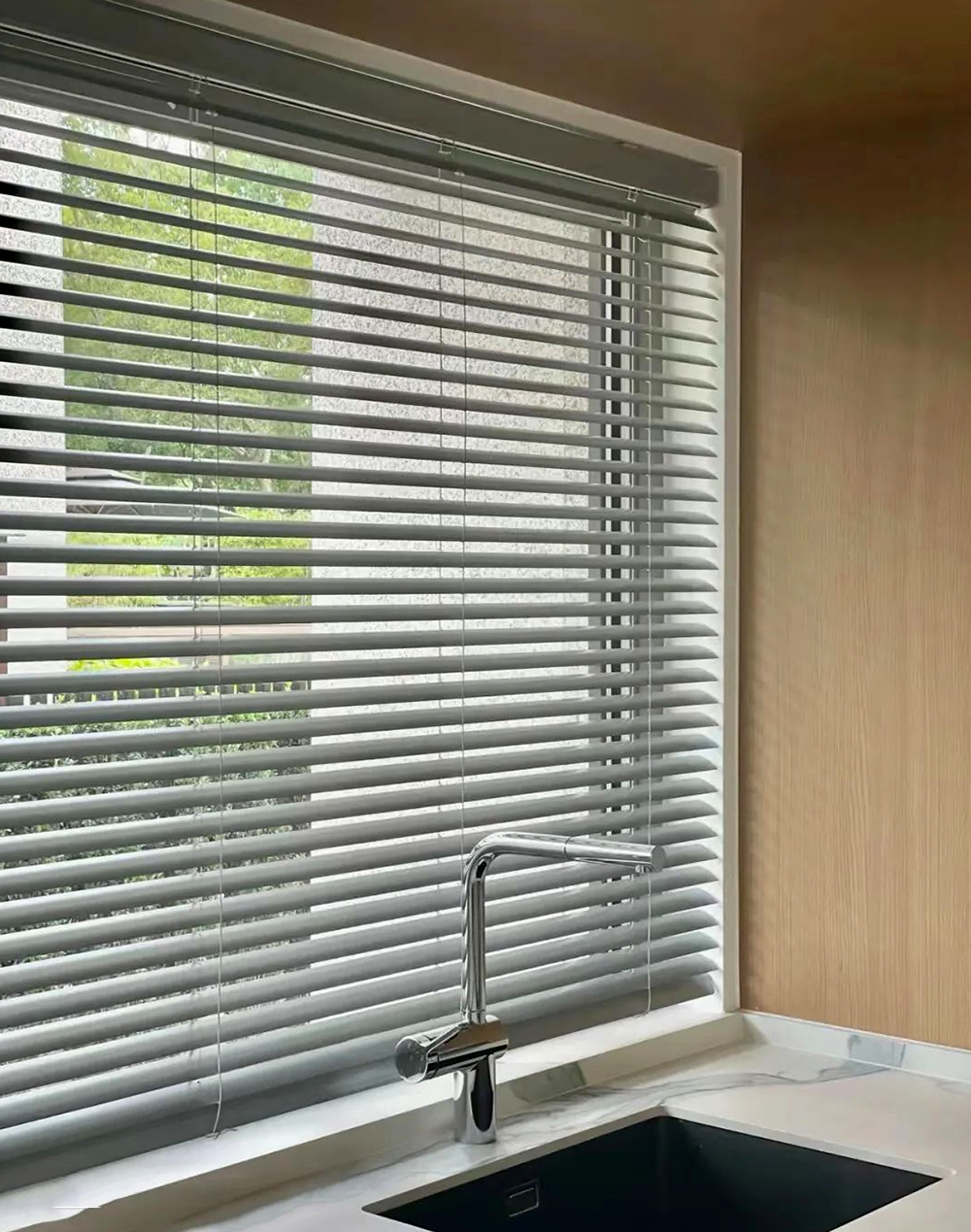
Aluminum Blinds: Heavy Duty Heat and Grease Resistant Performance
For high-traffic family kitchens, open-concept homes, and households that regularly cook heavy, high-heat meals, aluminum blinds deliver unrivaled heavy-duty performance. Built with dense, precision-crafted metal slats and a premium protective coating, aluminum features a smooth, completely non-porous surface that blocks all grease, moisture, and fume penetration. No daily cooking residue can seep into or damage the material’s internal structure, ensuring long-term structural stability.
Superior heat resistance sets aluminum blinds apart from all other kitchen blind materials. They effortlessly withstand persistent stove-side warmth and sudden spikes of high cooking heat without deforming, fading, or premature aging. Unlike softer vinyl, aluminum boasts impressive scratch and abrasion resistance. It holds up perfectly to accidental bumps, frequent cleanings, and long-term heavy use, preserving its sleek finish and structural integrity for a decade or longer.
Aluminum blind maintenance is just as effortless as vinyl upkeep. Its smooth coated finish actively repels grease and dust, preventing sticky residue from bonding tightly to the surface. A quick wipe with a dry or slightly damp cloth is enough to keep slats clean and glossy day-to-day. Even thick, accumulated cooking grease lifts easily with mild cleaning products, with zero risk of surface damage. Thanks to their exceptional durability, aluminum blinds are a worthwhile long-term home investment, eliminating the recurring cost and hassle of replacing low-quality wood and faux wood blinds every few years.
Frequently Asked Questions
Q1: Why should you avoid solid wood blinds next to kitchen stoves?
A: Solid wood blinds have porous textures that trap cooking grease and kitchen moisture deep inside the slats. Continuous stove heat causes wood slats to swell, warp, crack, and discolor permanently. Embedded grease leads to mold growth and unpleasant odors, and the material requires intensive ongoing maintenance. These issues make solid wood blinds functionally unsuitable for high-heat, greasy stove-side kitchen windows.
Q2: Are vinyl blinds a good choice for greasy kitchen windows?
A: Yes, vinyl blinds are an excellent practical choice for most greasy kitchen windows. Their non-porous structure prevents oil and moisture absorption, keeping all grease on the surface for easy wiping. The heat-resistant material resists warping and swelling in daily kitchen conditions, requiring almost no maintenance. It delivers reliable stain resistance and consistent performance for regular household cooking scenarios.
Q3: Do aluminum slats resist cooking oil stains effectively?
A: Aluminum slats provide outstanding resistance to cooking oil stains and high temperatures. Their dense metal surface fully blocks grease penetration to prevent permanent staining and buildup. The heat-proof construction avoids heat-induced warping and aging, while the smooth coated finish allows effortless cleaning. Aluminum blinds work exceptionally well for heavy-duty greasy kitchens and open-plan layouts with unobstructed cooking fume exposure.
Q4: What is the most low maintenance blind material for kitchens?
A: Both aluminum and vinyl blinds are far lower maintenance than wood and faux wood alternatives. Vinyl suits standard residential kitchens with easy daily cleaning and budget-friendly durability. Aluminum offers stronger scratch resistance and higher heat tolerance for heavy cooking use. Both materials eliminate mold, swelling, and deep grease buildup, making them the most hassle-free kitchen blind options.
Post time: Jul-31-2026