As a parent, every decision we make for our homes boils down to one core priority—keeping our kids safe. From baby-proofing electrical outlets to securing furniture to the wall, we leave no stone unturned in minimizing risks. But when it comes to window treatments, many of us overlook a hidden hazard that lingers in plain sight—blind cords. For years, traditional blinds with dangling cords have been linked to thousands of accidental strangulations and injuries in young children, prompting families to seek reliable child safety blinds. Enter cordless blinds, often marketed as the gold standard for child-safe window coverings. But are they truly safer? And how do they compare to other options, like Venetian blinds, which have their own set of considerations for child safety? In this guide, we’ll break down the risks of traditional blinds, explore why cordless options stand out as a must-have for family homes, and share actionable tips to choose the best child safety blinds.
The Hidden Danger of Traditional Blind Cords
Before diving into cordless solutions, it’s critical to understand why blind cords are such a significant risk for children—especially toddlers and preschoolers aged 0 to 4. Kids are naturally curious; they love to climb, explore, and play with dangling objects. Blind cords, whether from roller blinds, Roman shades or even some Venetian blinds, create a perfect storm. They’re low enough for little hands to reach, flexible enough to wrap around a neck, and strong enough to cause strangulation in mere minutes. According to the U.S. Consumer Product Safety Commission (CPSC), window covering cords are responsible for an average of 22 deaths per year among children under 6, with hundreds more non-fatal injuries reported annually. These tragedies are often preventable, yet they persist because many families are unaware of the risk or haven’t updated their window treatments to safer alternatives.
Traditional Venetian blinds with their horizontal slats and operating cords are no exception to this risk. While metal or faux wood Venetian blinds are popular for their durability and light control, their corded mechanisms—either lift cords or tilt wands—can pose hazards. Lift cords which hang freely to raise and lower the slats are the biggest concern as they can form loops that catch a child’s neck. Even though tilt wands are less risky, they can become a choking hazard if they break off or if a child chews on them. For families with young kids, corded Venetian blinds require extra precautions, but as we’ll discuss, cordless versions eliminate many of these risks.
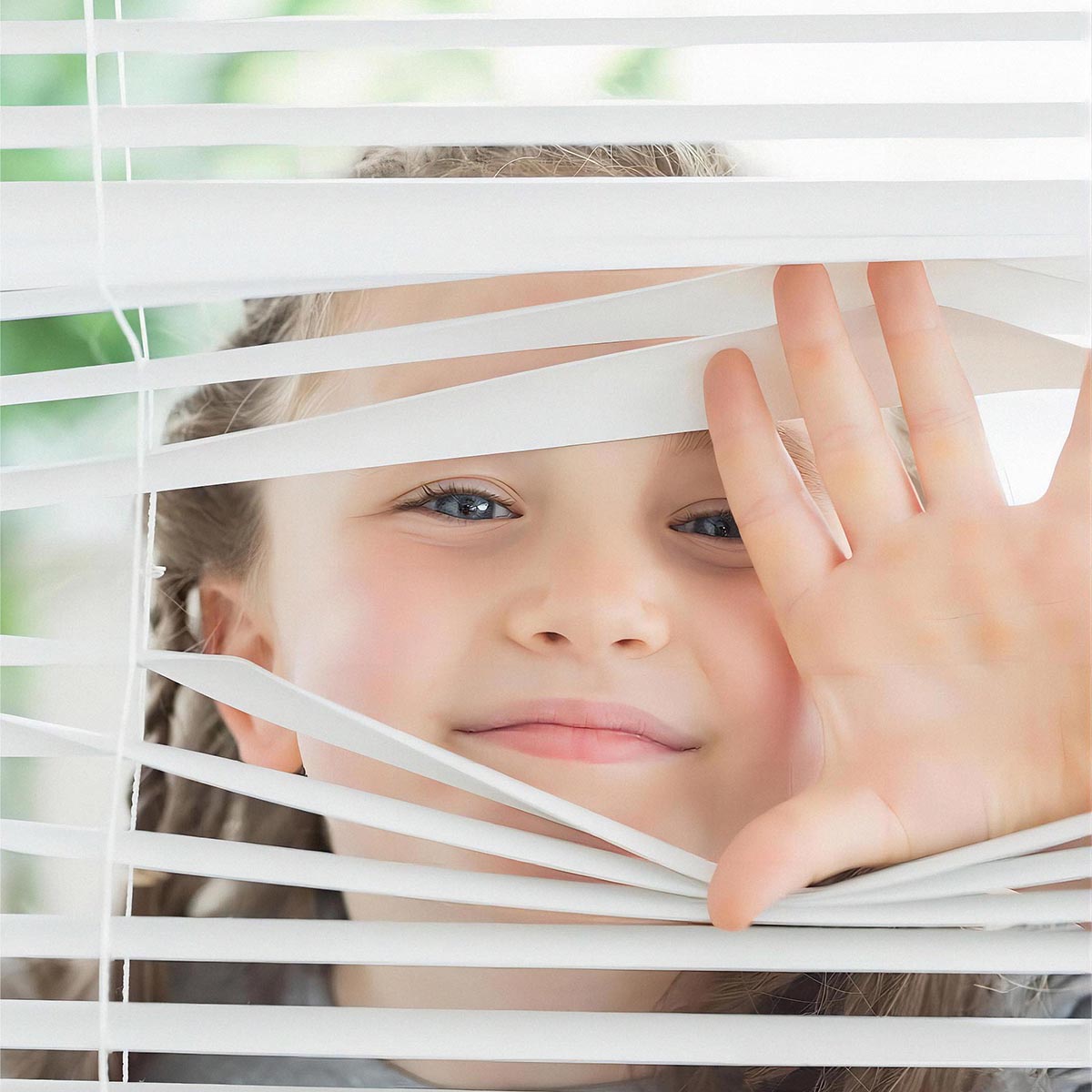
Are Cordless Blinds Actually Safer?
The short answer: yes, cordless blinds are significantly safer for homes with children than their corded counterparts. By removing the dangling cords that are the primary cause of strangulation, cordless models eliminate the most critical hazard. But it’s important to understand how cordless blinds work and what makes them safe—so you can make an informed choice.
Cordless blinds operate using one of two main mechanisms: spring-loaded lifts or motorized controls. Spring-loaded cordless blinds rely on internal tension to hold the slats (or shade fabric) in place. To raise or lower them, you simply push up or pull down on the bottom rail—no cords required. Motorized cordless blinds take this a step further—they’re controlled by a remote smartphone app or wall switch, so there are no physical controls within a child’s reach at all. Both options eliminate the looped cords that pose the greatest risk, making them ideal for nurseries, playrooms, and bedrooms.
That said, not all “cordless” blinds are created equal. Some manufacturers market “cordless” models but still include small internal cords that are hidden from view. While these are far safer than external cords, they can still pose a risk if the blind is damaged or if a child manages to access the internal components. For maximum safety, look for blinds labeled as “cord-free” (not just “cordless”) and certified by third-party organizations like the Window Covering Manufacturers Association (WCMA) under their Child Safety Certification Program. This certification ensures that the product meets strict safety standards and is free from accessible cords.
When it comes to Venetian blinds, specifically cordless versions are a game-changer. Cordless Venetian blinds retain all the benefits of traditional Venetian blinds—like adjustable slats for light and privacy control, durability, and a sleek esthetic—without the dangerous lift cords. Instead, you adjust the slats using a hidden tilt mechanism (often controlled by a small integrated wand that’s attached to the headrail and can’t be easily removed) and lift/lower the blinds via the bottom rail. This makes cordless Venetian blinds a great option for families who want the functionality of Venetian blinds without compromising on safety.
Cordless Blinds vs. Other Child-Safe Alternatives
Cordless blinds aren’t the only child-safe window treatment option, but they’re one of the most versatile. Let’s compare them to other popular choices to help you decide which is best for your home.
1. Cordless Blinds vs. Corded Blinds with Safety Devices
Some families opt to keep their existing corded blinds (including Venetian blinds) and add safety devices like cord cleats tensioners or cord wraps. While these devices can reduce risk by keeping cords taut or out of reach, they’re not foolproof. Cord cleats require adult supervision to use correctly—if you forget to wrap the cord around the cleat after adjusting the blinds, the risk returns. Tensioners can break over time and cord wraps can come loose. For busy parents, relying on these devices adds an extra layer of responsibility, and there’s always a chance of human error. Cordless blinds, by contrast, require no ongoing maintenance or supervision to stay safe.
2. Cordless Blinds vs. Shades (Roman, Roller, Cellular)
Cordless shades are another popular option, but they differ from cordless Venetian blinds in terms of functionality. Roman shades offer a soft decorative look but may not provide the same level of light control as Venetian blinds whose slats can be tilted to let in partial light. Roller shades are simple and affordable, but are often made of fabric that can be damaged by curious kids. Cellular shades (honeycomb shades) are energy-efficient but can be more expensive than cordless Venetian blinds. If you value adjustable light control and durability—key features of Venetian blinds—cordless Venetian blinds are a better choice than shades for many families.
3. Cordless Blinds vs. Motorized Blinds
Motorized blinds are technically a type of cordless blind, but they come with a higher price tag. They’re ideal for hard-to-reach windows (like above a crib or sofa) and offer added convenience as you can adjust them without getting up. However, basic spring-loaded cordless blinds are more affordable and work just as well for most windows. For families on a budget, spring-loaded cordless Venetian blinds strike the perfect balance between safety, functionality and cost.

How to Choose the Best Child Safety Blinds (Including Cordless Venetian Blinds)
When shopping for child safety blinds, keep the following tips in mind to ensure you’re getting a safe, high-quality product.
1. Prioritize WCMA-Certified Products
Look for the WCMA Child Safety Certification label on any blind you’re considering. This label guarantees that the product has been tested and meets strict safety standards, including no accessible cords. Avoid blinds that don’t have this certification—even if they’re marketed as “cordless.”
2. Opt for Cord-Free (Not Just Cordless) Mechanisms
As mentioned earlier, some “cordless” blinds still have hidden internal cords. For maximum safety, choose blinds labeled “cord-free,” which means they have no cords at all—internal or external. Cord-free Venetian blinds use spring-loaded lifts and integrated tilt mechanisms, so there’s no risk of a child accessing a cord.
3. Consider the Material of Venetian Blinds
If you’re choosing cordless Venetian blinds, opt for durable materials like faux wood or aluminum. Faux wood Venetian blinds are water-resistant, making them great for bathrooms and kitchens, and they’re less likely to break if a child tugs on them. Aluminum Venetian blinds are lightweight and affordable, but they may dent more easily. Avoid real wood Venetian blinds if you have young kids, as they’re more expensive and prone to damage.
4. Measure Your Windows Correctly
Ill-fitting blinds can create gaps where a child could get their fingers stuck or climb behind. Measure your windows carefully before purchasing and choose blinds that fit snugly within the window frame (inside mount) or cover the entire window opening (outside mount). For cordless Venetian blinds, a proper fit also ensures that the bottom rail is easy to reach and adjust.
5. Avoid Decorative Add-Ons That Pose Risks
Some blinds come with decorative tassels, beads, or pulls—even cordless models. These small items can be choking hazards for young children. Stick to plain simple cordless blinds without any extra decorations. For cordless Venetian blinds, the integrated tilt wand should be short and attached securely to the headrail so it can’t be pulled off.
6. Test the Blind Before Installing
Once you receive your cordless blinds, test them out before installing. For spring-loaded models, make sure the bottom rail stays in place when raised or lowered—no slipping. For cordless Venetian blinds, check that the slats tilt smoothly and that the tilt mechanism is secure. If anything feels loose or faulty, return the blind and choose a different model.
Maintaining Child Safety with Cordless Blinds
Even the safest cordless blinds require regular maintenance to keep them safe for your kids. Here are a few key steps to take.
• Inspect blinds regularly Check for signs of damage, like broken slats, loose mechanisms, or exposed internal parts. For cordless Venetian blinds, replace any broken slats immediately—sharp edges or loose pieces can pose a risk.
• Keep blinds out of reach where possible For windows above cribs, beds, or playpens, install cordless blinds high enough that your child can’t reach the bottom rail when standing in the crib or bed.
• Teach older kids how to use them safely If you have older children, show them how to adjust cordless blinds properly (by pushing/pulling the bottom rail) and explain why they shouldn’t play with them.
• Replace old corded blinds If you still have corded blinds in your home—even if they’re rarely used—replace them with cordless models. The risk of strangulation is too high to justify keeping them, especially when affordable cordless options are available.
Cordless Blinds Are a Safe Bet for Families
When it comes to child safety, cordless blinds—including cordless Venetian blinds—are a reliable, practical choice. They eliminate the number one hazard of traditional blinds (dangling cords) while retaining the functionality and esthetic appeal that families love. By choosing WCMA-certified cord-free models and following the tips outlined in this blog, you can create a safer environment for your kids without sacrificing style or convenience.
Remember, no window treatment is 100% risk-free—supervision is still key. But by investing in cordless blinds, you’re taking a proactive step to minimize one of the most hidden and dangerous hazards in your home. Whether you opt for cordless Venetian blinds for their light control, cordless shades for their softness, or motorized blinds for convenience, the most important thing is to choose a product that puts your child’s safety first.
If you’re ready to upgrade your window treatments to child-safe options, start by assessing which rooms need the most attention (nurseries and playrooms should be top priorities) and consider cordless Venetian blinds as a versatile, durable solution. Your peace of mind—and your child’s safety—is worth the investment.
Post time: Feb-26-2026