If you’ve ever shopped for Venetian blinds, you might have noticed two main categories popping up: Commercial Venetian Blinds and Residential Venetian Blinds. At first glance, they look pretty similar—slatted coverings that tilt to control light, pull up to open, and add a sleek touch to any space. But dig a little deeper, and you’ll find that these two types are designed for entirely different purposes, with key differences in material, style, durability, and functionality that can make or break your purchase.
I’ve talked to dozens of people who’ve made the mistake of buying residential blinds for their small business, or commercial blinds for their home, only to be disappointed by how quickly they wear out, how mismatched they look, or how difficult they are to use. The truth is, one size does NOT fit all when it comes to Venetian blinds. Whether you’re outfitting a home office, a retail store, a restaurant, or your living room, understanding the gap between commercial and residential options is crucial to making a choice that’s practical, long-lasting, and fits your space’s unique needs.
First, Let’s Get Clear: What Are Venetian Blinds, Anyway?
Before we jump into the differences, let’s make sure we’re on the same page. Venetian blinds are a type of window covering made from horizontal slats (usually ranging from 1 inch to 3 inches wide) that are attached to a headrail. They’re operated by a cord, wand, or motor: tilting the slats lets you adjust how much light filters through, while lifting them up opens the window completely.
Unlike roller blinds or Roman shades, Venetian blinds offer unbeatable versatility—they’re great for privacy, light control, and adding a polished look to any room. But not all Venetian blinds are created equal. The two main subcategories—commercial and residential—are engineered to handle different levels of use, traffic, and aesthetic demands. To keep things focused, we’ll be touching on a few key auxiliary keywords too: aluminum Venetian blinds, wooden Venetian blinds, and motorized Venetian blinds—all of which play a role in choosing the right option for your space.
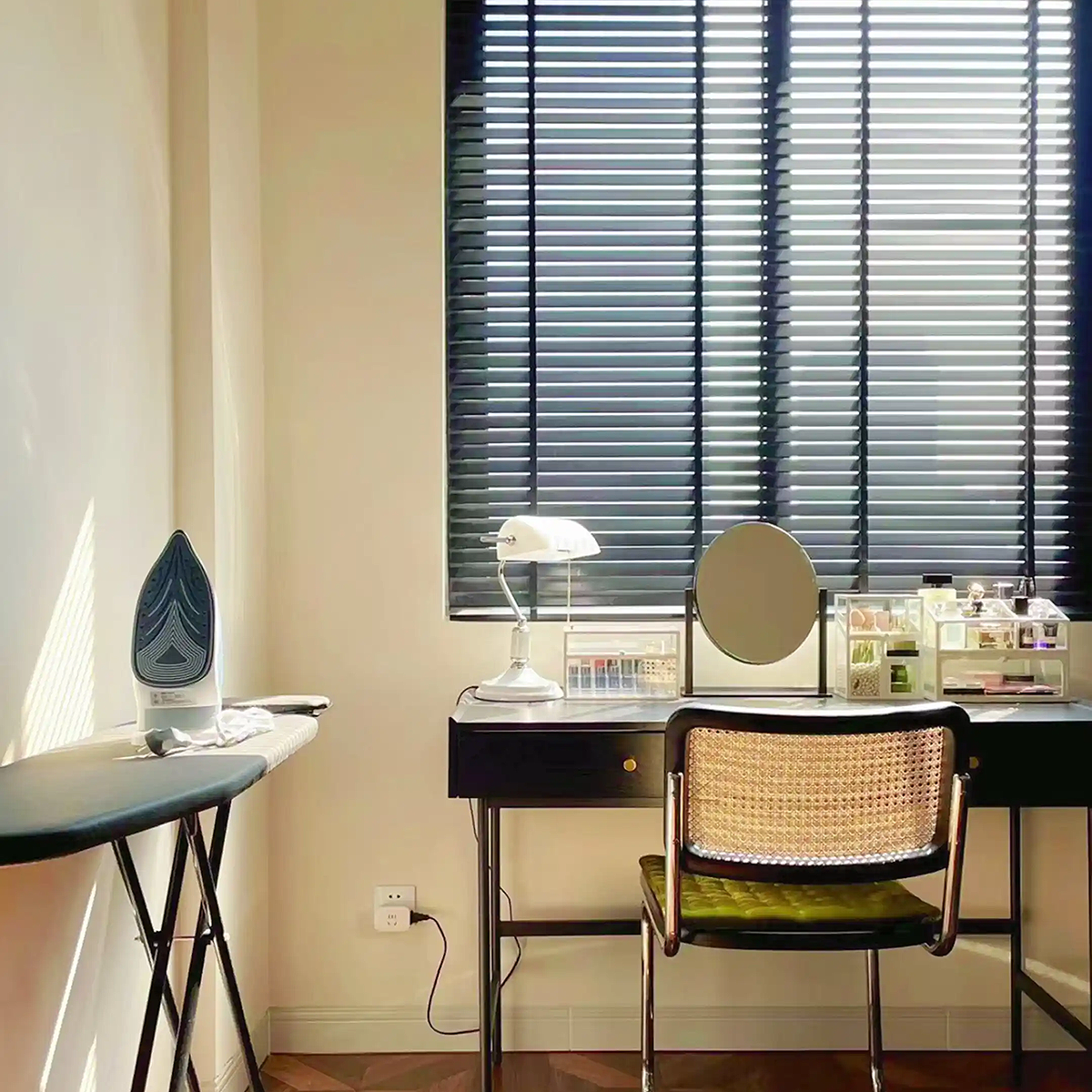
Key Difference 1: Materials—Durability vs. Warmth
The biggest difference between Commercial and Residential Venetian Blinds lies in the materials used. Why? Because commercial spaces (think offices, retail stores, restaurants, schools) see far more wear and tear than residential spaces. They’re exposed to more people, more sunlight, more dust, and sometimes even harsh cleaning products. Residential spaces, on the other hand, prioritize comfort, warmth, and style over industrial-level durability. Let’s break down the materials for each, and why they matter.
• Commercial Venetian Blinds: Materials Built for Heavy Use
Commercial Venetian Blinds are all about durability and low maintenance. When you’re outfitting a space that’s used by dozens (or hundreds) of people every day, you don’t want to be replacing blinds every year. That’s why manufacturers rely on tough, resilient materials that can handle constant use and harsh conditions.
The most common material for Commercial Venetian Blinds is aluminum. Aluminum Venetian blinds are lightweight, scratch-resistant, water-resistant, and incredibly easy to clean—perfect for high-traffic areas. They’re also fire-retardant, which is a must for commercial spaces (many building codes require fire-safe window coverings). Aluminum slats are usually thinner than residential options (around 0.4mm to 0.6mm) but reinforced to prevent bending. You’ll often find them in neutral colors like white, gray, or black—colors that are easy to match with commercial decor and don’t show dirt easily.
Another material you might see for Commercial Venetian Blinds is PVC (polyvinyl chloride). PVC blinds are even more water-resistant than aluminum, making them ideal for spaces like commercial kitchens, bathrooms, or hospitals where moisture is a concern. They’re also stain-resistant and can be wiped down with harsh cleaning products (like disinfectants) without fading or warping—something that’s crucial for spaces that need to meet hygiene standards.
One thing to note about commercial blind materials: they’re not designed for warmth. Aluminum and PVC are both cold to the touch, which is fine for commercial spaces where comfort is secondary to functionality. But they’d feel out of place in a cozy living room or bedroom.
• Residential Venetian Blinds: Materials Built for Comfort & Style
Residential Venetian Blinds are all about creating a warm, inviting atmosphere. Unlike commercial spaces, homes are meant to feel comfortable, so materials are chosen for their aesthetic appeal and tactile quality, not just their durability.
The most popular material for Residential Venetian Blinds is wood. Wooden Venetian blinds add a touch of natural warmth and elegance to any room—they’re perfect for living rooms, bedrooms, and dining rooms. They’re usually made from hardwoods like oak, maple, or basswood, or softwoods like pine. Wooden slats are thicker than aluminum (around 1mm to 1.5mm) and have a smooth, polished finish. They come in a wide range of stains and colors, from light oak to dark walnut, so you can match them to your furniture and decor.
For homeowners who want the look of wood but don’t want to deal with its maintenance, there are faux wood Venetian blinds (a key auxiliary keyword!). Faux wood blinds are made from composite materials (like wood pulp and PVC) that mimic the look of real wood but are more durable and low-maintenance. They’re water-resistant (great for kitchens and bathrooms), scratch-resistant, and won’t warp or fade in direct sunlight—something real wood blinds can struggle with. Faux wood blinds are also more affordable than real wood, making them a popular choice for residential spaces.
You can also find residential aluminum Venetian blinds, but they’re usually thicker and more decorative than commercial ones. Residential aluminum blinds might have textured finishes, bright colors, or even patterns—designed to add style to a room, not just functionality. They’re a good choice for kids’ rooms or laundry rooms, where durability is still important but warmth isn’t the top priority.
• Material Comparison: What to Choose When?
To make it easy, here’s a quick breakdown of which material is best for which space:
- Commercial spaces (offices, retail, restaurants): Aluminum or PVC Venetian blinds. They’re durable, low-maintenance, and meet commercial building codes.
- Residential spaces (living rooms, bedrooms): Wooden or faux wood Venetian blinds. They add warmth and style, and fit the cozy vibe of a home.
- Residential spaces with high moisture (kitchens, bathrooms): Faux wood or PVC Venetian blinds. They’re water-resistant and won’t warp.
- Residential spaces with kids/pets: Aluminum or faux wood Venetian blinds. They’re scratch-resistant and easy to clean.
Key Difference 2: Styles—Functionality vs. Aesthetics
While materials are the biggest difference, style is a close second. Commercial and Residential Venetian Blinds are designed with different aesthetic goals in mind: commercial blinds prioritize functionality and uniformity, while residential blinds prioritize style and customization. Let’s break down the style differences, including slat size, operation, and design options.
• Slat Size: Narrow for Commercial, Wide for Residential
Slat size is one of the easiest ways to tell commercial and residential Venetian blinds apart. Commercial blinds almost always have narrow slats (1 inch or 1.5 inches wide). Why? Narrow slats are more durable—they’re less likely to bend or break when someone pulls on the cord or tilts them roughly. They also provide better light control, which is important for offices where glare on computer screens can be a problem. Narrow slats also look more streamlined and professional, which fits the aesthetic of commercial spaces.
Residential Venetian Blinds, on the other hand, often have wider slats (2 inches or 2.5 inches wide). Wider slats create a more open, spacious look—perfect for homes where you want to maximize natural light and create a cozy atmosphere. They also add more visual interest: wider slats show off the texture of wood or faux wood better than narrow slats. Some residential blinds even have 3-inch slats, which are great for large windows (like picture windows) where narrow slats would look too busy.
Pro tip: If you have a small commercial space (like a home office that’s used for business), you can mix and match—opt for 1.5-inch aluminum slats for durability, but choose a neutral color that feels warm enough for a home setting.
• Operation: Manual (Commercial) vs. Motorized (Residential, Sometimes Commercial)
Another style/function difference is how the blinds are operated. Commercial Venetian Blinds are almost always manual—operated by a cord or wand. Why? Manual operation is simple, affordable, and easy to repair. In commercial spaces, you don’t want to deal with the cost or maintenance of motorized blinds—especially if the blinds are in a space that’s not used 24/7. Corded operation is also more straightforward for multiple people to use (employees, customers, students) without needing instructions.
Residential Venetian Blinds, on the other hand, often offermotorized options (another key auxiliary keyword!). Motorized Venetian blinds are perfect for homes because they’re convenient—you can open and close them with a remote control, smartphone app, or even voice command (if paired with a smart home system). They’re great for hard-to-reach windows (like above a couch or bed) or for homeowners who want to add a touch of luxury to their space. Motorized residential blinds can also be programmed to open and close at specific times—helping you save energy (by letting in sunlight during the day) and improve security (by making it look like someone is home when you’re away).
That said, motorized Venetian blinds are becoming more common in commercial spaces too—especially in large offices or retail stores where adjusting multiple blinds manually would be time-consuming. But for most small commercial spaces, manual operation is still the go-to choice.
• Design & Customization: Uniform (Commercial) vs. Personalized (Residential)
Commercial Venetian Blinds are designed to be uniform and neutral. Commercial spaces need a cohesive look—you don’t want blinds in different colors or styles clashing with each other. That’s why commercial blinds come in a limited range of colors: white, off-white, gray, black, and sometimes beige. They’re also usually plain—no patterns, textures, or decorative details. The goal is to be functional and unobtrusive, not eye-catching.
Residential Venetian Blinds, on the other hand, are all about customization. Homeowners want blinds that reflect their personal style, so manufacturers offer a wide range of colors, finishes, and details. Wooden blinds can be stained to match your hardwood floors or furniture. Faux wood blinds come in realistic wood grains or solid colors. Aluminum residential blinds can have textured finishes (like brushed metal) or bright colors (like blue, green, or red) for a fun pop of color.
You can also customize the headrail and valance of residential blinds—something that’s rarely an option for commercial blinds. A valance (a decorative covering for the headrail) can hide the mechanism of the blinds and add a polished look to the room. Residential blinds can also be cut to fit unusual window sizes (like arched windows or bay windows), while commercial blinds are usually only available in standard sizes (since commercial windows are often uniform).

Practical Tips: How to Choose Between Commercial & Residential Venetian Blinds
Now that you know the key differences, let’s put it all together with some practical tips to help you choose the right blinds for your space. These are the tips I give to my clients—they’re simple, actionable, and designed to avoid common mistakes.
Tip 1: Start with Your Space’s Purpose
The first question to ask yourself is: What is the space used for? If it’s a commercial space (office, retail, restaurant, school), go with Commercial Venetian Blinds (aluminum or PVC, narrow slats, manual operation). If it’s a residential space (living room, bedroom, kitchen, bathroom), go with Residential Venetian Blinds (wood, faux wood, or decorative aluminum, wide slats, optional motorization).
Exception: If you have a home office that’s used exclusively for business (and has high traffic), you might want to opt for commercial aluminum blinds for durability. But if it’s a home office that’s part of your living space, choose residential faux wood blinds to keep the space feeling warm.
Tip 2: Consider Traffic & Maintenance
How much traffic does the space get? If it’s a high-traffic area (like a retail store or a kids’ room), choose blinds that are easy to clean and scratch-resistant (aluminum or PVC for commercial, faux wood or aluminum for residential). If it’s a low-traffic area (like a guest bedroom), you can splurge on more delicate materials (like real wood).
Also, think about how much time you want to spend maintaining your blinds. Commercial blinds are low-maintenance—just wipe them down with a damp cloth occasionally. Real wood residential blinds require more care: they need to be dusted regularly, and you should avoid getting them wet (which can cause warping).
Tip 3: Don’t Sacrifice Aesthetics for Durability (or Vice Versa)
One common mistake is buying commercial blinds for a home because they’re durable—only to hate how cold and sterile they look. Another mistake is buying residential wooden blinds for a commercial space because they look nice—only to have them warp or break within a few months.
The solution? Find a balance. For example, if you want the durability of commercial blinds but the warmth of residential ones, opt for faux wood commercial blinds (yes, they exist!). Or, if you want the style of residential blinds but need them to be durable, choose thick aluminum residential blinds with a wood-like finish.
Tip 4: Measure Twice, Buy Once
This might sound obvious, but it’s a mistake I see all the time. Whether you’re buying commercial or residential Venetian blinds, measure your windows carefully before making a purchase. Commercial blinds are usually available in standard sizes, so if your windows are unusual, you might need to order custom commercial blinds (which are more expensive). Residential blinds are easier to customize, but you still need accurate measurements to ensure a perfect fit.
Pro tip: Measure the width and height of your window at three different points (top, middle, bottom for width; left, middle, right for height). Use the smallest measurement for width (to ensure the blinds fit inside the window frame) and the largest measurement for height (to ensure the blinds cover the entire window).
FAQ: Common Questions About Commercial & Residential Venetian Blinds
To wrap things up, let’s answer the most frequent questions I get about Venetian blinds. These are the questions that my clients ask most often—so chances are, you’re wondering them too!
Q1: Can I use Commercial Venetian Blinds in my home?
Yes, you can—but it’s not always the best choice. Commercial blinds are durable and low-maintenance, but they’re also cold, sterile, and limited in style. They work well in home offices or laundry rooms (high-traffic, low-aesthetic spaces), but they’ll feel out of place in living rooms or bedrooms. If you do use commercial blinds in your home, opt for neutral colors (like white or gray) and 1.5-inch slats to make them feel less industrial.
Q2: Are Residential Venetian Blinds more expensive than Commercial ones?
It depends on the material. Basic residential aluminum blinds are usually similar in price to commercial aluminum blinds. But residential wooden or faux wood blinds are more expensive than commercial aluminum or PVC blinds. Motorized residential blinds are also more expensive than manual commercial blinds. In general, residential blinds are more expensive because they’re more customizable and use higher-quality (or more aesthetically pleasing) materials.
Q3: How long do Commercial vs. Residential Venetian Blinds last?
Commercial Venetian Blinds (aluminum or PVC) usually last 5–10 years with regular use. They’re built to handle heavy traffic, so they’re more durable than residential blinds. Residential Venetian Blinds last 3–7 years, depending on the material: real wood blinds last 5–7 years (if well-maintained), faux wood blinds last 4–6 years, and residential aluminum blinds last 3–5 years.
Q4: Are motorized Venetian Blinds worth it for commercial spaces?
It depends on the size of your space. For small commercial spaces (like a small office or boutique), manual blinds are usually sufficient and more affordable. For large commercial spaces (like a big office, retail store, or hotel), motorized blinds are worth it—they save time and effort, especially if you have multiple blinds to adjust. Motorized commercial blinds can also be integrated with smart building systems, which is a plus for modern commercial spaces.
Q5: Which is easier to clean: Commercial or Residential Venetian Blinds?
Commercial Venetian Blinds are easier to clean. Aluminum and PVC blinds can be wiped down with a damp cloth or even a disinfectant wipe—no special cleaners needed. Residential wooden blinds need to be dusted regularly (with a feather duster or microfiber cloth) and can’t be wiped down with water (which causes warping). Faux wood residential blinds are easier to clean than real wood—they can be wiped down with a damp cloth—but not as easy as commercial aluminum or PVC blinds.
At the end of the day, the difference between Commercial Venetian Blinds and Residential Venetian Blinds comes down to one thing: purpose. Commercial blinds are built for durability, low maintenance, and uniformity—perfect for high-traffic spaces where functionality is key. Residential blinds are built for warmth, style, and customization—perfect for homes where comfort and aesthetics matter most.
By understanding these differences, you can avoid common mistakes and choose the right blinds for your space. Remember: there’s no “best” option—only the best option for you. Whether you’re outfitting a commercial space or a residential one, prioritize your needs (durability, maintenance, style) and you’ll end up with blinds that work for you for years to come.
Post time: Mar-12-2026