Homeowners with sliding glass doors often face the same frustrating struggle: finding window coverings that look good, work seamlessly with the door’s movement, and actually solve daily problems—like glare, privacy, or that annoying “curtain gets stuck in the door track” issue. Scroll through Instagram or Pinterest, and countless posts ask, “What’s the best window treatment for sliding doors?” Spoiler: Vertical Blinds for Sliding Doors are the unsung heroes here, but only if chosen and installed correctly.
First, let’s address the elephant in the room: why vertical blinds, and not roller shades, curtains, or horizontal blinds? Curtains on sliding doors often block the door’s path, get crushed when sliding open, or fail to cover the entire width properly. Horizontal blinds are a nightmare for tall sliding doors—hard to adjust, dust-prone, and often clunky. Vertical blinds, however, are designed to move with the door, not against it. They hang vertically, so they don’t obstruct sliding panels, and cover the entire height and width of the door without looking bulky. No more yanking curtains out of tracks or struggling to adjust hard-to-reach blinds.
But here’s the thing: not all vertical blinds are created equal. Home improvement stores offer overwhelming options—different colors, control types, and “fancy” features that sound great but may be unnecessary. That’s why practicality is key here. Let’s break down the most common annoyances homeowners face with Vertical Blinds for Sliding Doors, along with simple, actionable solutions—because social media rarely shows the messy, real-world challenges.

Common Problems with Vertical Blinds for Sliding Doors
TikTok is filled with videos of homeowners complaining about their vertical blinds: “Why do my vertical blinds keep getting stuck?” “How do I keep them from sagging?” “Are vertical blinds too outdated?” These issues are common, but easily fixable with the right know-how.
Problem 1: Vertical Blinds Get Stuck in the Sliding Door Track
This is one of the most frustrating issues with vertical blinds for sliding doors. A common cause is ill-fitting blinds—slats that are too long drag on the floor and eventually get wedged in the door’s path, often resulting in tears or damage. The solution is simple: measure carefully before purchasing.
When measuring for Vertical Blinds for Sliding Doors, focus on two key measurements: height and width. For height, measure from the top of the door frame (where the track will be installed) to the floor, then subtract ½ inch to ensure slats don’t touch the floor and get stuck. For width, measure the entire door opening, including trim. For recessed installation (inside the frame), add 1 inch to each side for full coverage. For surface-mounted installation (outside the frame), add 2 to 3 inches to each side to prevent light gaps.
Another helpful feature is a “track stop,” which prevents slats from sliding too far to one side and getting caught in the door’s edge. Most modern vertical blinds include this feature, but it’s worth double-checking before buying.
Problem 2: Vertical Blinds Sag or Warp Over Time
Sagging vertical blinds quickly make a room look unkempt, and this issue is often tied to low-quality materials rather than the material itself. PVC vertical blinds are the most common and practical choice for sliding doors, but cheap, thin PVC slats are prone to sagging—especially when exposed to direct sunlight. For sliding doors with heavy sun exposure, high-quality, thick PVC vertical blinds are the better choice.
High-quality PVC vertical blinds are durable, water-resistant, and resistant to sagging—ideal for high-traffic areas or doors facing the sun. Unlike cheap plastic alternatives, premium PVC slats are thick, rigid, and designed to withstand prolonged sunlight without warping or drooping. They’re also humidity-resistant, making them a smart choice for sliding doors near kitchens or bathrooms, where moisture can damage other materials. Pro tip: Avoid cheap, thin PVC vertical blinds—they’re flimsy, break easily, and look low-quality. Investing in thick, high-density PVC slats ensures longevity.
Problem 3: Lack of Privacy or Too Much Glare
Sliding glass doors are excellent for natural light but can be a privacy liability—especially if facing a neighbor’s home or busy street. Many homeowners want to let in light during the day while maintaining privacy at night, and the right vertical blinds can achieve this balance with adjustable slats and proper opacity.
Most PVC vertical blinds have slats that rotate 180 degrees, allowing homeowners to adjust light flow while blocking visibility. For maximum privacy, blackout PVC vertical blinds (another auxiliary keyword!) are ideal—they feature thick, opaque slats or an added blackout layer, blocking 99% of light, making them perfect for bedrooms or home offices. For a balance of light and privacy, light-filtering PVC vertical blinds work best—their slightly translucent slats soften sunlight without completely blocking it, ideal for living rooms or dining areas.
Glare is another common issue, especially for sliding doors near TVs or seating areas. Matte PVC vertical blinds reduce glare without blocking all natural light, allowing for comfortable TV viewing while still enjoying sunlight. Glossy PVC blinds, by contrast, can amplify glare, so they’re best avoided for sliding doors with direct sunlight and nearby TVs.
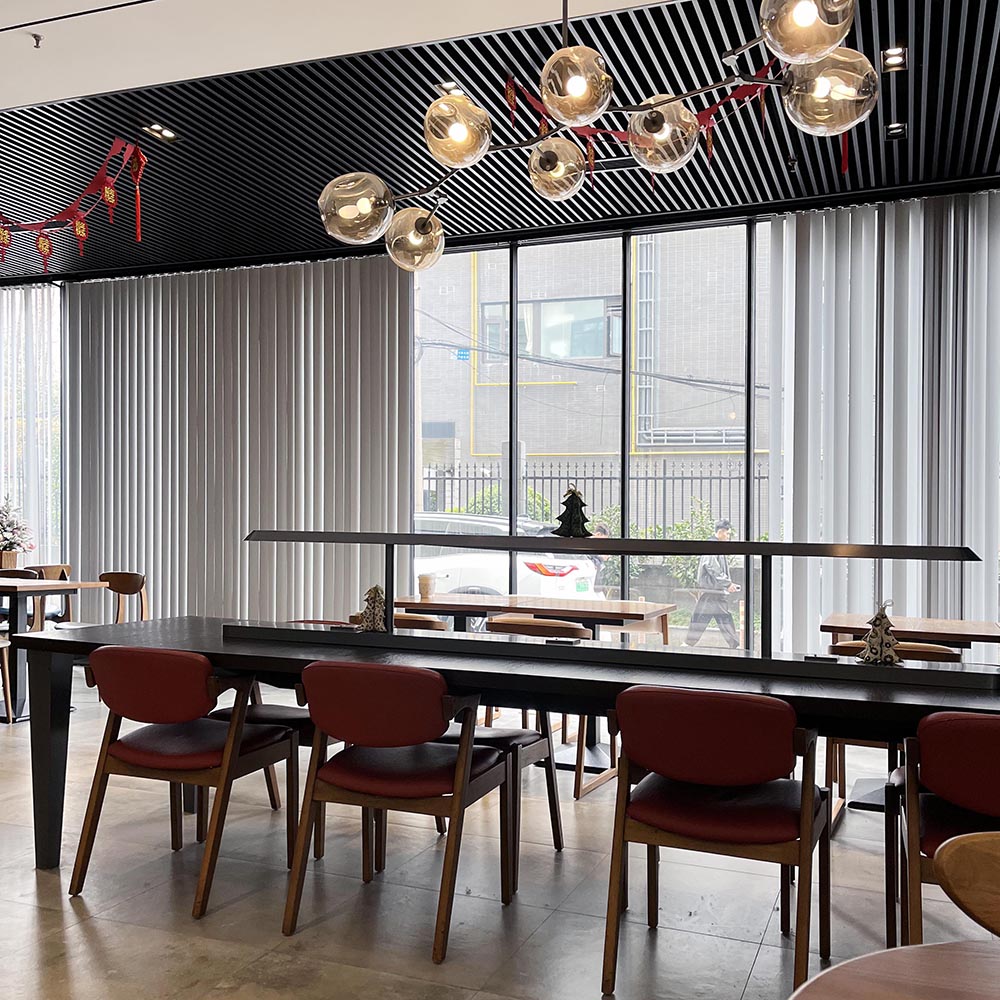
How to Choose the Right Vertical Blinds for Sliding Doors
Avoiding buyer’s remorse starts with choosing vertical blinds that fit both the space and lifestyle. These steps break down the selection process to ensure the right fit, function, and style.
Step 1: Choose the Right PVC Quality
PVC is the standard and most practical material for vertical blinds for sliding doors, and quality matters for durability and functionality. Here’s what to look for in high-quality PVC vertical blinds:
• Thick, High-Density PVC Slats: The most important factor is slat thickness—look for slats at least 0.2mm thick. These are rigid, resistant to sagging, and durable enough for daily use. High-density PVC also resists fading, warping, and damage from sunlight or moisture, making it ideal for any sliding door, especially those in high-traffic areas, kitchens, or bathrooms.
• Reinforced PVC for Large Sliding Doors: For particularly wide or tall sliding doors, reinforced PVC vertical blinds are recommended. These slats have an internal metal or plastic core for extra rigidity, preventing sagging even over long lengths. They’re slightly heavier but far more durable, worth the small extra cost for large doors.
• Matte vs. Glossy PVC Finishes: PVC vertical blinds come in two main finishes, each with unique benefits. Matte PVC blinds (a great auxiliary keyword!) reduce glare, perfect for sliding doors near TVs or seating areas—they soften sunlight without harsh reflections. Glossy PVC blinds have a sleek, modern look, reflect light to brighten dark rooms, and are easy to clean with a damp cloth. Choose based on room lighting and decor style.
• Color-Coated PVC Slats: Cheap PVC blinds often have thin, chip-prone paint, but high-quality options use color-coated PVC (another auxiliary keyword!)—color infused into the material, not just painted on. This ensures no chipping, fading, or peeling, even with frequent cleaning or direct sunlight. Color-coated PVC comes in a wide range of shades, from neutrals to bold hues, to match any decor.
Step 2: Pick the Right Control Type
PVC vertical blinds offer three main control types, each suited to different lifestyles and budgets:
Corded PVC vertical blinds are the most affordable option—using a cord to open/close the blinds and a wand to rotate slats. They’re simple to use but pose a safety hazard for kids or pets (cords can tangle). If choosing corded blinds, add a cord cleat to keep cords out of reach.
Cordless PVC vertical blinds are a safer alternative—using a handle or wand to operate, with no loose cords. They’re easy to use, look cleaner, and are ideal for families with kids/pets or anyone wanting a clutter-free look, though they’re slightly more expensive than corded options.
Motorized PVC vertical blinds (another auxiliary keyword!) are the most convenient—operated via remote control, smartphone app, or voice commands (compatible with smart home systems like Alexa or Google Home). They’re perfect for tall sliding doors (no reaching for cords) or anyone wanting a hands-free experience. They’re the most expensive option but worth it for convenience.
Step 3: Match the Style to Your Decor
Gone are the days of boring, outdated vertical blinds. Today’s PVC vertical blinds come in a variety of colors and finishes, fitting any decor style—modern, bohemian, traditional, or minimalist. Here are key tips for styling:
• For a modern, minimalist look: Choose white, gray, or black PVC vertical blinds with sleek, narrow slats. Both matte and glossy finishes work—matte for subtlety, glossy for a contemporary edge.
• For a warm, cozy look: Opt for soft neutral colors (beige, taupe, light gray) with a matte finish. The matte texture softens PVC’s appearance, adding warmth without sacrificing functionality.
• For a pop of color: Add boldness to neutral rooms with color-coated PVC vertical blinds in shades like navy, emerald, or terracotta. Color-coated PVC holds its hue well, so fading isn’t a concern.
• For a bohemian look: Use PVC slats in soft, earthy tones (terracotta, sage) and pair with natural textures (woven baskets, potted plants) around the sliding door. Solid colors work best for a cohesive boho vibe.
Step 4: Don’t Forget About Installation
Even high-quality PVC vertical blinds won’t perform well if installed incorrectly. Lopsided tracks cause slats to get stuck or sag, so professional installation is recommended—it ensures the track is level, blinds are aligned, and no light gaps exist.
For DIY installation, use a level to ensure the track is straight—even a slight tilt causes sagging or jamming. Use the right hardware: anchors for drywall installation, screws (no anchors needed) for wood surfaces.
Why Vertical Blinds for Sliding Doors Are Trending on Social Media
Vertical blinds are making a comeback on Instagram and TikTok, and their popularity stems from practicality, style, and versatility. Here’s why they’re trending:
• They’re Practical: Homeowners are tired of high-maintenance window coverings, and vertical blinds offer ease of use, durability, and seamless compatibility with sliding doors—no more struggling with curtains or horizontal blinds.
• They’re Stylish: Modern PVC vertical blinds feature color-coated finishes, matte/glossy options, and sleek slat designs that fit contemporary decor styles—from minimalist to bohemian—dispelling the “outdated” stereotype.
• They’re Versatile: Vertical blinds work in every room—living room, bedroom, kitchen, bathroom, even garages—and are ideal for large sliding doors, which are increasingly popular in modern homes.
• They’re Budget-Friendly: Compared to custom curtains or motorized roller shades, vertical blinds are affordable—high-quality sets typically cost under $200, making them a cost-effective choice.
Social media is also filled with DIY hacks for updating old PVC vertical blinds—like painting slats with PVC-specific paint, adding decorative tape to edges, or replacing cords with stylish wands. These simple hacks refresh the look of existing blinds without a full replacement.
Tips to Keep Your Vertical Blinds Looking Great
Proper maintenance ensures PVC vertical blinds stay functional and attractive for years. Follow these tips:
• Clean them regularly: Dust slats weekly with a duster or vacuum’s soft brush attachment. Wipe PVC blinds monthly with a damp cloth (and mild soap if needed)—their water resistance prevents damage.
• Avoid excessive force: Don’t yank cords or pull slats—this damages tracks or slats. Use wands or remote controls gently.
• Protect from direct sunlight: For sun-exposed sliding doors, use a PVC-specific UV protectant spray to prevent fading. This is especially important for light-colored or glossy slats, which are more prone to discoloration.
• Fix small issues quickly: Replace bent slats or broken cords promptly—hardware stores sell replacement parts, and installation is simple, no need to replace the entire set.
PVC vertical blinds are the best choice for sliding doors—practical, durable, and versatile. They solve the most common window treatment challenges for sliding doors while complementing any decor style. With the right selection and maintenance, they provide long-lasting, stress-free functionality.
For homeowners on the fence: The best window coverings are those that look good, work well, and don’t cause stress—and vertical blinds check all these boxes. They’re a reliable, affordable solution for sliding door window coverings.
Post time: Mar-26-2026