When it comes to outfitting large office spaces—think open-plan work areas, conference rooms with floor-to-ceiling windows, or reception lobbies—choosing the right window treatments feels like a balancing act. Office managers and facility teams often grapple with the same question: Are PVC Vertical Blinds a practical fit for big offices, or are they better suited for homes? With so many options on the market, from Venetian Blinds to roller shades, it’s easy to get stuck on what works best for high-traffic, high-use spaces.
Office managers frequently cite consistency, maintenance, and cost as their most common pain points when selecting window treatments for large offices. Large offices have unique needs: window treatments need to look uniform across multiple rooms, stand up to daily use (think employees opening and closing blinds dozens of times a day), be easy to clean, and fit within a budget. PVC Vertical Blinds often get overlooked for offices, with many teams defaulting to Venetian Blinds or fabric curtains—but they might just be the unsung hero large offices need.
First, Why Do Large Offices Struggle with Window Treatments
Large offices aren’t like homes—they have unique challenges that make window treatments tricky. For starters, they often feature massive windows: floor-to-ceiling panes, wide open-plan areas, and sometimes dozens of windows that need to match. Consistency is key—mismatched blinds or curtains can make even the most polished office look unprofessional.
Then there’s the wear and tear. In a busy office, blinds get pulled, slats get bent, and dust builds up fast. Office teams don’t have time for high-maintenance window treatments—they need something that’s durable, easy to clean, and doesn’t require constant repairs. Cost is another factor: outfitting an entire office with window treatments adds up, so affordability without sacrificing quality is essential.
Many offices initially choose Venetian Blinds because they look sleek and professional. But here’s the catch: standard Venetian Blinds struggle with large windows. Their horizontal slats are heavy, so they sag over time—especially on wide or tall windows. They’re also harder to clean, with dust collecting in the grooves of the slats, and bent slats are a common issue in high-traffic areas. Faux wood Venetian Blinds are a bit more durable, but they’re still prone to warping if exposed to direct sunlight for long hours—something large office windows get plenty of.
Why PVC Vertical Blinds Work for Large Offices
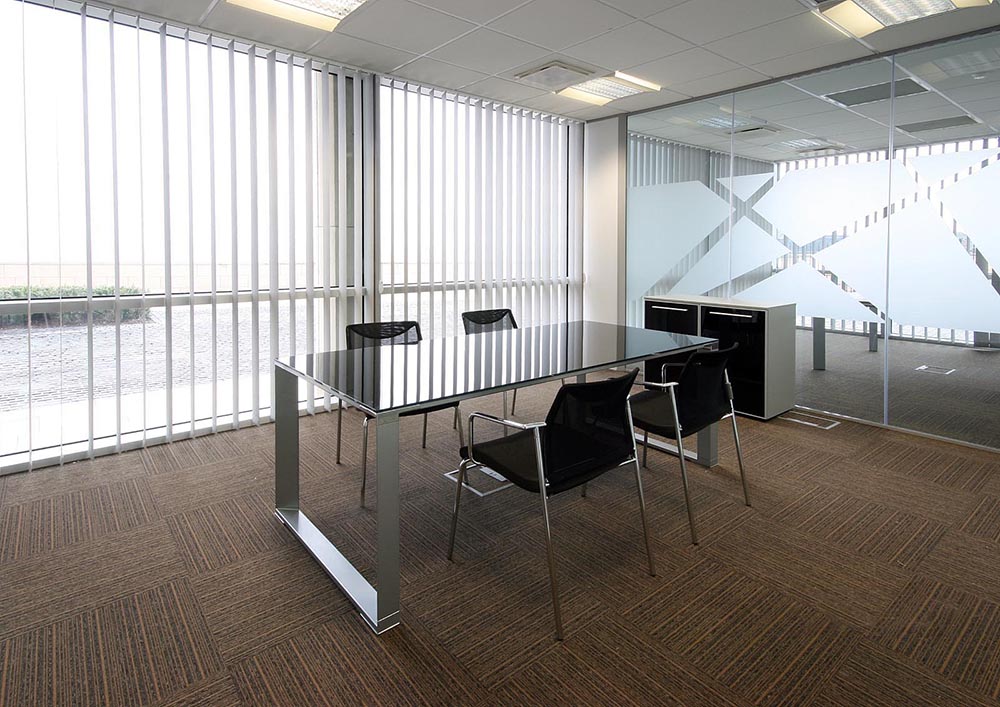
PVC Vertical Blinds solve many of the pain points that come with outfitting large offices. Here’s why they’re a practical choice, backed by real office use cases:
1. They’re Durable and Low-Maintenance
Large offices see a lot of action—employees, clients, and visitors moving in and out, opening and closing blinds multiple times a day. PVC Vertical Blinds are built to handle this. Unlike fabric curtains (which stain easily) or thin aluminum Venetian Blinds (which bend at the slightest pressure), PVC slats are thick, rigid, and water-resistant. They won’t stain, fade, or warp, even with constant use and direct sunlight.
Cleaning is a breeze too—no need for special cleaners or time-consuming dusting. A quick wipe with a damp cloth removes dust, fingerprints, or even coffee spills (a common office mishap). This is a game-changer for facility teams, who can keep the office looking neat without spending hours on window treatments.
2. They’re Consistent and Scalable Across Large Spaces
One of the biggest challenges with large offices is keeping window treatments consistent. PVC Vertical Blinds come in a wide range of neutral colors (white, light gray, beige) that match any office decor, and they can be ordered in the same size and style for every window. This creates a cohesive, professional look that ties the office together—something that’s hard to achieve with mixed window treatments.
They’re also scalable. Whether an office has a small open-plan area or a massive conference room with 20-foot windows, PVC Vertical Blinds can be custom-sized to fit. Unlike Venetian Blinds, which look bulky on extra-wide windows, PVC Vertical Blinds hang sleekly and don’t sag, even on the largest openings.
3. They Offer Flexible Light Control
Lighting is key in offices—too much glare can make it hard to work on screens, while too little light can make employees feel sluggish. PVC Vertical Blinds let users adjust light easily: rotate the slats 180° to filter light, slide them open fully for maximum sunlight, or close them completely for privacy during meetings.
This flexibility is especially useful in open-plan offices, where different teams might have different lighting needs. For example, the design team might want more natural light for creativity, while the customer service team might need less glare to focus on calls. PVC Vertical Blinds let each area adjust their blinds as needed, without disrupting the rest of the office.
PVC Vertical Blinds in Action
Theory is great, but real-world examples show how PVC Vertical Blinds perform in large offices. Here are two cases from offices—one a large tech startup, the other a mid-sized law firm—to show what works (and what to avoid).
Case Study 1: Open-Plan Tech Startup (10,000 sq. ft.)
A tech startup in Chicago with 80 employees had a problem: their open-plan office had floor-to-ceiling windows on two sides, and they were using cheap aluminum Venetian Blinds. Within six months, the slats were bent, the blinds were sagging, and the office looked unkempt. The facility manager was spending hours every week replacing bent slats and cleaning dust from the grooves.
They switched to high-density PVC Vertical Blinds in light gray, custom-sized to fit each window. The difference was immediate: the office looked more professional, the blinds were easy to clean (the facility team now spends 15 minutes a week instead of hours), and there were no more bent slats. The employees also loved the flexible light control—they could adjust the blinds to reduce glare on their monitors without blocking all natural light. After a year, the startup reported no need to replace any blinds, and they saved money on maintenance costs.
Case Study 2: Law Firm Conference Rooms (3 Large Rooms)
A mid-sized law firm in Dallas had three large conference rooms with wide windows, and they were using fabric curtains. The curtains were hard to clean, stained easily from coffee and ink, and didn’t offer enough privacy during sensitive meetings. They considered faux wood Venetian Blinds but worried about warping from the afternoon sun and the cost of outfitting three large rooms.
They opted for blackout PVC Vertical Blinds (a popular variation) in white. The blackout slats blocked light completely during meetings, ensuring privacy for client discussions. The PVC material was easy to wipe clean—no more stained curtains—and the white color kept the conference rooms looking bright and professional. The firm saved over $500 compared to faux wood Venetian Blinds, and the blinds still look like new after two years of heavy use.
Common Mistakes to Avoid When Choosing PVC Vertical Blinds for Large Offices
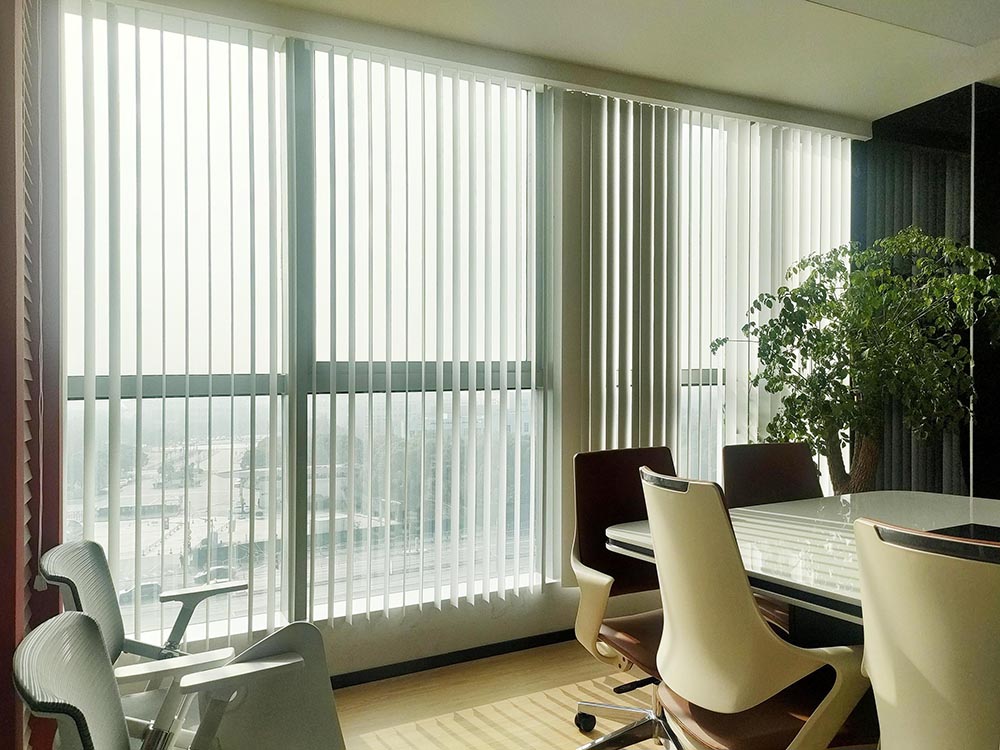
PVC Vertical Blinds are great, but they won’t work if common mistakes are made. Based on feedback from office managers, here’s what to watch out for:
Mistake 1: Choosing Cheap, Thin PVC Slats
It’s tempting to cut costs with cheap PVC Vertical Blinds, but thin slats (less than 0.2mm thick) will sag, bend, and fade quickly—especially on large windows. For large offices, opt for high-density PVC slats (0.2mm or thicker) with a reinforced core. They’re slightly more expensive, but they’ll last longer and save money on replacements.
Mistake 2: Ignoring Control Type
In large offices, corded PVC Vertical Blinds are a safety hazard (employees can get tangled) and a hassle (hard to reach blinds on tall windows). Instead, choose cordless or motorized PVC Vertical Blinds. Cordless blinds are easy to operate with a wand, while motorized blinds can be controlled with a remote or smart system—perfect for conference rooms or large open-plan areas where adjusting all blinds at once is needed.
Mistake 3: Forgetting About Installation
Even the best PVC Vertical Blinds won’t work if they’re installed incorrectly. Large office windows need sturdy tracks that can support the weight of the blinds. Don’t cut corners with DIY installation—hire a professional who has experience with large-scale office window treatments. They’ll ensure the tracks are level, the blinds are aligned, and there are no gaps that let in unwanted light.
Mistake 4: Comparing Them to Venetian Blinds Wrongly
Many office teams dismiss PVC Vertical Blinds because they think Venetian Blinds look “more professional.” But Venetian Blinds (even high-quality ones) aren’t designed for large windows—they sag, are harder to clean, and cost more. PVC Vertical Blinds are a better fit for large offices because they’re durable, low-maintenance, and scalable. If the look of Venetian Blinds is preferred, consider aluminum Venetian Blinds for smaller office windows (like individual offices) and PVC Vertical Blinds for large, open areas.
Practical Tips for Choosing PVC Vertical Blinds for Your Large Office
Now that it’s clear PVC Vertical Blinds work for large offices, here’s how to choose the right ones for any space. These tips are based on feedback from office managers who have successfully outfitted their large offices with PVC Vertical Blinds:
• Stick to neutral colors: White, light gray, or beige PVC Vertical Blinds look professional and match any office decor. Avoid bold colors—they can clash with furniture and make the space feel overwhelming.
• Choose the right slat width: For large windows, 3-4 inch slats work best—they’re wide enough to cover the window without looking clunky, and they’re easy to adjust. Narrow slats (2 inches or less) can look too busy in large spaces.
• Opt for blackout slats if needed: Conference rooms, private offices, or areas with sensitive work (like HR or finance) benefit from blackout PVC slats. They block light completely, ensuring privacy and reducing glare on screens.
• Test a sample first: Before ordering blinds for the entire office, order a sample slat to check the color, thickness, and finish. This ensures satisfaction with the look and quality before making a large purchase.
• Factor in long-term costs: While PVC Vertical Blinds are affordable upfront, consider maintenance and replacement costs. High-quality PVC blinds will last 5-7 years, while cheap ones will need to be replaced every 2-3 years—so investing in quality saves money in the long run.
One last thing to keep in mind: PVC Vertical Blinds aren’t a one-size-fits-all solution. They work best for large, open areas, sliding doors, and floor-to-ceiling windows. For smaller individual offices or windows, Venetian Blinds (like aluminum or faux wood) might be a better fit. Mixing and matching is okay—there’s no rule that says the same window treatment must be used for the entire office.
PVC Vertical Blinds can transform large offices—turning messy, high-maintenance spaces into polished, functional ones. The tech startup and law firm mentioned earlier are just two examples of how they work in real life. They’re affordable, durable, easy to clean, and offer the flexible light control that offices need.
If still on the fence, ask: Do you want window treatments that look professional, stand up to daily use, and don’t require constant maintenance? If the answer is yes, then PVC Vertical Blinds are worth considering. They might not be the most glamorous option, but they’re the most practical—and in large offices, practicality wins every time.
Post time: Mar-30-2026