Window treatments have evolved far beyond basic coverings—today’s homeowners and designers seek solutions that blend convenience, functionality, and style seamlessly. Motorized Venetian Blinds have emerged as a game-changer in this space, offering hands-free control, precise light management, and a sleek, modern look. Yet many people remain intimidated by them: How do they actually work? Are they difficult to install or maintain? Will they fit my existing windows or decor?
One of the biggest misconceptions about Motorized Venetian Blinds is that they’re overly complex or only suitable for high-end homes. In reality, they’re designed to simplify daily life, work with most window sizes and styles, and fit a range of budgets. Whether you’re dealing with hard-to-reach windows, struggling to balance light and privacy in a busy household, or simply want to add a touch of modern convenience to your space, Motorized Venetian Blinds offer solutions that traditional manual blinds can’t match. Below, we’ll demystify their inner workings, explore their practical applications, and help you decide if they’re the right choice for your home.
How Motorized Venetian Blinds Actually Work
At their core, Motorized Venetian Blinds operate on a simple, reliable mechanism that combines a small motor, control system, and the classic slat design of traditional Venetian blinds. Unlike manual blinds, which require pulling cords or twisting wands to adjust, motorized versions use an electric motor to raise, lower, and tilt the slats—all with the push of a button, a voice command, or a tap on a smartphone app. Let’s break down the key components and how they work together, in plain language:
• Key Components of Motorized Venetian Blinds
Every set of Motorized Venetian Blinds includes three essential parts, each working in harmony to deliver smooth, effortless control:
- Motor: The “engine” of the blinds, typically hidden inside the headrail (the top part that mounts to the window frame). Motors are either battery-powered or hardwired to your home’s electrical system. Battery-powered motors are easier to install (no electrical work required) and ideal for renters or homes where hardwiring isn’t feasible. Hardwired motors draw power directly from your home’s grid, eliminating the need to replace batteries and ensuring consistent performance—perfect for permanent installations.
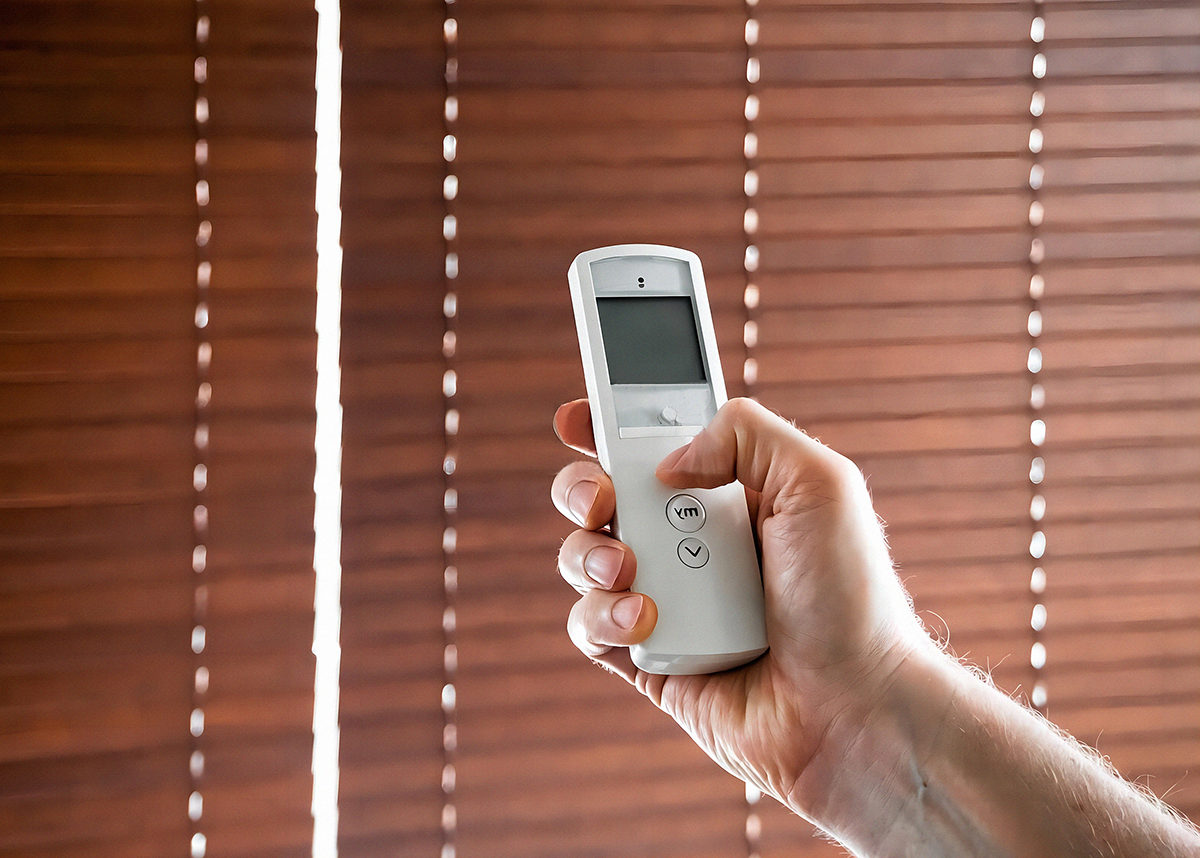
- Control System: This is how you operate the blinds. Common options include a handheld remote control, a wall-mounted switch, a smartphone app (via Wi-Fi or Bluetooth), or voice control (compatible with smart home systems like Alexa, Google Home, or Siri). Most modern systems let you program schedules—for example, setting the blinds to open at sunrise and close at sunset—adding an extra layer of convenience and even energy efficiency.
- Slat Mechanism: Just like traditional Venetian blinds, Motorized Venetian Blinds feature horizontal slats (usually made of wood, aluminum, or faux wood) that tilt to control light and privacy. The motor connects to a gear system that tilts the slats (typically 0 to 180 degrees) and lifts/lowers the entire blind. The slats move in sync, ensuring uniform light control and a clean, polished look.
The mechanism is designed to be quiet and durable—most motors operate at a volume similar to a soft whisper, so they won’t disrupt a quiet room or disturb sleep. Additionally, high-quality motors are built to last, with a lifespan of 5 to 10 years (or more, with proper maintenance), making them a long-term investment.
• Common Myths About How They Work
Many people avoid Motorized Venetian Blinds because of false assumptions about their mechanism. Let’s set the record straight on two of the most common myths:
- Myth 1: They’re prone to breaking or malfunctioning. Reality: Modern motorized blinds use high-quality, tested motors that are designed to handle daily use. As long as you choose a reputable manufacturer and follow maintenance guidelines (more on that later), malfunctions are rare. Even if something does go wrong, most manufacturers offer warranties that cover parts and labor.
- Myth 2: They require complicated programming to use. Reality: Most control systems are intuitive and user-friendly. Handheld remotes have simple buttons (up, down, tilt), and smartphone apps walk you through setup in minutes. Programming schedules or integrating with smart home systems is optional—you can use them manually if you prefer, just like traditional blinds.
Where Motorized Venetian Blinds Shine
Motorized Venetian Blinds aren’t just a “luxury” upgrade—they solve real problems in homes and even commercial spaces. Their versatility makes them suitable for nearly any room, but they’re especially useful in situations where manual blinds are inconvenient, unsafe, or ineffective. Below are the most common applications, along with practical benefits:
1. Hard-to-Reach Windows
One of the biggest pain points with manual blinds is reaching windows that are high up—think tall ceilings, skylights, or windows above countertops, fireplaces, or furniture. Climbing on chairs, stools, or ladders to adjust blinds is not only inconvenient but also dangerous (falls are a common household injury). Motorized Venetian Blinds eliminate this risk entirely—you can adjust them from the comfort of your couch or even from another room using a remote or app.
Auxiliary keyword: Skylight Venetian Blinds are a perfect example. Skylights are often installed high on ceilings, making manual adjustment nearly impossible. Motorized Skylight Venetian Blinds let you tilt or close the slats to block harsh sunlight, reduce glare, and regulate room temperature—all without climbing a ladder. This is especially useful in attics, home offices, or living rooms with skylights, where light control is key but accessibility is a challenge.
2. Homes with Children or Pets
Manual Venetian Blinds often come with cords or wands that pose a safety hazard for young children and pets, who can get tangled in loose cords. Motorized Venetian Blinds are typically cordless, eliminating this risk entirely. This makes them an ideal choice for nurseries, playrooms, bedrooms, and living rooms where kids or pets spend time.
Auxiliary keyword: Cordless Venetian Blinds (a category that includes motorized options) are recommended by child safety organizations for homes with young children. Motorized versions take this a step further by removing all manual controls, ensuring there’s no risk of entanglement. For pet owners, they also prevent pets from tugging on cords or wands, which can damage the blinds or harm the pet.
3. Energy Efficiency and Light Control
Motorized Venetian Blinds are a smart way to reduce energy costs and create a more comfortable living space. By programming the blinds to open and close based on the sun’s position, you can maximize natural light (reducing the need for artificial lighting during the day) and block harsh sunlight (reducing heat gain in summer and heat loss in winter).
For example, in a south-facing living room, programming the blinds to tilt closed during the hottest part of the day (11 AM to 3 PM) can reduce indoor temperatures by 10-15 degrees, lowering your air conditioning bill. In winter, opening the blinds during the day lets sunlight warm the room, reducing heating costs. This level of precise control is difficult to achieve with manual blinds, which often get forgotten or left in one position for days.
4. Commercial Spaces and Smart Homes
Motorized Venetian Blinds aren’t just for homes—they’re also widely used in commercial spaces like offices, hotels, and conference rooms. In offices, they can be programmed to open at the start of the workday and close at the end, ensuring a comfortable working environment for employees. In hotels, they offer guests convenience (adjusting blinds without getting out of bed) and add a touch of luxury.
In smart homes, Motorized Venetian Blinds integrate seamlessly with other smart devices. For example, you can set them to close automatically when your security system arms at night, or to open when your alarm goes off in the morning. This level of integration adds convenience and peace of mind, making your home more efficient and secure.
How Motorized Venetian Blinds Solved Common Problems
To illustrate just how practical Motorized Venetian Blinds are, let’s look at two real-world examples of homeowners who used them to solve everyday frustrations:
Example 1: A Family with High Ceilings and Young Kids
Mark and Lisa have a two-story living room with large windows that stretch from the floor to the ceiling—beautiful, but impossible to reach with manual blinds. They also have a 3-year-old and a 5-year-old, so corded blinds were a safety risk. They tried using step stools to adjust the blinds, but it was inconvenient and dangerous (Lisa once fell while trying to reach the top window).
They decided to install Motorized Venetian Blinds with a hardwired motor and smartphone app control. The blinds fit perfectly in their tall windows, and they can adjust them from anywhere in the room—even from the kitchen while cooking. The cordless design eliminated the safety hazard for their kids, and they programmed the blinds to open at 7 AM (when the kids wake up) and close at 8 PM (when it’s time for bed). “It’s been a game-changer,” Lisa said. “We no longer have to worry about climbing stools or our kids getting tangled in cords, and the house feels brighter and more comfortable.”
Auxiliary keyword: Wooden Venetian Blinds were their material of choice—they wanted a warm, natural look that matched their hardwood floors. The motorized version retained the classic wooden slat design but added the convenience of remote control, proving that Motorized Venetian Blinds can be both stylish and practical.
Example 2: A Freelancer with a Home Office Skylight
Emma is a freelance writer who works from a home office with a large skylight. While the skylight let in plenty of natural light, it also caused harsh glare on her computer screen during the afternoon, making it hard to work. She tried using a manual skylight blind, but it was nearly impossible to reach—she had to stand on a desk and stretch to adjust it, which was not only inconvenient but also risky.
She installed Motorized Skylight Venetian Blinds with a battery-powered motor and remote control. Now, she can tilt the slats to block glare without leaving her desk, and she programmed the blinds to automatically tilt closed at 1 PM (when the sun is strongest) and open again at 4 PM. The battery-powered motor was easy to install (no electrical work needed), and the blinds blended seamlessly with her office decor. “I used to waste 10 minutes every afternoon adjusting the blind,” Emma said. “Now, I can focus on my work, and my eyes are much less strained. It’s one of the best home office upgrades I’ve made.”
Practical Tips for Choosing and Maintaining Motorized Venetian Blinds
If you’re considering Motorized Venetian Blinds for your home or commercial space, follow these tips to ensure you choose the right product and keep it in top condition:
• Choose the Right Motor Type: Decide between battery-powered and hardwired motors. Battery-powered is better for renters or easy installation; hardwired is better for permanent installations and no battery replacements. For large blinds (wider than 4 feet), opt for a more powerful motor to ensure smooth operation.
• Select the Right Material: Just like traditional Venetian blinds, Motorized Venetian Blinds come in a range of materials. Aluminum Venetian Blinds are durable and affordable, ideal for high-traffic areas or bathrooms (moisture-resistant). Wooden Venetian Blinds add warmth and style, perfect for living rooms and bedrooms. Faux Wood Venetian Blinds are a great middle ground—they look like wood but are more durable and moisture-resistant.
• Consider Control Options: Think about how you want to operate your blinds. A handheld remote is simple and affordable; a smartphone app adds convenience (control from anywhere) and scheduling features; voice control is perfect for smart home enthusiasts. Many systems offer multiple control options, so you can choose what works best for you.
• Measure Correctly: Just like any Venetian blind, Motorized Venetian Blinds need to fit your windows perfectly. Hire a professional to measure your windows—this ensures the blinds fit snugly and the motor works properly. Ill-fitting blinds can strain the motor and reduce its lifespan.
• Maintain Regularly: Motorized Venetian Blinds are low-maintenance, but a little care goes a long way. Dust the slats regularly with a microfiber cloth or vacuum with a soft brush attachment. For battery-powered motors, replace batteries every 6-12 months (or as needed). For hardwired motors, check the wiring occasionally to ensure it’s secure. Avoid using harsh chemicals to clean the slats, as this can damage the material.
• Choose a Reputable Manufacturer: Not all Motorized Venetian Blinds are created equal. Look for a manufacturer with a good reputation, positive customer reviews, and a warranty (preferably 2-5 years). A reputable manufacturer will use high-quality motors and materials, ensuring your blinds last for years.
Common Questions About Motorized Venetian Blinds
To wrap up, let’s address some of the most common questions users have about Motorized Venetian Blinds, to help you make an informed decision:
Q: How much do Motorized Venetian Blinds cost? A: Prices vary based on size, material, motor type, and control options. On average, they cost 20-50% more than manual Venetian blinds, but the convenience and safety benefits are often worth the investment. Battery-powered blinds are typically more affordable upfront (no electrical work), while hardwired blinds may have a higher initial cost but lower long-term maintenance (no battery replacements).
Q: Can Motorized Venetian Blinds be installed on existing windows? A: Yes! Most Motorized Venetian Blinds are designed to fit standard window frames, and they can be installed on existing windows without major modifications. If you have unusual-sized windows, many manufacturers offer custom Motorized Venetian Blinds that fit perfectly.
Q: What happens if the power goes out? A: For battery-powered blinds, they’ll continue to work as long as the batteries are charged. For hardwired blinds, most manufacturers include a manual override (like a crank or battery backup) that lets you adjust the blinds manually during a power outage.
Q: Are Motorized Venetian Blinds noisy? A: No—modern motors are designed to be quiet, operating at around 30-40 decibels (similar to a soft conversation or a fan on low). You’ll barely notice the sound when adjusting the blinds, even in a quiet room like a bedroom.
Q: How long do the motors last? A: High-quality motors typically last 5-10 years with regular use. Battery-powered motors may have a shorter lifespan if batteries are not replaced promptly, but most manufacturers offer replacement motors if needed.
Motorized Venetian Blinds are more than just a convenient upgrade—they’re a practical solution to common window treatment problems, from hard-to-reach windows to safety hazards. By understanding how they work, their applications, and how to choose the right ones for your space, you can transform your home or commercial space into a more comfortable, efficient, and stylish environment.
Gone are the days of struggling with manual blinds or compromising on safety and convenience. With Motorized Venetian Blinds, you can enjoy effortless control, precise light management, and peace of mind—all while adding a touch of modern elegance to your space. Whether you’re a homeowner, renter, or business owner, they’re a worthwhile investment that will enhance your space for years to come.
Post time: Mar-17-2026