When it comes to choosing Custom Venetian Blinds or ready-made options, homeowners often face a common dilemma: balancing the convenience of off-the-shelf blinds with the perfect fit of custom ones. You want window treatments that look polished, function well, and fit your budget—but how do you decide which type suits your space best? The solution lies in understanding their core differences, from fit and material quality to cost and customization, then aligning those factors with your unique needs.
We’ll break down the key distinctions between Custom Venetian Blinds and ready-made Venetian blinds, address common misconceptions (like “custom always means expensive”), and share actionable tips to help you choose. We’ll also explore related options like faux wood Venetian blinds and cordless Venetian blinds—popular variations that factor into the decision-making process.
One Size Fits None (vs. A Perfect Fit for Every Window)
The most obvious—and often most impactful—difference between Custom Venetian Blinds and ready-made options is the fit. Ready-made blinds are produced in standard sizes (typically 24×36 inches, 36×48 inches, or 48×72 inches) to cater to the most common window dimensions. They’re designed for speed and affordability, but this one-size-fits-most approach falls short for many homes.
If your windows are non-standard—too narrow, too tall, arched, or have unusual proportions—ready-made blinds will force you to compromise. You might end up with blinds that are too wide (requiring awkward trimming) or too short (leaving unsightly gaps at the top or bottom). Even for slightly non-standard windows, trimming ready-made blinds (which only works for aluminum or faux wood varieties) can risk damaging the slats or ruining the mechanism, leading to a shoddy finish.
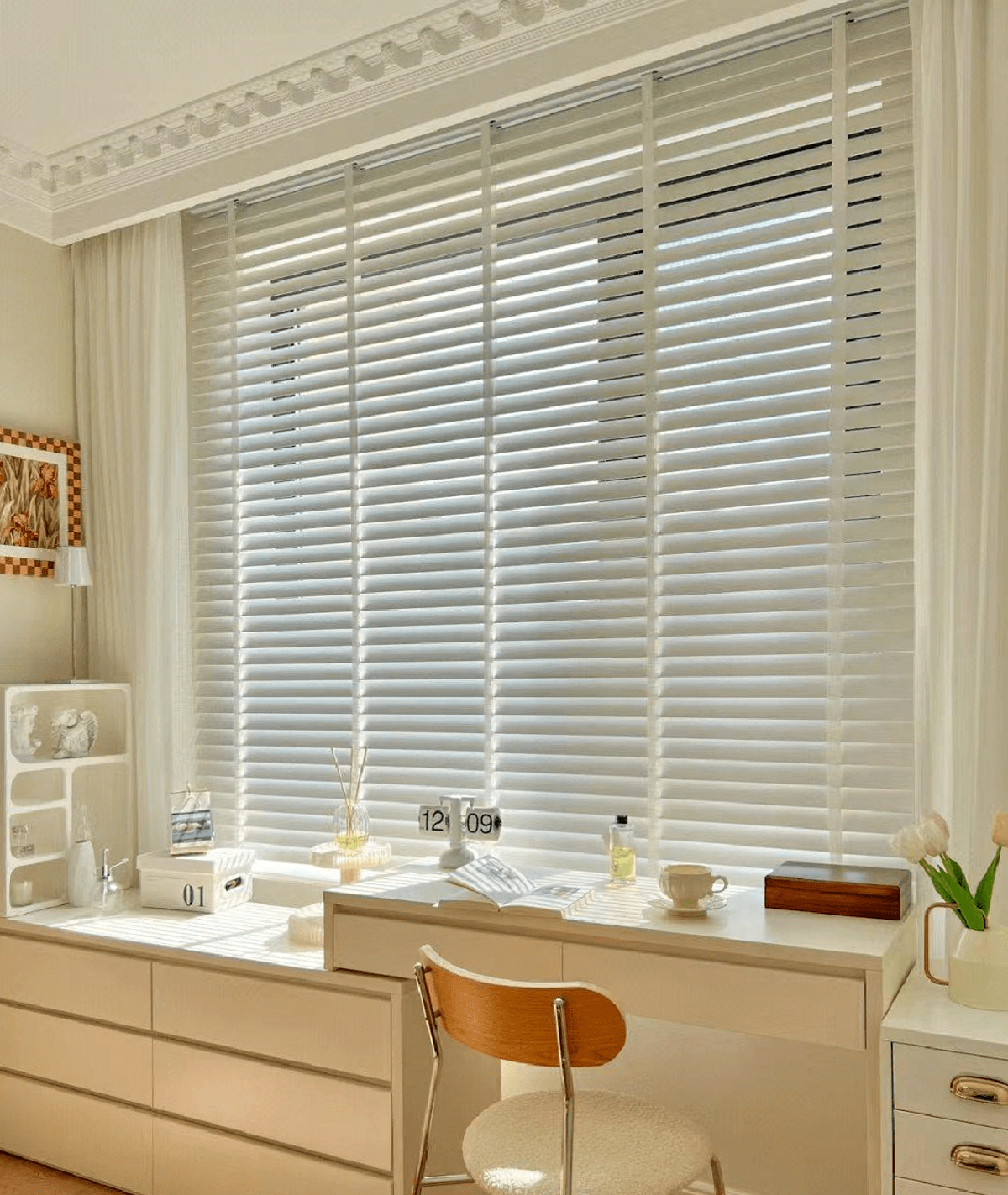
Custom Venetian Blinds, on the other hand, are crafted to your exact window measurements. Professional installers (or reputable retailers) will take precise measurements of your window frame, accounting for depth, corners, and any obstructions like handles or trim. This ensures the blinds fit seamlessly—whether you choose inside-mount (fitted within the frame) for a clean, streamlined look or outside-mount (mounted above the window) to cover the entire frame.
For example, if you have a 32×58-inch window (a non-standard size), ready-made blinds will either be too small (24×48) or too large (36×72), requiring modifications. Custom Venetian Blinds will be cut to 32×58 inches exactly, with slats aligned perfectly and the headrail fitted to avoid gaps. This level of precision isn’t just esthetic—it also improves light control and privacy, as ill-fitting blinds often let in stray light around the edges.
Mass-Produced vs. Tailored Craftsmanship
Material quality is another critical difference that impacts durability, appearance, and long-term value. Ready-made Venetian blinds are mass-produced to keep costs low, which often means using thinner, lower-grade materials.
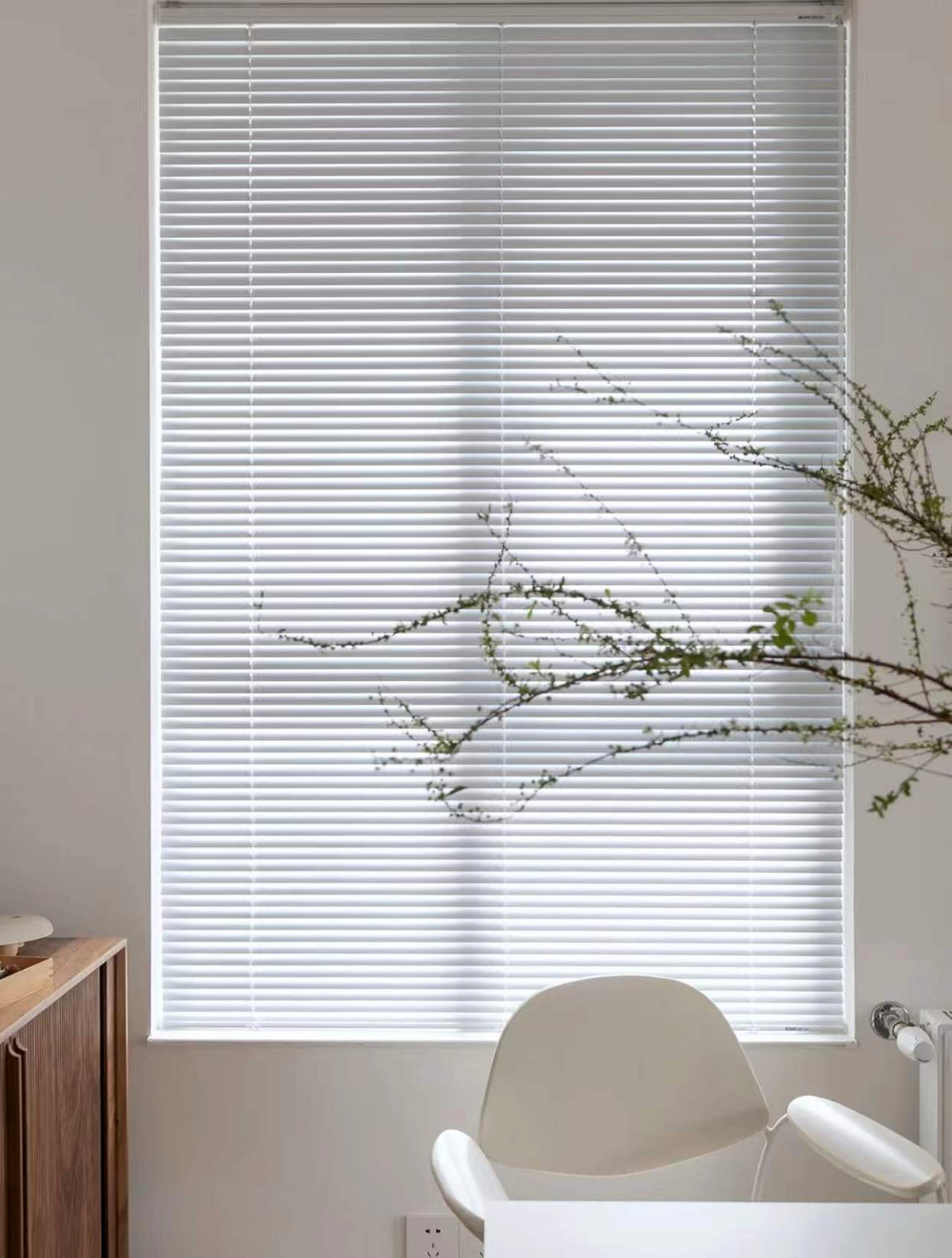
Ready-made aluminum Venetian blinds, for instance, typically use 0.1mm-thick slats that bend easily and may warp over time, especially in direct sunlight. Ready-made faux wood Venetian blinds often use low-density PVC that can become brittle or fade quickly, lacking the realistic texture of higher-quality alternatives. The mechanisms (like cord lifts or wand controls) are also simplified, with plastic components that wear out faster than metal ones.
Custom Venetian Blinds prioritize quality, as they’re designed for a specific space and customer. You’ll have access to premium materials: thicker aluminum slats (0.15mm or more) for durability, high-density faux wood that mimics real wood grain, or genuine basswood or oak for wooden Venetian blinds. The mechanisms are sturdier too—metal gears, reinforced headrails, and smoother lift systems that stand up to daily use.
Another quality perk of Custom Venetian Blinds is consistency. Mass-produced ready-made blinds can have slight variations in color or slat alignment, as they’re made in large batches. Custom blinds are crafted with more attention to detail, ensuring uniform slats, consistent finishes, and a polished look that elevates the room. For high-traffic areas like living rooms or bedrooms, this quality difference translates to longer lifespan—custom blinds often last 5-10 years, while ready-made options may need replacing in 2-3 years.
Limited Choices vs. Endless Possibilities
Ready-made Venetian blinds offer minimal customization—you’ll usually choose from a handful of colors (white, beige, gray) and slat sizes (1-inch or 2-inch). There’s little flexibility to match your decor, and features like valances, custom finishes, or specialty slats are rarely available. If you have a specific design vision—like a stained wood finish to match your flooring or a cordless system for safety—ready-made blinds will leave you disappointed.
Custom Venetian Blinds are all about personalization. You can tailor every detail to your taste and needs:
• Slat size and material: Choose 1-inch, 2-inch, or 2.5-inch slats, and pick from aluminum, faux wood, real wood, or even bamboo.
• Finish and color: Opt for custom paint, stain, or texture to match your walls, furniture, or flooring. For wooden blinds, you can select a specific wood species and finish to achieve the exact warmth or tone you want.
• Functionality: Add cordless Venetian blinds for child and pet safety, motorization for hard-to-reach windows, or light-filtering slats for soft ambient light.
• Extras: Custom valances, decorative trims, or blackout liners to enhance privacy and style.
This level of customization is especially valuable for unique spaces—like a home office with large picture windows or a bedroom with arched tops. Custom Venetian Blinds can be adapted to fit any window shape, and the design options let you integrate them seamlessly into your decor, rather than settling for a one-size-fits-all afterthought.
Upfront Savings vs. Long-Term Value
Cost is often the deciding factor for homeowners, and there’s no denying that ready-made Venetian blinds are cheaper upfront. A basic ready-made aluminum blind costs $20-$50 per window, while ready-made faux wood blinds range from $50-$100. This makes them ideal for renters, temporary spaces, or anyone on a tight budget.
Custom Venetian Blinds come with a higher upfront cost—starting at $80 per window for aluminum, $150 for faux wood, and $200+ for real wood. The price increases with customization: motorization adds $50-$100 per window, custom finishes add $20-$50, and specialty sizes or shapes can push costs higher. But it’s important to consider long-term value.
Custom blinds last longer, require fewer replacements, and add value to your home—they’re seen as a premium upgrade, unlike ready-made blinds which are viewed as temporary. They also reduce waste: ill-fitting ready-made blinds often end up in landfills after a few years, while custom blinds are designed to last, making them a more sustainable choice. For homeowners planning to stay in their home for 5+ years, Custom Venetian Blinds offer better return on investment.
There’s also a middle ground: some retailers offer “semi-custom” blinds—ready-made sizes with limited customization (like color or cordless lift)—for $50-$100 per window. These are a good option if you want a bit more flexibility than ready-made but don’t need full customization.
|
Factors |
Ready-Made Venetian Blinds |
Custom Venetian Blinds |
|
Fit |
Standard sizes only; may require trimming; gaps or ill-fit common for non-standard windows |
Tailored to exact window measurements; seamless fit for any size/shape (arched, narrow, etc.) |
|
Material & Quality |
Thin, low-grade materials; plastic mechanisms; 2-3 year lifespan; batch variations |
Premium materials (thicker aluminum, high-density faux wood); metal mechanisms; 5-10 year lifespan; consistent craftsmanship |
|
Customization |
Limited colors (white, beige, gray) and slat sizes (1-2 inch); no extra features |
Full personalization (slat size/material, custom finish, cordless/motorization, valances) |
|
Cost |
Upfront savings: $20-$50 (aluminum), $50-$100 (faux wood) per window |
Higher upfront: $80+ (aluminum), $150+ (faux wood), $200+ (real wood) per window; better long-term value |
|
Best For |
Renters, standard windows, low-traffic spaces, tight budgets |
Homeowners, non-standard windows, high-traffic areas, decor cohesion |
This table simplifies the key differences, making it easier to weigh your options based on your space and priorities. Keep these contrasts in mind as we break down practical tips for choosing the right type for your home.
When to Choose Custom vs. Ready-Made
To help you decide, here are actionable guidelines based on common scenarios:
• Choose Ready-Made Venetian Blinds If:
- You have standard-size windows (24×36, 36×48, etc.) and don’t need a perfect fit.
- You’re a renter or planning to move soon—ready-made blinds are easy to install and remove.
- You’re on a tight budget and prioritize upfront savings over long-term durability.
- The space is low-traffic (like a storage room or guest closet) where quality and style are less important.
• Choose Custom Venetian Blinds If:
- You have non-standard or unusual windows (arched, narrow, tall, or irregularly shaped).
- You want a polished, cohesive look that matches your decor—customization ensures the blinds complement your space.
- The room is high-traffic (living room, bedroom, kitchen) where durability and functionality matter.
- You need safety features (like cordless) or specialty functions (motorization) that ready-made blinds don’t offer.
- You’re a homeowner planning to stay long-term—custom blinds add value and last longer.
Pro Tips to Save on Custom Venetian Blinds
If you want the benefits of Custom Venetian Blinds but want to keep costs in check, try these strategies:
- Opt for faux wood instead of real wood—high-density faux wood looks authentic but costs 30-40% less.
- Skip unnecessary extras—decorative valances and custom finishes are nice but not essential. Stick to standard colors and simple trims.
- Choose cordless over motorized—cordless lift is safer and cheaper than motorization, and still offers convenience.
- Shop sales or package deals—many retailers offer discounts on custom blinds during holidays (Black Friday, Memorial Day) or bundle them with installation for free.
- Compare quotes—get 2-3 quotes from different retailers to find the best price for the same quality and customization.
At the end of the day, the choice between Custom Venetian Blinds and ready-made comes down to your priorities. If convenience and upfront cost are key, ready-made works— but if fit, quality, and style matter most, custom is worth the investment. Remember, window treatments are a visible part of your home, and getting them right can transform a room from ordinary to extraordinary.
Post time: Feb-06-2026