There’s nothing more frustrating than ordering a set of Venetian blinds, eagerly unboxing them, and realizing they don’t fit your window—too wide, too narrow, or just off enough to ruin that clean, polished look you were aiming for. I’ve been there myself: rushing through measurements, guessing at “standard sizes,” and ending up with blinds that either overlap the window frame awkwardly or leave annoying gaps where light seeps through. The good news? Measuring Venetian blinds isn’t rocket science, but it does take precision, attention to detail, and knowing how to work with your window’s unique layout. In this guide, I’ll walk you through the step-by-step process to get measurements right the first time, avoid common pitfalls, and make sure your Venetian blinds fit like they were custom-made—even if you’re a total beginner. We’ll also break down key terms like inside Mount Venetian blinds, outside Mount Venetian blinds, and Venetian blind slats to help you make smart choices along the way.
First: Gather the Right Tools (Don’t Skip This!)
Before you grab a random ruler and start measuring, let’s make sure you have the tools that will guarantee accuracy. A flimsy plastic ruler might bend or give inconsistent readings, and estimating with your eye is a surefire way to mess up. Here’s what you’ll need:
• A steel tape measure (preferred over cloth or plastic—steel stays straight and provides precise measurements to the 1/8 inch or millimeter).
• A pencil and paper (to jot down measurements; label each one clearly to avoid mixing them up).
• A level (optional but helpful for confirming your window frame is square—more on that later).
• A step stool or ladder (if your windows are high up; safety first—don’t stretch or stand on unstable surfaces).
Pro tip: Measure twice, cut (or order) once. It’s cliché, but it’s true for Venetian blinds. Even if you think you got the number right the first time, double-check to eliminate human error.
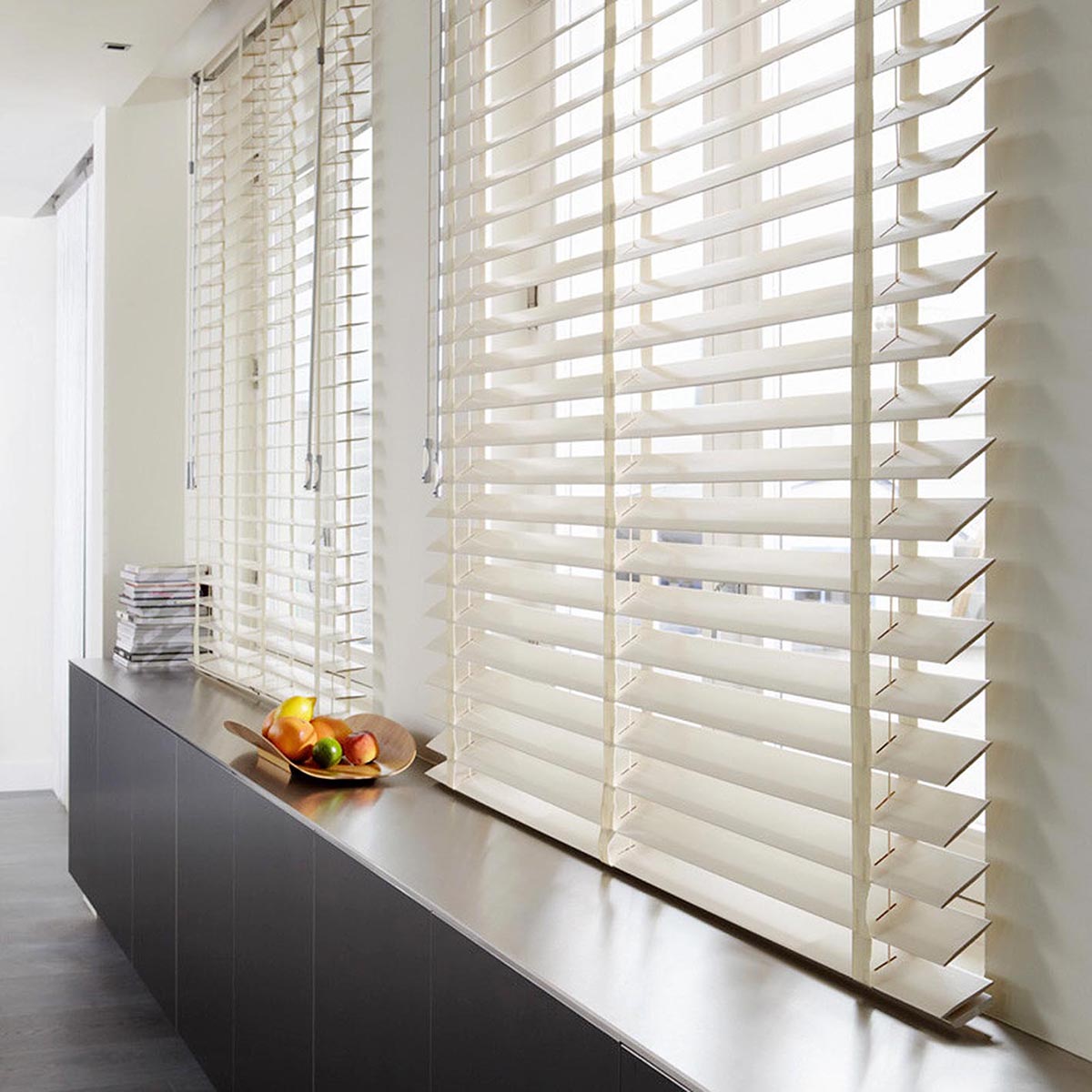
Step 1: Decide Between Inside Mount and Outside Mount Venetian Blinds
The first critical decision you’ll make is whether to install inside Mount Venetian blinds (fits inside the window recess) or outside Mount Venetian blinds (mounts on the wall or window frame, covering the entire opening). This choice dictates how you measure, so it’s important to pick the right option for your space.
• Inside Mount: Sleek and Minimalist
Inside mount is ideal if you want a clean, built-in look—think modern kitchens, bedrooms, or offices where you want the blinds to blend with the window frame. For inside mount to work, you need enough depth in the window recess to accommodate the blind’s headrail (the top part that holds the slats). Most Venetian blinds require at least 1.5 inches of depth, but check the manufacturer’s specs—some slim models need only 1 inch, while thicker ones (like those with motorized mechanisms) may need 2 inches or more.
Warning: If your window recess is too shallow, the headrail will stick out, ruining the inside mount effect. In that case, opt for outside mount instead. Also, inside mount won’t work if your window frame is uneven or out of square—gaps will show on the sides.
• Outside Mount: Bold and Functional
Outside mount is perfect for windows with narrow recesses, uneven frames, or if you want to cover the entire window (and possibly the frame) for maximum light control. It’s also a great way to make small windows look larger—mount the blinds a few inches above the window and extend them slightly beyond the sides for a more dramatic effect.
One key benefit of outside mount: it hides any imperfections in the window frame, like chipped paint or uneven edges. Just keep in mind that outside mount blinds will take up more wall space, so measure accordingly to avoid blocking trim or nearby fixtures.
Step 2: Measure for Inside Mount Venetian Blinds
If you’ve chosen inside mount, follow these steps to get precise measurements. Remember: inside mount relies on the width and height of the window recess, not the overall window size.
• Measuring Width
Windows are rarely perfectly square, so you’ll need to measure the width at three points: the top, middle, and bottom of the recess. Use the smallest measurement as your width—this ensures the blinds fit without getting stuck. If you use the largest measurement, the blinds might be too wide and won’t sit flush.
How to measure: Hold the tape measure parallel to the top of the recess, starting at the left edge (inside the frame) and extending to the right edge. Repeat at the middle and bottom. Note each measurement (e.g., 32 1/4 inches, 32 3/8 inches, 32 1/4 inches) and circle the smallest one.
Pro tip: Don’t deduct any inches from the width—most manufacturers will automatically subtract a small amount (1/8 to 1/4 inch) to ensure a snug fit. If you deduct too much, you’ll end up with gaps.
• Measuring Height
For height, measure at three points: left side, middle, and right side of the recess. This time, use the longest measurement—you want the blinds to reach the bottom of the recess (or slightly below, if you prefer) without leaving a gap.
How to measure: Hold the tape measure vertically from the top of the recess (where the headrail will sit) to the bottom. Repeat on the left, middle, and right. Note each measurement (e.g., 48 1/2 inches, 48 3/4 inches, 48 1/2 inches) and circle the largest one.
If you want the blinds to rest on the windowsill, measure to the top of the sill. If you want them to hang below the sill, add the desired length (e.g., 2 inches) to the longest height measurement.

Step 3: Measure for Outside Mount Venetian Blinds
Outside mount measurements are a bit more flexible, but you still need to be precise to avoid blinds that look ill-fitted. The main goal here is to measure the exact area you want the blinds to cover, plus a little extra overlap to keep light out.
• Measuring Width
For outside mount, the width should be wider than the window opening to prevent light gaps. A general rule is to add 3-4 inches total (1.5-2 inches on each side) to the window’s width. If your window has a frame, measure from the outer edge of the frame on the left to the outer edge on the right, then add the extra inches.
Example: If your window opening is 30 inches wide, add 4 inches (2 inches per side) for a total width of 34 inches. This ensures the blinds cover the entire opening and block light from the sides.
If you’re mounting the blinds on the wall above the window (not on the frame), measure the width you want the blinds to span. For a cohesive look, align the blinds with nearby trim or fixtures.
• Measuring Height
For height, measure from where you want the top of the headrail to sit (usually 2-3 inches above the window frame or opening) to where you want the bottom of the blinds to end. Adding 2-3 inches above the window not only hides the headrail but also makes the window appear taller.
If you want the blinds to reach the floor, measure from the top mounting point to the floor (add 1 inch if you want them to graze the floor). If you want them to stop at the windowsill, measure to the top of the sill and add one inch for a slight overlap.
Pro tip: If your window is above a counter or furniture, make sure the blinds don’t hang too low—leave at least 2 inches of clearance to avoid damage.
Step 4: Account for Special Cases
Not all windows are standard rectangles. Here’s how to handle common tricky scenarios to ensure your Venetian blinds fit perfectly.
• Uneven or Out-of-Square Windows
If your window frame is out of square (common in older homes), use the level to check. For inside mount, the smallest width and longest height measurements will still work, but you may need to adjust the mounting brackets to keep the blinds straight. For outside mount, the extra width and height will help hide uneven edges.
• Bay Windows
Bay windows require three separate blinds (one for each section). Measure each section individually as you would for inside or outside mount. For inside mount, make sure each recess has enough depth for the headrail. For outside mount, align the blinds so they meet neatly at the corners without overlapping too much.
• French Doors or Sliding Doors
For doors, outside mount is usually best (inside mount can interfere with door handles). Measure the width of the door’s glass panel, add 2-3 inches on each side, and measure the height from the top of the glass to the bottom. Opt for Venetian blind slats that are 2-inch or 2.5-inch wide—narrower slats (1-inch) are more prone to damage from door movement.
• Windows with Handles or Obstacles
If your window has handles, locks, or other obstacles, measure the distance from the obstacle to the edge of the recess. For inside mount, this will tell you if you need to adjust the headrail position (e.g., mount it higher to avoid the handle). For outside mount, the extra width should cover the obstacle without issue.
Step 5: Understand Venetian Blind Slats and Sizing
While we’re on the topic of measurements, it’s worth touching on how Venetian blind slats impact both fit and function. Slat width—usually 1 inch, 2 inches, or 2.5 inches—doesn’t change the overall width or height of the blinds, but it does affect how they hang and how well they block light.
Narrow slats (1 inch) are great for small windows or spaces where you want a subtle look, but they require more precise measurements to avoid gaps. Wider slats (2.5 inches) are better for large windows—they’re easier to operate and provide better light control. Keep in mind that wider slats may need a sturdier headrail, so check the manufacturer’s weight recommendations.
Another factor: slat material. Aluminum Venetian blinds are lighter and require less depth for inside mount, while wood or faux wood blinds are heavier and may need more support (and deeper recesses for inside mount).
Common Mistakes to Avoid
Even with careful measuring, it’s easy to make mistakes. Here are the most common ones—and how to steer clear of them:
• Measuring the window frame instead of the recess (for inside mount): Always measure the inside of the recess, not the outer frame.
• Forgetting to account for the headrail: The headrail adds width and depth—don’t just measure the slats.
• Using metric and imperial units interchangeably: Stick to one system (most manufacturers use inches in the US, millimeters in Europe).
• Guessing at overlap for outside mount: Too little overlap leads to light gaps; too much looks bulky. Stick to 1.5-2 inches per side.
• Ignoring window depth: Inside mount blinds won’t fit if the recess is too shallow—always check the headrail depth requirement.
Final Tips for a Perfect Fit
Once you have your final measurements, double-check them against the manufacturer’s sizing guide—this step is easy to skip but can save you headaches later. Many brands offer custom Venetian blinds, so if your measurements fall between standard sizes, go custom. It’s the safest bet for a perfect fit, no exceptions.
If you’re unsure about anything, take a photo of your window and bring your measurements to a local blinds store. The staff can help you confirm your mount type, adjust measurements if needed, and recommend the right slat width and material.
Finally, when installing the blinds, use a level to ensure the headrail is straight. A crooked headrail will make the blinds hang unevenly, even if your measurements are perfect.
At the end of the day, measuring Venetian blinds correctly boils down to precision, patience, and understanding your window’s unique quirks. By following the steps outlined here—from choosing between inside and outside mount to accounting for tricky obstacles and avoiding common mistakes—you’ll wind up with blinds that fit flawlessly, block light just right, and add a polished touch to your space. This isn’t about rushing through the process; it’s about getting it right the first time so you don’t have to deal with the hassle of returns, reorders, or a finish that falls short of your expectations.
Whether you’re going for inside Mount Venetian blinds to keep your kitchen looking sleek or outside Mount Venetian blinds to tackle a lopsided window frame, the core principle stays the same: measure carefully, double-check every number, and pick a style that works with your space. With a little extra time and attention to the details we’ve covered—from slat width to headrail depth—your Venetian blinds will fit so well, you’ll swear they were custom-made just for your windows.
Post time: Feb-10-2026