Large windows are a stunning focal point in any home—they flood rooms with natural light, create an illusion of more space, and blur the line between indoor comfort and outdoor beauty. But when it comes to dressing them with window coverings, many homeowners stumble—especially when choosing Venetian Blinds for Large Windows. Unlike standard-sized windows, large windows have unique needs: they require blinds that are sturdy enough to cover wide or tall openings, functional enough to control light and privacy, and stylish enough to complement your decor without overwhelming the space.
After helping dozens of clients fix their misaligned or ill-fitting large window blinds, I’ve noticed a pattern: most people make the same avoidable mistakes when shopping for Venetian Blinds for their big windows. These mistakes don’t just waste money—they lead to sagging slats, hard-to-operate blinds, poor light control, and a look that feels disjointed. The good news? With a little know-how, you can skip the frustration and choose the perfect large window Venetian Blinds the first time around.
Mistake 1: Ignoring the Weight and Size of the Blinds (The #1 Culprit of Sagging Slats)
The biggest mistake I see? Underestimating how heavy Venetian Blinds for Large Windows can be. Standard Venetian Blinds are designed for small to medium windows, so when you scale them up to cover a large opening (think 4 feet wide or more), the weight adds up quickly—especially if you choose real wood or thick aluminum slats.
Many homeowners pick the same thin, lightweight blinds they’d use for a small bedroom window, not realizing that these blinds can’t support their own weight over a large span. The result? Sagging slats in the middle, bent headrails, and even damage to your window frames over time. I once had a client who installed cheap plastic Venetian Blinds on a 6-foot-wide living room window—within 3 months, the slats were drooping so much, they blocked half the light and looked messy.
How to Avoid It: Prioritize blinds labeled “heavy-duty” or “for large windows.” Look for reinforced headrails (metal is better than plastic) and slats that are thicker (at least 2.5 inches for wood/faux wood, 0.03 inches for aluminum). If your window is wider than 5 feet, opt for split blinds (two separate blinds side by side) instead of one single large blind—this reduces the weight on each headrail and prevents sagging. For extra support, choose blinds with multiple mounting brackets (at least one every 2 feet) to distribute the weight evenly.
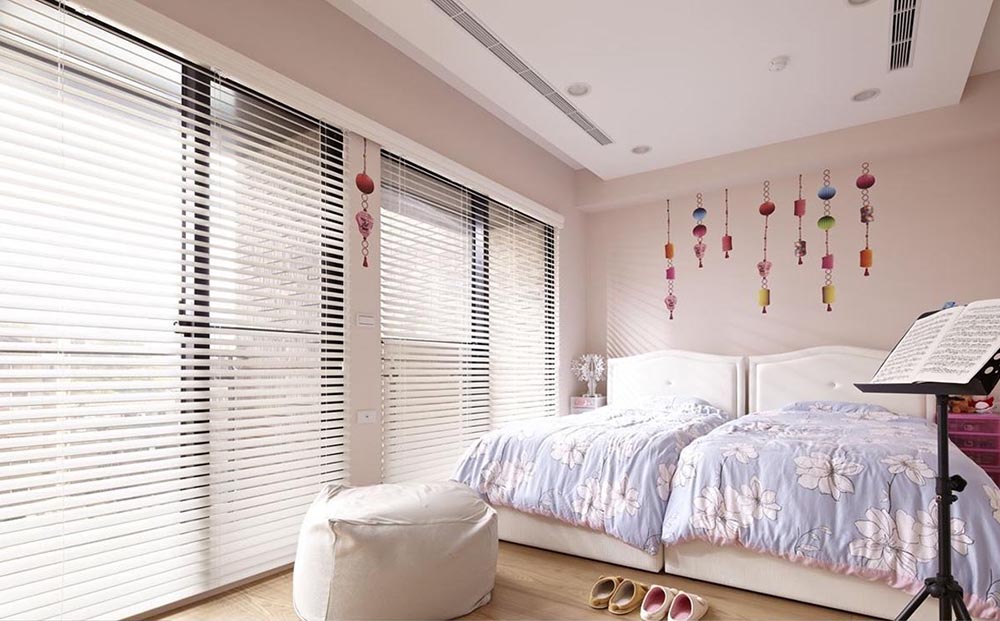
Mistake 2: Choosing the Wrong Slat Size
Slat size might seem like a minor detail, but it makes a huge difference in how your Venetian Blinds for Large Windows look and function. Many people default to small slats (1 inch or less) because they’re “traditional,” but small slats on a large window create a cluttered, busy look—like a grid that overwhelms the window’s natural beauty. On the flip side, choosing slats that are too large (4 inches or more) can make the blinds look bulky and out of proportion, especially if your window is tall but not wide.
I recently worked with a client who installed 3-inch wooden slats on a narrow but tall (8 feet) large window—they ended up looking like oversized shutters, and the slats were so heavy, they were hard to tilt. Another client chose 1-inch aluminum slats on a 7-foot-wide window, and the blinds looked cramped, like they were “trying too hard” to cover the space.
How to Avoid It: Follow this simple rule of thumb: the larger your window, the wider the slat should be (within reason). For windows wider than 4 feet, 2-inch or 2.5-inch slats are ideal—they balance coverage and style without looking cluttered or bulky. If your window is both wide and tall (e.g., 6×8 feet), 2.5-inch slats are perfect. For narrower large windows (4×6 feet), 2-inch slats work best. Stick to this range, and you’ll avoid the “too small” or “too large” trap.
Mistake 3: Overlooking the Tilt and Lift Mechanism
When shopping for Venetian Blinds, it’s easy to get caught up in color and material—but the tilt and lift mechanism is just as important, especially for large windows. Large Venetian Blinds are heavier, so a flimsy mechanism will break quickly, leaving you with blinds that won’t tilt or lift smoothly.
A common mistake is choosing corded blinds for large windows. Corded mechanisms work for small blinds, but for heavy large window Venetian Blinds, pulling the cord can be difficult (especially for kids or elderly family members), and the cords can fray or snap over time. I’ve also seen homeowners choose cheap plastic tilt mechanisms—these break easily, leaving slats stuck in one position (either fully open or fully closed), which defeats the purpose of Venetian Blinds.
How to Avoid It: Opt for motorized or cordless lift mechanisms for large windows—they’re easier to operate and more durable. Motorized blinds let you adjust slats or lift the blinds with a remote or smartphone, which is a game-changer for tall or hard-to-reach windows. If motorized is out of your budget, choose cordless lift with a sturdy metal tilt rod (not plastic). Look for mechanisms labeled “heavy-duty” or “for large blinds”—they’re designed to handle the weight of bigger slats and wider spans.
Mistake 4: Choosing the Wrong Material
Venetian Blinds come in a variety of materials—wood, faux wood, aluminum, and plastic—and each works best in specific environments. The mistake? Choosing a material based solely on looks, not on your window’s location or your home’s needs. This is especially problematic for large windows, which are often exposed to more sunlight, humidity, or wear and tear.
For example, real wood Venetian Blinds are beautiful, but they warp and fade in direct sunlight or high humidity (like in bathrooms or kitchens with large windows). I had a client who installed real wood blinds on a large kitchen window—within a year, the slats were warped, and the finish had faded, making the blinds look old and worn. On the other hand, aluminum blinds are durable, but they can feel cold and industrial in a cozy living room with large windows.
How to Avoid It: Match the material to your window’s location:
• Sunny rooms (living rooms, bedrooms): Faux wood Venetian Blinds—they’re resistant to fading and warping, and they look like real wood without the maintenance.
• Humid areas (bathrooms, kitchens): Aluminum or PVC Venetian Blinds—they’re waterproof and easy to clean.
• Cozy, low-humidity rooms (home offices, dining rooms): Real wood or faux wood blinds—they add warmth and texture.
For large windows, avoid plastic blinds—they’re too flimsy and won’t hold up to regular use. Stick to wood, faux wood, or aluminum for durability.
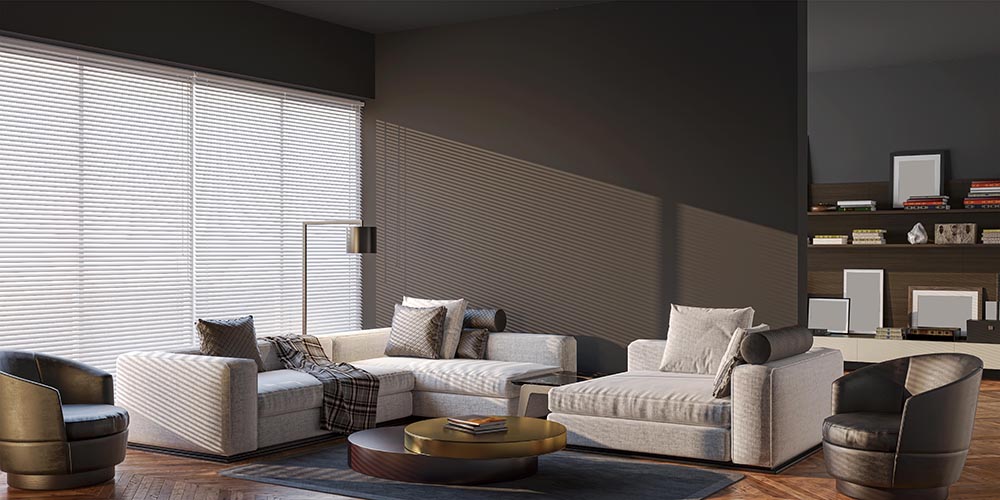
Mistake 5: Measuring Incorrectly
Measuring is make-or-break for Venetian Blinds for Large Windows. A small measurement error (even 1/2 inch) can result in blinds that are too small (leaving gaps around the edges) or too large (not fitting in the window frame or overlapping awkwardly). Many homeowners rush through measuring, or they measure the wrong part of the window—leading to expensive mistakes.
I’ve seen clients measure the width of the window frame instead of the opening, resulting in blinds that are too narrow. Others measure only one spot (e.g., the top of the window) and don’t check the bottom—many large windows are slightly uneven, so the width can vary by 1/4 inch or more from top to bottom. If you don’t account for this, your blinds won’t fit properly.
How to Avoid It: Measure carefully, and follow these steps:
• Measure the width: Measure the inside of the window frame at the top, middle, and bottom. Use the smallest measurement (this accounts for any unevenness).
• Measure the height: Measure the inside of the frame at the left, middle, and right. Use the longest measurement (to ensure full coverage).
• For outside mount: If you’re mounting the blinds outside the window frame (to cover the frame or add depth), add 3-4 inches to the width and 2-3 inches to the height (this prevents light gaps).
• Double-check: Measure twice to ensure accuracy—better to spend an extra minute than to order the wrong size.
If you’re unsure, hire a professional to measure—many blind companies offer free measurement services, and it’s worth it to avoid costly mistakes.
Mistake 6: Forgetting About Light Control and Privacy
Large windows let in lots of light, which is great—but they also mean less privacy, especially if your home faces a street, neighbor’s house, or busy area. A common mistake is choosing Venetian Blinds that look great but don’t provide enough light control or privacy. For example, thin aluminum slats can let in gaps of light when closed, and light-colored slats can be see-through at night (when lights are on inside).
I had a client who chose light gray aluminum slats for a large living room window facing a busy street—at night, the slats were see-through, and they could see people walking by, which made them feel uncomfortable. Another client chose slats that were too thin, so even when closed, sunlight streamed through, making the room too bright during the day.
How to Avoid It: Prioritize light control and privacy when choosing slats. For maximum privacy and light blockage, choose slats with a blackout backing (available for faux wood and aluminum blinds). If you want to let in some light but maintain privacy, opt for darker-colored slats (brown, black, dark gray)—they’re less see-through than light colors. For adjustable light control, choose 2-inch or 2.5-inch slats—they close more tightly than smaller slats, reducing light gaps.
Mistake 7: Skimping on Quality to Save Money
Large windows require more material, so Venetian Blinds for Large Windows can be more expensive than standard blinds. It’s tempting to cut corners and buy cheap blinds to save money—but this is a mistake that will cost you more in the long run. Cheap blinds are made with flimsy materials, weak mechanisms, and thin slats that break, sag, or fade quickly. You’ll end up replacing them within a year or two, which is more expensive than buying quality blinds upfront.
I’ve had clients who spent $200 on cheap plastic Venetian Blinds for a large window, only to replace them 18 months later for $500. In contrast, a client who spent $600 on high-quality faux wood blinds has had them for 5 years, and they still look like new. Quality blinds are an investment—they last longer, function better, and look better, which adds value to your home.
How to Avoid It: Set a reasonable budget, and invest in mid-to-high-quality blinds. Look for brands that offer warranties (at least 5 years) and positive reviews from homeowners with large windows. You don’t have to buy the most expensive option, but avoid the cheapest ones—they’re not worth the hassle. If budget is a concern, opt for split blinds (two smaller blinds instead of one large one)—they’re often more affordable than a single large blind, and they’re more durable.
FAQs: Common Questions About Venetian Blinds for Large Windows
To wrap things up, let’s answer the most frequently asked questions I get about choosing Venetian Blinds for Large Windows. These will help clear up any last-minute confusion and ensure you make the right choice.
Q1: Should I choose inside mount or outside mount for my large window Venetian Blinds?
A: It depends on your window and decor. Inside mount (blinds mounted inside the window frame) looks clean and streamlined, but it requires precise measurements (and the frame must be deep enough to fit the headrail). Outside mount (blinds mounted outside the frame) is better for windows with narrow frames or uneven edges—it covers the frame and can make the window look larger. For large windows, outside mount is often easier to install and ensures full coverage.
Q2: Can I install Venetian Blinds for Large Windows myself, or do I need a professional?
A: It’s possible to install them yourself if you’re handy, but large blinds are heavy and can be tricky to hang (especially if the window is tall). If you’re not comfortable lifting heavy blinds or drilling into window frames, hire a professional—they’ll ensure the blinds are mounted securely and evenly, which prevents sagging and damage. Many blind companies offer installation services for a reasonable fee, and it’s worth it for peace of mind.
Q3: How do I clean large Venetian Blinds without taking them down?
A: Cleaning large blinds can be a hassle, but you don’t have to take them down. Use a microfiber duster or a vacuum with a soft brush attachment to dust slats regularly (once a week). For deeper cleaning, mix a solution of warm water and mild dish soap, dip a cloth in it, wring it out (so it’s damp, not wet), and wipe each slat individually. Avoid using harsh chemicals or too much water (especially for wood blinds)—this can damage the slats.
Q4: Are motorized Venetian Blinds worth the extra cost for large windows?
A: Yes! Motorized blinds are a game-changer for large windows. They’re easier to operate (no pulling heavy cords), and they let you adjust slats or lift the blinds with a remote or smartphone—perfect for tall or hard-to-reach windows. They also last longer than corded mechanisms, so they’re a good investment. If budget is a concern, you can opt for motorized blinds for the most hard-to-reach windows and cordless for the rest.
Choosing Venetian Blinds for Large Windows doesn’t have to be stressful. By avoiding these 7 common mistakes—ignoring weight, choosing the wrong slat size, overlooking the mechanism, picking the wrong material, measuring incorrectly, forgetting light control, and skimping on quality—you can find blinds that are functional, stylish, and durable.
Remember: large windows deserve blinds that are designed for them. Take your time, measure carefully, prioritize quality and function, and don’t be afraid to ask for help if you need it. With the right blinds, your large windows will shine, and you’ll enjoy a space that’s both beautiful and functional for years to come.
If you have any other questions about choosing or installing Venetian Blinds for large windows, leave a comment below—I’m happy to help!
Post time: May-12-2026