Bay windows are the heart of many modern homes, blending natural light and architectural charm into living spaces, but finding the right window treatments to match their unique angles and curves can feel like a daunting task. Venetian blinds have emerged as the top choice for bay window customization in 2026, thanks to their unbeatable flexibility in light control, space-saving design, and seamless integration with both contemporary and classic home styles. What makes them even more appealing this year is the rise of thermal wooden Venetian blinds and smart motorized Venetian blinds, two trends that marry practicality with the latest home design innovations. If you’ve ever struggled with ill-fitting blinds, poor light management, or a lack of style cohesion in your bay window area, this guide will walk you through every step of customizing Venetian blinds that check all the boxes—functionality, trendiness, and perfect fit. We’ll cover everything from measuring your bay window with precision to choosing the right materials, installation methods, and even small upgrades that make a big difference, all tailored to the unique needs of bay window spaces. By the end, you’ll have all the tools to transform your bay window from a design challenge into a standout feature of your home.
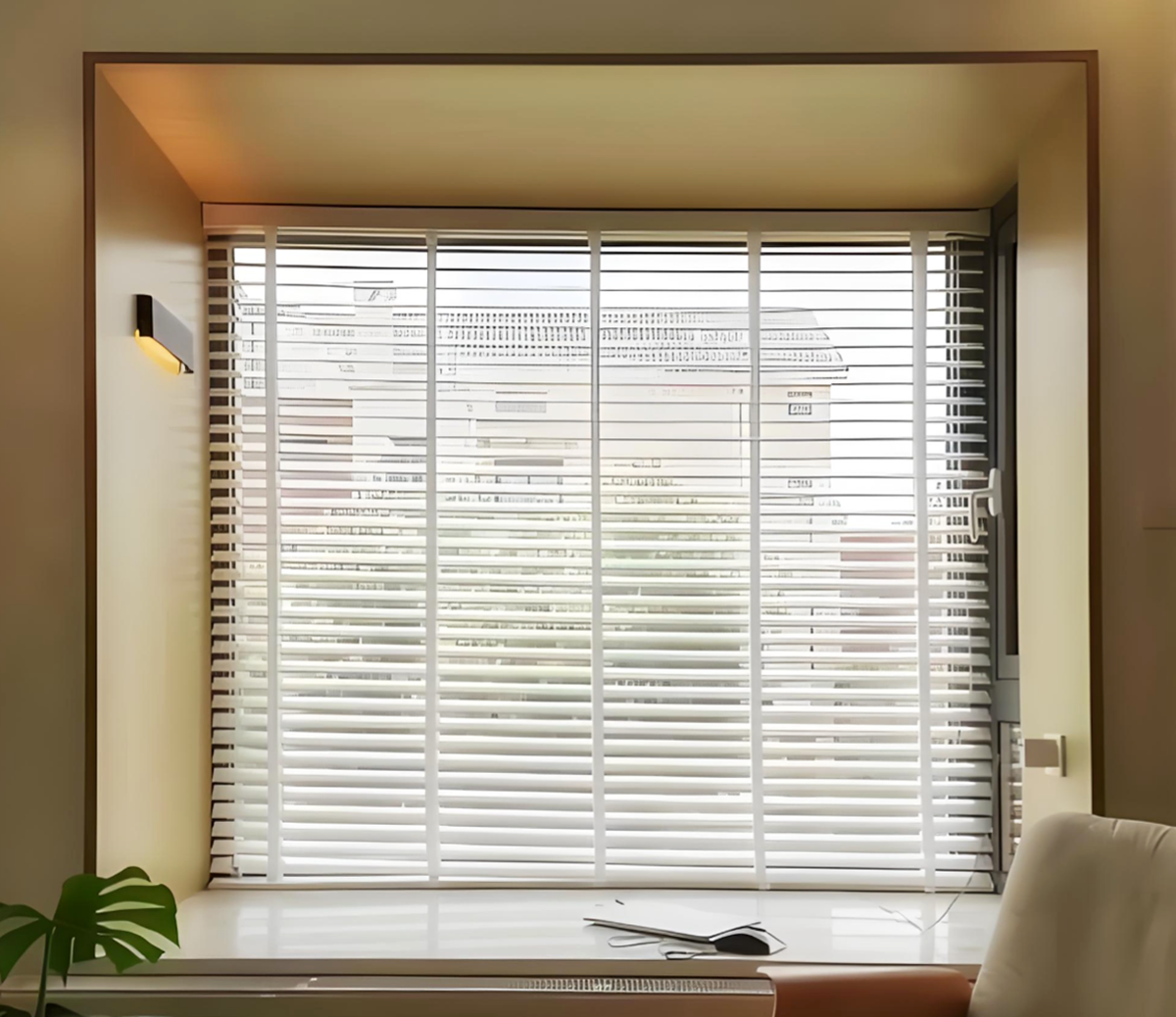
First, let’s address the biggest hurdle most homeowners face: measuring a bay window for Venetian blinds. Unlike standard rectangular windows, bay windows come in three main types—inner bay, outer bay, and floor-to-ceiling bay—and each requires a slightly different measuring approach to ensure your blinds fit without gaps or operational issues. The golden rule here is precision: even a 5mm error can lead to blinds that stick, don’t close fully, or leave unsightly light leaks, so skip the flimsy plastic tape measure and invest in a metal one (or a laser measuring tool for larger bays). Start by breaking your bay window into its individual panes—most bay windows have three sections, a central one and two angled sides—and measure each pane separately. For recess fitting (installing the blinds inside the window frame, the most popular choice for bay windows), measure the width of each pane at the top, middle, and bottom, then record the smallest width measurement for each—this accounts for any slight warping or irregularities in the frame. For the drop (height), measure from the top of the frame to the windowsill (or the floor for floor-to-ceiling bays) at three points too, again noting the smallest number. Don’t forget to measure the depth of the window recess: Venetian blinds need at least 6.5 cm of depth to clear window handles and operate smoothly, so if your recess is shallower, opt for face fitting (installing the blinds on the wall outside the frame) instead. For face fitting, add 10-15 cm to the total width of the bay window (5-7.5 cm on each side) to ensure full coverage and eliminate light gaps, and measure the drop from where you’ll mount the headrail (usually 5-10 cm below the ceiling) to your desired end point. Always measure each dimension three times and take the average—this simple step avoids costly mistakes and ensures your custom Venetian blinds fit like a glove.
Next, choosing the right material for your bay window Venetian blinds is critical, and 2026′s trends lean heavily into sustainability and energy efficiency, two factors that add long-term value to your home. The three most popular materials for bay window Venetian blinds this year are aluminium, thermal wood (real or faux), and composite PVC, each with unique benefits tailored to different rooms and needs. Aluminium Venetian blinds are the workhorse of the group—lightweight, water-resistant, easy to clean, and incredibly durable, making them ideal for high-moisture areas like kitchen bay windows or bathroom bay windows. They come in a huge range of finishes for 2026, from matte black and brushed titanium to glitter and grain textures, so you can match them to your cabinetry or tile work without sacrificing style. For living rooms, bedrooms, or home offices—spaces where warmth and energy efficiency are key—thermal wooden Venetian blinds are the top trend. These blinds feature a special thermal fabric finish that traps heat in winter and reflects sunlight in summer, cutting down on your energy bills while adding a natural, luxurious texture to your bay window. Real wood options (like oak or pine) are perfect for traditional homes, while faux wood is a budget-friendly, low-maintenance alternative that resists warping and fading from direct sunlight. Composite PVC Venetian blinds are a great middle ground—affordable, moisture-resistant, and available in wood-grain finishes that mimic real wood, they’re ideal for renters or anyone looking for a practical, stylish option that doesn’t break the bank. When choosing slat size, stick to 25mm or 35mm slats for bay windows: larger slats (50mm+) can look bulky on angled panes and are harder to adjust for light control, while smaller slats offer more precision and a sleeker look. For a cohesive design, match the slat color to your window trim or wall color—neutral tones like white, grey, and mink are timeless, While bold black or charcoal adds a modern edge to contemporary homes.
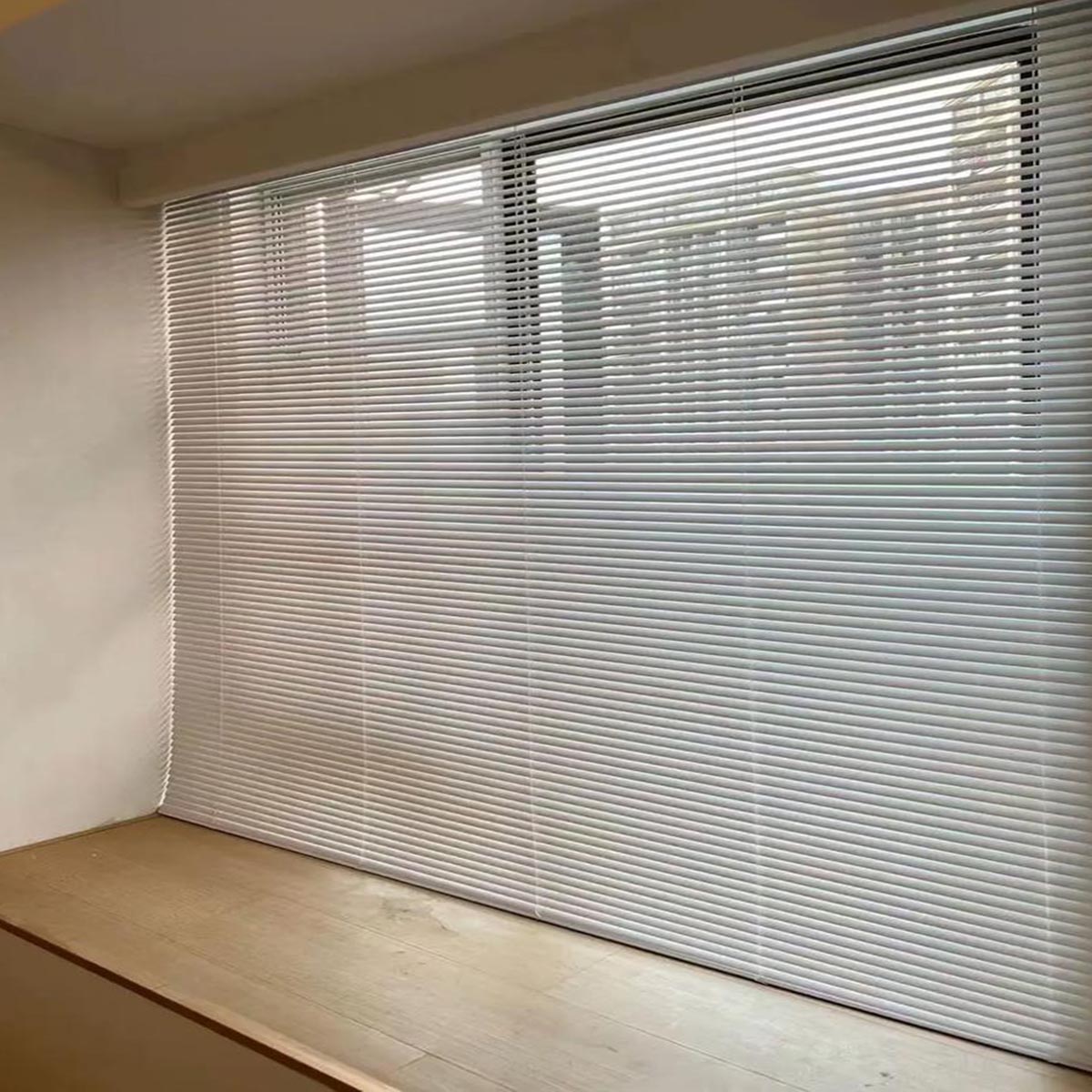
Once you’ve got your measurements and material sorted, the next step is deciding on the operation type and small customizations that elevate your Venetian blinds from functional to fantastic—2026′s biggest upgrade here is smart motorized Venetian blinds, a trend that’s quickly becoming a staple in modern homes. Manual Venetian blinds (with cord or wand operation) are still a great choice for small bay windows or anyone on a budget, but motorized options offer unbeatable convenience, especially for hard-to-reach bay windows (like those above a seating nook or counter). Smart motorized Venetian blinds can be controlled via a smartphone app, voice command (compatible with Alexa, Google Home, and Apple HomeKit), or a wall switch, allowing you to adjust the slat angle or raise/lower the blinds without lifting a finger. You can even set schedules for automatic operation—for example, opening the blinds at sunrise to let in natural light or closing them at sunset for privacy—making them perfect for busy homeowners or anyone who loves smart home technology. If motorized is outside your budget, opt for cordless Venetian blinds (a safety must if you have kids or pets) or a decorative wand in a matching finish to the blinds for a polished look. Cordless Venetian blinds eliminate the risk of tangled cords and create a cleaner, more streamlined appearance, which is especially appealing for minimalist or modern bay window designs. Another small customization that makes a big difference for bay windows is custom headrails: most blind suppliers offer headrails in the same finish as the slats, so the entire blind blends seamlessly with the window frame, and some even offer angled headrails for the side panes of the bay window, eliminating gaps and ensuring a clean, professional look. For added light control (a common pain point with bay windows), ask for sealed side channels—these thin, fabric-lined channels attach to the sides of the blind and block out light leaks, perfect for bedrooms where blackout is essential or home offices where glare on screens is a problem.
Installation is the final step, and while custom Venetian blinds for bay windows can be a DIY project for confident homeowners, professional installation is worth the investment for most people—especially if you have a large or floor-to-ceiling bay window, or if you’re installing smart motorized Venetian blinds. If you’re tackling it yourself, start by gathering the right tools: a cordless drill, Phillips head bit, level, pencil, and the mounting brackets that come with your blinds (most suppliers include universal brackets that work for recess or face fitting). For recess fitting, mark the position of the brackets on the top of the window frame, ensuring they’re level and spaced evenly (at least one bracket every 900 mm for stability). For the angled side panes of the bay window, use a protractor to match the bracket angle to the window angle—this step is crucial to avoid the blinds sitting crookedly. Drill pilot holes first to prevent the frame from splitting, then secure the brackets with the included screws. Once the brackets are in place, simply click the headrail into the brackets (most modern blinds use a snap-on design for easy installation) and test the operation: raise and lower the blinds, adjust the slat angle, and check for any sticking or gaps. If you notice light leaks, add weatherstripping to the sides or bottom of the blinds—an affordable fix that makes a huge difference in light control. For face fitting, the process is similar, but you’ll mount the brackets on the wall outside the frame, using wall anchors if you’re drilling into plaster or drywall to ensure the blinds are secure (Venetian blinds, especially wooden ones, are heavier than they look). If you’re installing smart motorized Venetian blinds, the supplier will include a power supply (either hardwired or battery-operated) and instructions for pairing the blind with your smart home system—this step is best left to a professional if you’re not comfortable with electrical work. After installation, a quick clean (a soft dust cloth for wooden blinds, a damp cloth for aluminium) and you’re ready to enjoy your new custom Venetian blinds.
Caring for your bay window Venetian blinds is simple, and a little regular maintenance will keep them looking like new for years. For aluminium Venetian blinds and PVC blinds, a quick wipe with a damp microfiber cloth once a month is enough to remove dust and grime—avoid harsh chemicals, which can damage the finish. For thermal wooden Venetian blinds, dust with a soft brush or feather duster regularly, and use a wood cleaner (specifically for blind use) once a season to nourish the wood and protect the thermal finish. If your blinds get stained (e.g., food splatters in the kitchen), spot clean with a mild soap and water solution, then dry immediately to avoid water damage. For smart motorized Venetian blinds, check the batteries (if using battery-operated) every 3-6 months and wipe the motor with a dry cloth to remove dust—this ensures smooth operation for years. If you notice the slats are bent or the operation is sticking, contact your blind supplier for replacement parts—most offer a warranty on custom Venetian blinds, so repairs are often covered.
FAQ
Q: Can I install the same type of Venetian blinds on all panes of my bay window for a cohesive look?
A: Absolutely! Most blind suppliers can create custom Venetian blinds in matching material, finish, and slat size for the central and side panes of your bay window, including angled headrails for the side panes to ensure a cohesive design. This is the most popular choice for bay windows, as it creates a clean, unified look that enhances the window’s architectural appeal without clashing with existing decor.
Q: Are thermal wooden Venetian blinds worth the extra cost for a bay window?
A: Yes—especially if your bay window faces south or west (direct sunlight) or north (cold drafts). The thermal finish cuts down on energy costs by regulating indoor temperature, and the natural wood texture adds value and style to your home. They’re also more durable than standard wooden blinds, resisting warping and fading even with prolonged sun exposure, so the extra cost is a long-term investment that pays off in both comfort and aesthetics.
Q: How do I avoid light gaps with Venetian blinds on my bay window?
A: Start with precise measurements and recess fitting (if your frame has enough depth to accommodate the headrail and slat movement). For added protection against light leaks, opt for sealed side channels or add weatherstripping to the sides and bottom of the blinds. If your bay window has sharp angles, ask for custom-cut slats that match the window’s shape—this eliminates gaps in the corners that standard slats often leave uncovered.
Q: Can I customize Venetian blinds for a curved bay window?
A: Yes! Many blind suppliers offer curved Venetian blinds for soft, curved bay windows—these use flexible slats and headrails that follow the window’s curve, ensuring a perfect fit and smooth operation. Curved blinds are a bit more expensive than straight ones, but they’re the only option for a curved bay window, as standard straight Venetian blinds will leave unsightly gaps and won’t operate correctly.
Q: What’s the best slat size for a small bay window (under 1.5 m wide)?
A: 25mm slats are the best choice for small bay windows—they offer precise light control, don’t look bulky or overwhelming in tight spaces, and operate smoothly on the angled panes that are typical of bay windows. Larger slats can make a small bay window feel cramped and are harder to adjust for targeted glare control, which is especially important if the window is near a desk or seating area.
Post time: Mar-02-2026